Languages
Saturday, November 28, 2026



News and Views from the Global South
Economy & Trade
CENTRAL AMERICA: Boosting Small Enterprise to Fight Poverty
Small and medium-sized companies in Central America are the targets of foreign development aid programmes aimed at fighting the region's high poverty levels.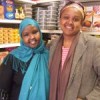
Somali Women Entrepreneurs Carve a Niche in Boston
Deeqo Jibril is always on the go. Whether she is tending to her four children or teaching breast cancer awareness classes to women in her community, the Somali-born community organiser is always up for a new challenge.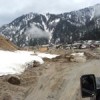
PAKISTAN: Tourists Flee Osama Shadow
This is the time of year when picturesque Chitral Valley in the northwestern corner of Pakistan sees a huge influx of tourists. But local residents fear a backlash from the events in Abbottabad, some 300 miles southeast, as authorities put up an extraordinary security cordon throughout this tourist haven.
ENVIRONMENT-CHILE: Fishing Villages Turn to Int’l Justice in Fight Against Waste Duct
Fisherfolk and indigenous people in southern Chile have petitioned the Inter-American Commission on Human Rights in their 15-year conflict with Celulosa Arauco y Constitución (CELCO), a paper pulp company which plans to dump toxic waste in the ocean, and with the Chilean state for alleged human rights violations.ECUADOR: Correa Set for Victory in Referendum
Pollsters predict that a majority of voters in Ecuador will approve a package of reforms backed by leftwing President Rafael Correa, in a May 7 referendum that has further polarised the population.
DEVELOPMENT-ZAMBIA: ‘Real Changes Needed in Policy and Implementation’
Zambia has enjoyed economic growth of around six percent per year over the past decade, says Patrick Mucheleka, but the government is failing to translate this into social and economic development for the majority of citizens. The upcoming conference on least developed countries in Turkey offers an opportunity to recalibrate the country's approach to development.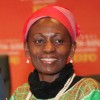
Q&A: Translating Southern Successes Into LDC Solutions
"In South-South cooperation we are all partners," Josephine Ojiambo, ambassador of Kenya to the U.N. and president of the U.N. General Assembly High-Level Committee on South-South Cooperation, told IPS. "SSC specifically shies away from the donor-client relationship."CUBA: Month-Long Offensive Against Homophobia
LGBT social networks and experts with Cuba's National Sex Education Centre (CENESEX) announced Tuesday that events surrounding the Day Against Homophobia will last a month this year in this Caribbean island nation.AFRICA: Coalition Against the High Cost of Living
In Burkina Faso, Niger, Kenya, Uganda: governments are worried by soaring prices - and by newly confident and enraged civil society. Governments are being challenged to take decisive action, despite lacking the tools to address rising global oil prices. Their responses could have important consequences for their legitimacy and survival.
ENVIRONMENT: Endosulfan Ban Highlights Need for Alternatives
The upsurge in the use of the toxic pesticide endosulfan, targeted for prohibition by the international community, illustrates one of the dilemmas of intensive agriculture in Argentina and Latin America in general.CUBA: Professionals Awaiting their Chance
Cuba’s opening to private enterprise still leaves out many professionals who have yet to find a way to use their skills and potential in non-state industries, although they have not lost hope that the rules of the game will change.
SRI LANKA: War Long Over, Media Still Muzzled
It has been two years since the end of Sri Lanka’s decades long war, and life in general has begun to slowly edge back towards normalcy here. Not so for the country’s besieged media community, according to observers and journalists alike - reporting still feels hemmed in and muzzled, they say.Food Price Hike Worsens Poverty in Asia
An annual meeting of Asian finance ministers and central bank governors in Hanoi is set to address the fate of 64 million people in the region on the brink of extreme poverty. They are the worst affected by soaring food prices, which have hit record highs in the first two months of this year.U.S.: Lethal Injection Treads Murky Ethical Waters
The death penalty is in limbo in several states since the U.S. Drug Enforcement Agency confiscated several states' supplies of sodium thiopental (ST), a key drug used in lethal injections, and as the supply of the drug to the U.S. grows even tighter.PAKISTAN: Vaccinators Get a Shot in the Arm
The questions came like something from a medical student’s exam: What is routine immunisation? When should a vaccine be destroyed? What is the best temperature for storing a vaccine? At which angle should the needle be held while administering a pentavalent vaccine? And which five diseases does a pentavalent vaccine prevent?
PAKISTAN: Health Workers Without Maternity Leave
Shazia Kiran is seven months pregnant with her third child and worried she might be unable to juggle her work and the responsibilities of caring for a newborn. But what worries her more is that she has no maternity benefits, and she has not received her salary as a Lady Health Worker (LHW) for the last three months.BALKANS: Cornered Hopelessly at Work
Katka Ceh has been selling vegetables at Pancevo’s open-air market since losing her job as a pre-school teacher in the nearby village of Kovacica more than a year ago.DEVELOPMENT: IBSA Fund Packs Small But Sustainable Punches*
Despite only three million dollars a year coming into the India-Brazil-South Africa (IBSA) Fund for Poverty and Hunger Alleviation, it aims to pack punches above its weight with small but sustainable projects.BAHRAIN: McCarthyism in Manama?
As the savage crackdown on the majority Shiite opposition movement drags on in Bahrain, King Hamad bin Issa Al Khalifa's military regime – backed by the hefty armed forces of Sunni- dominated Saudi Arabia – has moved from launching outright assaults on peaceful protestors on the streets of Manama in broad daylight into the murky waters of what experts are calling state terror, featuring all the old tactics of petrifying a population into submission.
BOLIVIA: The Boomerang Effect for Morales
It wasn't easy to get to the Bolivian city of Riberalta from Brazil. The adventurous journey included potholes on the Brazilian highway, a rickety boat that ferried us across the Mamoré - the border river - and an unnerving ride on a motorcycle taxi. But the biggest complication was the roadblocks.
PORTUGAL: Commemoration of Revolution Turns into Protest Against IMF
The traditional celebration of the anniversary of the 1974 Carnation Revolution in the Portuguese capital turned into a massive protest against the extreme austerity measures imposed by the European Union and the International Monetary Fund (IMF) as a condition for the imminent financial bailout.« Previous Page — Next Page »


 UN Commission on International Trade Law Holds Colloquium on Harmonizing Law in Age of Digital Trade and Finance. Credit: UN Photo/Manuel Elías
Trade has historically been a geopolitical tool that can both be used to propel development as well as entrench inequalities. In various nations in East Asia and Latin America, increased trade, as often seen in export booms, has allowed them to achieve influential standings within the global economy. On the other hand, many low-income countries in Sub-Saharan Africa, Asia, and Latin America struggle to maintain a robust trade performance, and oftentimes are subjugated to exploitative trade dynamics through intense extraction of their natural resources. In recent decades, international trade has reached a new era as emerging economies across the world are rising in economic preeminence. Stable international trade is crucial to world peace as global interconnectedness facilitates reliable diplomacy. Nevertheless, significant challenges are on the rise. Notably, a major wave of United States tariff escalations in January 2025 lifted US import taxes to their highest level since the 1930s, changing market dynamics and forcing renegotiations with global trading partners.These articles are aimed at informing readers about the complexities of trade and its varying effects on development, with a special focus on the consequences of the global economic crisis, the potential of fair trade and the gender implications of trade policies.
Updated by Yilan Batista and Shuli Wong August 2026

The Week with IPS

NEXT STOP - SDGs
Tracking global progress towards a sustainable world
