Languages
Saturday, November 28, 2026



News and Views from the Global South
Economy & Trade
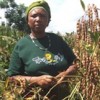
KENYA: Women Hold the Key to Rural Prosperity
John Kyalo Mulwa couldn't support his family from his six hectare farm, so he quit farming to open a bar. But he turned the land - and decision-making on it - over to his wife. Turns out she's a better farmer than he ever was.UGANDA: Bicycles at the Heart of Empowerment Scheme for Rural Women
The bicycle has become a symbol of hope for hundreds of women in Uganda who have been trained in repairing one of life’s favorite transport modes.ECONOMY-LATIN AMERICA: ‘Multilatinas’ in a Globalised World
Economic growth in Latin America is driving the expansion of corporations from this region throughout the world – even in countries of the industrialised North that formerly seemed out-of-reach.
Q&A: “Microfinance Is Much More Than Just Credit”
A day after U.S. assistant secretary of state for south and central Asian affairs Robert Blake appealed to the Bangladeshi government to reconsider its dismissal of 70-year-old microfinance guru Muhammad Yunus from the Grameen Bank, IPS spoke with the president and CEO of Women's World Banking (WWB), currently the most comprehensive network of microfinance institutions (MFIs) in the world.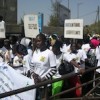
TRADE: African NGOs Oppose Human Rights Clause in EPAs
Part of the delay in the finalisation of the economic partnership agreements (EPAs) is due to the so-called non-execution clause that gives the EU the power to take steps against its African, Caribbean and Pacific (ACP) trading partners if they violate human rights, democracy and good governance principles.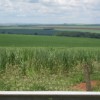
Sugar Cane and Ethanol Boom Drives Development in Southern Brazil
The roads are exceptionally good and numerous here, in contrast with other parts of Brazil, but the monotony of the landscape is not inviting to tourists. Sugar cane fields stretch to the horizon along a 400-km stretch of highway to the north of São Paulo.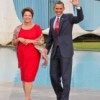
BRAZIL-US: Libya Attack Sours Obama-Rousseff Meeting
The first black president of the United States visited the first woman president of Brazil: their meeting resulted in modest progress in bilateral relations, but a bitter taste could not be avoided over the announcement, in Brazil, of the U.S.-led air attack on Libya.
U.N. Water Conference Focuses on Cities
As a U.N. conference on water opens in South Africa today, the country's Council for Scientific and Industrial Research has repeated warnings that the country faces a water supply crisis. Experts attending the three-day conference will consider the challenges posed by growing demands, migration and water resources potentially limited by careless use and climate change.Manufacturing in Africa Can be Profitable – And Developmental
Investing in adding value to raw materials is crucial for the development of the African continent.
Swazi Government Challenged
Swaziland's autocratic government is facing a growing challenge as a sharp decline in customs revenue forces budget cuts. Thousands of protesters brought the Swazi capital of Mbabane to a standstill Friday as they took to the streets to oppose imminent salary cuts to civil service wages - and demand changes to the country's government.Cambodia Struggles to Stem Domestic Worker Abuse
Cambodia’s fledgling domestic worker export industry continues to come under scrutiny amid allegations that women have been forcibly detained in privately run training centres.
LATIN AMERICA: Brick-Making Industry Confronts Its Climate Impacts
Wearing rolled up trousers and a spattered shirt, Carlos Frías mixes mud, water and manure to prepare a row of red bricks.POLITICS-ZAMBIA: Days of Male Domination Numbered
Elizabeth Phiri was so incensed when she was overlooked as a parliamentary candidate for the Patriotic Front in a 2008 by-election on the basis of her gender that she quit the party. Four years on, she has rejoined the party but remains pessimistic - but other women politicians see reasons to hope the 2011 elections will be different.
AFRICA: Anxious Eyes on Green Climate Fund
The African Development Bank says it is concerned about administrative delays holding up progress on the Green Climate Fund - one of the most significant achievements from the Cancún climate talks.
Investment in African Economies Shifting Away from Raw Materials
Local and foreign investment on the African continent is slowly moving away from agriculture and raw materials to manufacturing, services, communication and tourism, despite poor infrastructure and low skills levels.Malawi Donor Funding Threatened by Rights, Governance Issues
Malawi is bracing itself for difficult economic times following a decision by the country’s main donors to withhold financial aid amounting to $400 million. Donors say they are responding to a range of governance and human rights issues in the country.U.S. Congress Weighs Aid Package to Post-Mubarak Egypt
As Egypt braces for Saturday's vote on constitutional amendments in its first referendum since the revolution, lawmakers here are seeking to address the North African country's economic situation in addition to immediate political developments, by introducing legislation that seeks to stimulate foreign direct investment (FDI).
BRAZIL-US: Obama Promises “Equal Partnership”
The United States says its relations with Latin America must be "an equal partnership" - a new vision or, at least, a new discourse that will have a chance to take more concrete shape during U.S. President Barack Obama's visit to Brazil this weekend.Maldives Seeks “Smooth Transition” for World’s Poorest Nations
When the environmentally-threatened Indian Ocean island of Maldives "graduated" from the ranks of least developed countries (LDCs) to a middle-income country last January, the graduation was characterised as a milestone in the country's socioeconomic development.U.S.-LATAM: Obama to Stress the Positive, Show Respect
On the eve of President Barack Obama's first-ever visit to South America, administration officials and independent analysts say that the emphasis throughout his five-day trip will be very much on the positive aspects and possibilities of U.S.-Latin American relations.
BANGLADESH-LIBYA: Garment Industry Pledges to Employ Evacuated Labourers
Bangladesh's garment factories and overseas recruiting agencies have pledged to employ a substantial number of Bangladeshi expatriates returning from politically volatile Libya, following the violent crackdown on opposition forces by Muammar Gaddafi's regime there.« Previous Page — Next Page »


 UN Commission on International Trade Law Holds Colloquium on Harmonizing Law in Age of Digital Trade and Finance. Credit: UN Photo/Manuel Elías
Trade has historically been a geopolitical tool that can both be used to propel development as well as entrench inequalities. In various nations in East Asia and Latin America, increased trade, as often seen in export booms, has allowed them to achieve influential standings within the global economy. On the other hand, many low-income countries in Sub-Saharan Africa, Asia, and Latin America struggle to maintain a robust trade performance, and oftentimes are subjugated to exploitative trade dynamics through intense extraction of their natural resources. In recent decades, international trade has reached a new era as emerging economies across the world are rising in economic preeminence. Stable international trade is crucial to world peace as global interconnectedness facilitates reliable diplomacy. Nevertheless, significant challenges are on the rise. Notably, a major wave of United States tariff escalations in January 2025 lifted US import taxes to their highest level since the 1930s, changing market dynamics and forcing renegotiations with global trading partners.These articles are aimed at informing readers about the complexities of trade and its varying effects on development, with a special focus on the consequences of the global economic crisis, the potential of fair trade and the gender implications of trade policies.
Updated by Yilan Batista and Shuli Wong August 2026

The Week with IPS

NEXT STOP - SDGs
Tracking global progress towards a sustainable world
