Languages
Wednesday, October 7, 2026



News and Views from the Global South
Trade & Investment

Insight to Impact: CGIAR Inaugural Flagship Report for Decision Makers Navigating Food System Science
"To have impact, it was crucial to understand what impact was wanted," CGIAR's Executive Managing Director Dr. Ismahane Elouafi said at the launch of the organization's flagship report, Insight to Impact: A decision-maker’s guide to navigating food system science.
‘With Science, We Can Feed the World of 9.7 Billion by 2050′
Animal scientist Lindiwe Majele Sibanda became what her grandmother earnestly prayed for when she was growing up on a farm in southern Zimbabwe.
A Pressure on Silicon Valley: Is the U.S. Ready for a Shift in Tech Dominance?
While the U.S. argues over tariffs, China, Japan, and South Korea are quietly reshaping their tech markets, shifting towards regional dominance – signaling a potential turning point in global tech leadership.
Lessons from the Global South on Transforming AgriFood Systems
The state of food and nutrition security in the Global South masks the great strides and investments made to increase agricultural yields to feed a rapidly growing population. As discussions deepen at the ongoing CGIAR Science Week, plenary discussions on Wednesday (April 9) explored transformative strategies and innovations driving agricultural resilience across Africa, the Caribbean, and Latin America.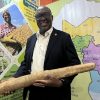
Farmers Need Science Solutions in Their Hands Sooner Than Later
Climate change is outpacing science and farmers are paying the price. Agricultural research innovations need to reach farmers before it is too late.
Welcoming Science: CGIAR Week-Long Focus on Innovation for Food, Climate-Secure Future
The world’s leading scientists and decision-makers in agriculture, climate, and health are meeting in Nairobi this week to promote innovation and partnerships towards a food, nutrition, and climate-secure future. As current agrifood systems buckle under multiple challenges, nearly one in 11 people globally and one in five people in Africa go hungry every day.
CGIAR Science Week Seeks Solutions for a Food-Secure, Climate Resilient Future
CGIAR and the Kenyan Agricultural and Livestock Research Organization (KALRO) are bringing together the world’s leading scientists and decision-makers in agriculture, climate, and health for the first CGIAR Science Week. This gathering will be a key moment to advance research and innovation, inspire action, and establish critical partnerships that can secure investment in sustainable food systems for people and the planet.
Solar-Powered Spinning Machines Help Indian Women Save Time and Earn More
As light enters through the small window of a modestly constructed tin-roofed house, Philim Makri sits on a chair deftly spinning cocoons of eri silk with the help of a solar-powered spinning machine in Warmawsaw village in Ri Bhoi district of Meghalaya in northeast India.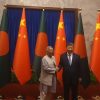
Bangladesh Chief Advisor’s China Tour Cements Dhaka-Beijing Relations
Bangladesh's Chief Adviser, Professor Muhammad Yunus's state visit to China, where he met Chinese President Xi Jinping, was seen as an opportunity to reaffirm old diplomatic and economic ties between the two countries.
Organic Fertilizers Prove Effective on Tea as Farmers Abandon Synthetic Inputs
On the outskirts of Kericho town within Kenya’s Rift Valley region, Kaptepeswet tea farm, an organic tea estate sprawling on a 50-acre piece of land, is a testament that organic fertilizers can be used on mature tea bushes and still produce the desired quantity and quality of premium leaves.
Seeds of Survival, Amid Conflict Sudan Is Saving Its Agricultural Future
Sudan’s diverse crops and agricultural heritage are at risk of being lost. The ongoing conflict in Sudan is claiming lives and threatening livelihoods and food security. In the chaos of conflict, scientists like Ali Babiker are fighting to protect Sudan’s future food security—not with weapons, but with seeds.
International Day of Forests
‘Now is the time for decisive, collaborative action’
The Forest Declaration Assessment Partners have called for urgent reforms to the international financial system to halt deforestation and protect biodiversity. It has also pitched for redirecting the public subsidies to mitigate the direct and indirect environmental risks from both public and private finance. 
Papua New Guinea: Years of Environmental Clean Up Ahead Following New Report on Abandoned Bougainville Mine
Local communities are finally witnessing progress in their mission for justice, 36 years after the Panguna copper mine in Papua New Guinea’s Autonomous Region of Bougainville became the centre of landowner grievances about environmental damage.
Siddis of India—a Unique Community Moves Into the Mainstream With Tourist Venture
The Siddi community, descendants of slaves from Africa, is now becoming more involved with mainstream enterprises, including a forest homestay venture—which is changing their fortunes after years of discrimination on the Indian subcontinent where they were originally enslaved.
International Women’s Day, 2025
In Zanzibar, Women Turn the Tide with Sponge Farming
In the early morning, as the tide pulls away, Zulfa Abdallah ties her scarf tightly around her head. She adjusts her goggles, places a snorkel across her forehead, and wades into the chest-deep waters off Jambiani village in Zanzibar. The Indian Ocean is her livelihood now, its waves offering a lifeline to women like her who confront challenges of poverty and climate change. 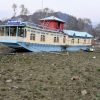
Not Seen in Living Memory: Kashmir’s Rivers Run Dry, Snow Disappears, and Hope Dissipates
The picturesque Kashmir Valley is battling nature’s fury. This time of year, its majestic mountains would typically be capped with thick snow, and its emerald streams would gush with fresh waters. However, none of these scenes are visible this year.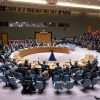
U.S. Passes on UN Ukraine Resolution amid the Humanitarian Crisis
From late 2024 to early 2025, the humanitarian situation in Ukraine has taken a turn for the worst, with poverty, violence, displacement, and damage to critical infrastructures having grown in intensity. Following the 2022 invasion of Ukraine by Russia, tensions have grown among member states of the United Nations (UN) on how to resolve the Russo-Ukrainian War.
African Leaders Challenged To Unite Against Energy Transition Mineral Oppressors
Renewable energy and climate change activists have challenged African heads of state to take a united stance to safeguard essential mineral resources, particularly in the Democratic Republic of the Congo (DRC) and other parts of the continent, which are selfishly exploited by foreign miners with disregard for poverty-stricken local communities.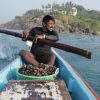
Mussel Divers in Kerala Face Livelihood Loss, with Species Habitat Under Threat
Ibrahim Basheer plunges into the sea and disappears. He remains gone for a couple of minutes before resurfacing for a deep breath of air, repeating this for the next half an hour. When he finally climbs aboard his boat, the net sack around his neck is filled with mussels—his catch for that diving trip. He rests for a short while before diving into the sea again—needing one more such trip to fill the basket he has brought along.
CARICOM Leaders Take Steps to Tackle Crime, Climate, Trade and Food Crises
CARICOM leaders wrapped up a crucial meeting on February 21, reaffirming their commitment to tackling pressing regional challenges with unity and resolve. From crime and security to education, trade and climate change, the leaders highlighted the need for decisive action amid global uncertainties.
Food, Water, Crime, Climate Change: CARICOM Leaders Begin 48th Conference with Commitment to Joint Action on Critical, Common Concerns
Leaders of the Caribbean Community (CARICOM) are meeting in Bridgetown from Feb. 19-21, as the world grapples with multiple crises, including escalating geopolitical conflicts, climate change and rising food insecurity.« Previous Page — Next Page »





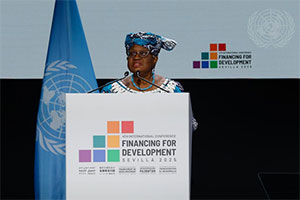 Opening of 4th International Conference on Financing for Development. Credit: UN Photo/Mariscal
International trade and investment are crucial elements of the world economy. While they can be powerful stimulators of development, they can also lead to global imbalances and dynamics of exploitation. In 2025, international trade entered a period of immense disruption, driven in part by a new wave of United States tariffs that reshaped global supply chains and investment flows. The increase in the US tariff rate, the highest since the 1930s, has forced bilateral renegotiations with global trading partners. Furthermore, the debt crisis in developing nations has accelerated while Official Development Assistance (ODA) has substantially dropped 7.3% in 2024.
In the 21st century, advancements in economic diversification in formerly colonized nations have propelled them into more central roles in the global economy. For example, both China and Mexico were able to develop their manufacturing sector and channel this development into booming export flows, thus advancing into the position of emerging economies. Foreign investment also plays an essential role in providing capital for developing countries, although they are oftentimes accompanied by social and environmental exploitation. For example, rising Chinese investments in natural resources in Latin America have often been met with tension as these investment projects fail to properly mitigate environmental risks and protect workers’ rights. In a more multifaceted vein, Sino-African relations have led to infrastructure development in Sub-Saharan Africa while also heightening the region’s economic dependency on China. IPS reports on global news in trade and investment, while shining a light on the nuanced nature of these endeavors.

The Week with IPS

NEXT STOP - SDGs
Tracking global progress towards a sustainable world
Tracking global progress towards a sustainable world
