Languages
Thursday, October 8, 2026



News and Views from the Global South
Climate Change Justice

Women Affected by ‘Gender-Biased’ Climate Change Deserve Justice
While research into the unequal impacts of climate change on women is growing, more is needed to enable them to realize their rights to climate justice. Researchers argue that women and girls have unequal access to food, water, health, education, and even income, thanks to climate change. This makes them more vulnerable.
No Turning a Blind Eye to Protection of Dominican Republic’s Natural Resources, Says Environment Minister
In 2020, general elections were held in the Dominican Republic. This took place while the COVID pandemic was becoming an increasingly serious threat, causing severe social and economic disruption. The elections were two months late as a result of the initial chaos COVID caused. The governing Dominican Liberation Party’s 16-year rule ended after the Modern Revolutionary Party’s candidate, Luis Abinader, received a majority of the votes. Elections are now scheduled for May 19 this year and IPS took the opportunity to ask Miguel Ceara Hatton, the country’s Minister of Environment and Natural Resources, how he perceived the past four years' efforts to mitigate a global crisis that now threatens us all, namely climate change and environmental degradation.
Taking Charge: Three Actions to Help Combat Climate Change and Save Amazonia
Climate change is the defining crisis of our time––it is the ultimate equalizer from which no one is immune. The Earth's ecosystems are on the brink of collapse, threatening biodiversity and human societies in unprecedented ways at a global scale.
Why Farmers in India and Pakistan Are Shifting to Natural or Regenerative Farming
Nine years ago, farmer Sultan Ahmed Bhatti gave up tilling the soil and using most fertilizers and pesticides on his farm in Doober Bhattian, Pakistan. His brothers at first derided him. But soon, his first experiment with growing wheat on raised beds was a runaway success. “We produced more wheat than what we grew on ploughed, flat land,” he said.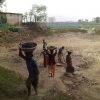
Revival of Hope: How a Remote Indian Village Overcame Water Scarcity
The people of Patqapara Village, a hamlet in India's West Bengal State, were until recently reeling under absolute distress due to water scarcity. The lack of irrigation facilities in this far-flung and inaccessible hamlet had resulted in a steady decline in agricultural activities. With a population of around 7,000, as per government estimates, the village primarily depends on agriculture for its livelihood. However, in recent years, drastic changes in weather patterns, including unseasonal rainfall, delayed monsoons, and soaring temperatures above normal levels, led to the drying up of irrigation canals and wells in the village. This left the local population in chaos, as their cultivable fields were bereft of any irrigation facilities.
How Women in Ahmedabad Slums Are Beating Back Climate’s Deadly Heat
Seema Mali is desperate. She has no defences against this changing climate’s brutal heat. Mali makes fresh flower garland the whole year, but her summer income has been plummeting by 30 percent over the last 8–10 years due to the extreme heat.
International Women’s Day, 2024
Inside Women Dominated Seaweed Farms in Kenya’s Indian Ocean Waters
Nearly two kilometers into the Indian Ocean from the Mwazaro beach coastline in Lunga Lunga Sub-County, Kwale County, women can be spotted seated in the shallow ocean waters or tying strings to erected poles parallel to the waves. It is a captivating sight to see rows of seaweed farms in the Indian Ocean. 
Into the Abyss: The Scramble for the Ocean Floor
Beneath the vast expanse of the ocean surface lies another world. At first, around the shores, the continental shelf is little more than an extension of the adjoining landmass. But then one reaches the edge of the abyss and, with the sudden drop that follows, everything changes. Remarkably, in view of what is known about the rest of the planet, and even outer space, most of the ocean floor remains largely a mystery. The scientific consensus is that only 5% of the deep sea has been explored in any detail. When a passenger jet was lost somewhere in the Indian Ocean in 2014, rescuers floundered without definitive maps of the maritime space and its currents at different depths that might have helped in their search.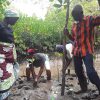
Coastal Indigenous and Minority Women Driving Kenya’s Blue Forest Conservation Efforts
Tsunza Peninsula is a natural wonder that sits just inside the many inlets of Mombasa Island on the border between Mombasa and Kwale Counties—a little-known spectacle of lagoons, islands, and thick mangroves in Kinango Sub-County, Kwale County, on Kenya’s coastal region.
Snowless Winter and a Climate Crisis: Kashmir’s ‘Unprecedented’ Weather
Abdul Gani Malik, a 75-year-old goldsmith living in Kashmir’s capital, Srinagar, has witnessed eras of tranquility and turbulence in the Himalayan region. What he has not seen, however, is a snowless Kashmir during the winter.
Nepal Farmers Face Another Year of ‘Agricultural Drought’, Threatening Food Security
Najboon Khatun looks up at the sky every day, searching for the possibility of rain. Clouds come and go without a drop of water. “Winter crops like wheat and vegetables need water, but like last year, there has been no rainfall yet,” says 65-year-old Khatun, expressing her anguish. In her village in Dhanusha, one of the agricultural hubs in the southern plains of Nepal, farmers mostly depend on rain as a source of irrigation. However, they are facing yet another year of drought, affecting winter crops, including wheat, mustard, lentils, and vegetables.
Road to COP29: Highest Climate Ambitions Needed to Decarbonize World
The road to COP29 has begun in earnest in the backdrop of a global climate report indicating that not only was 2023 the warmest year in a 174-year climate record, it was the warmest by far. Record-breaking temperatures, combined with El Niño, pushed vulnerable and poor nations in the Global South to the frontlines of extreme and severe weather events.
Snow Tales: ‘Too Little, Too Late,’ Say Climate Experts
Alpine skier, 28-year-old Muhammad Karim, has spent the winter with his eyes skyward, wishing and hoping for deep and abundant snow. “My bread and butter depend on the snow,” said the Olympian, who is also a ski trainer, at Naltar Ski Resort, in the valley by the same name nestled in the Gilgit-Baltistan’s Karakoram mountain range.
Under the Scorching Sun Kenyan Farmers Find New Ways to Beat Climate Change
In the tranquil village of Kotiang, perched on the shores of Lake Victoria in Kenya's lakeside region, Yvonne Atieno, a dedicated mother in her early thirties, tends to her fish pond under the relentless equatorial sun. Her young daughter eagerly joins her mother in this nurturing endeavor. Yvonne, a certified accountant by profession, reflects on how her decision to embrace regenerative farming has not only enriched her life but also imparted invaluable life lessons.
PPPs’ Private Gain at Public Expense
At high cost and with dubious efficiency, public-private partnerships (PPPs) have increased private profits at the public expense. PPPs have proved costly in financing public projects.
From Chemical Engineer to Climate Justice Avenger: A Journey with Yamide Dagnet
As a child on the French-Caribbean island of Guadeloupe, Yamide Dagnet dreamed of launching rockets into space. She stuck to science, discovering her path in chemical engineering. She became a scientist focused on critical reactions to solving real-world problems like improving water quality in the United Kingdom.
Amidst a Horrendous 2023, Civil Society is Fighting Back Society
The year 2023 has brought so much tragedy, with incomprehensible loss of lives, whether from wars or devastating ‘natural’ disasters, while our planet has seen yet more records broken as our climate catastrophe worsens. And so as the clock ticks towards the (mostly western) New Year, readers are traditionally subjected by media outlets like ours to the 'yearender'—usually a roundup of main events over the previous 12 months, one horror often overshadowed by the next.
Saving Energy, Saving Forests: How Kindle Stoves Are Changing Women’s Lives
Five years ago, farmer Sehlisiwe Sibanda would walk into a nearby forested area to fill a scotch cart with huge wood logs for cooking and heating; a pile of firewood would last her a week during the summer. But now she does not need a cartful of huge logs. Small branches and twigs are enough to last for more than a month.
Watching the Arctic Melt, Meteorologist’s Experience on Icebreaker Oden
Conflicting emotions greet the outcomes of COP28. After 28 years of climate conferences, an agreement has, for the first time, proclaimed that fossil fuels are the biggest culprit behind the warming of our planet and stated that it would encourage all nations to “accelerating action in this critical decade so as to achieve net zero by 2050 in keeping with the science." The agreement calls for, among other things, a tripling of renewable energy by 2030, but also an increased pace in the work to develop technical solutions for the separation and storage of carbon dioxide, an extremely expensive and, so far, limited effort.
Peru’s Andean Peoples ‘Revive’ Water that the Climate Crisis Is Taking From Them
"The rich world has caused the climate change that is drying up our water sources, and here we are doing everything we can to recover them because otherwise we will die," said Juan Hilario Quispe, president of the small farming community of Muñapata, just over 50 kilometers from the Peruvian city of Cuzco.
‘Imperfect COP28’ Gives Direction For Managed, Equitable Move From Fossil Fuels
While the outcomes of COP28 are being hotly debated in both the scientific and social justice arenas, the climate conference has taken an unprecedented step forward toward a just transition, says Yamide Dagnet, Director for Climate Justice at the Open Society Foundations.« Previous Page — Next Page »





The Week with IPS

NEXT STOP - SDGs
Tracking global progress towards a sustainable world
Tracking global progress towards a sustainable world
