
Thursday, November 19, 2026



News and Views from the Global South
Climate Change
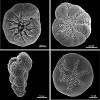
CLIMATE CHANGE: Acid Oceans Altering Marine Life
Some of the first species impacted by increasingly acidic oceans have been identified just as scientists meet in Copenhagen this week to present new data showing that climate change is far more urgent and serious than current economic problems.
ENVIRONMENT: Pine Beetle Kill No Longer Just Dead Wood
The sheer magnitude of the devastation left by this tiny beetle is shocking on its own.
CLIMATE CHANGE: A Little Equality Could Save a Lot of Lives
When ministers and government officials meet at the end of this year for a critical U.N. climate change conference in Copenhagen, they should bear in mind that the mortality rate for women during climate-related natural disasters is an average of 14 times higher than for men.DEVELOPMENT: High-Protein Pea Ideal for Drought-Hit Farmers
Agricultural researchers are reporting a major breakthrough in the development of a new, high-yielding variety of pigeonpea, a protein-rich legume that can be grown in marginal lands and is highly resistant to drought.
ENVIRONMENT: ‘‘Climate Change Does Not Wait For Recessions’’
Lack of money and technical know-how makes it difficult for poor farmers to participate in the Kyoto Protocol’s carbon trading mechanism aimed at reversing global warming. Meanwhile, the global economic crisis may further undermine investment in carbon trade in African countries.
ENVIRONMENT-PAKISTAN: Death of a Delta
Sitting on a rickety bench outside the dispensary of Dr. Abdul Jalil at Deh Bublo, Issa Mallah, a centenarian, watches the world go by. He says he comes to this ‘city’ everyday to buy his groceries.CLIMATE CHANGE: The Heat Is On Washington
A boiling point over government inaction on climate change may have been reached in the United States.
CLIMATE CHANGE: Controversy Sails with the Polarstern
The prestigious German oceanography ship Polarstern is conducting a major experiment of seeding the oceans with iron in order to absorb carbon dioxide, the principal greenhouse-effect gas.
CLIMATE CHANGE: New Thinking to Tackle Old Problems
Organic and eco-friendly farming can feed the world, contrary to the common belief that biotechnology and chemical-intensive farming are indispensable, modern strategies to increase production, agricultural experts say.
Q&A: “Environmental Key Lies with Young People”
The road to sustainable development begins with the participation of children and young people, says Argentine environmental expert and activist Cecilia Iglesias.
BIODIVERSITY: So Long, Salamanders
Mesoamerica's salamanders appear to be joining the global decline in amphibian species, like frogs, adding to the evidence of ecological change around the planet.BIODIVERSITY: Frigid Polar Regions Teeming With Life
Earth's two ice-covered polar oceans may be the most inhospitable places on the planet, but more than 12,000 species of animals have been found there, according to new research released at the annual meeting of the American Association for the Advancement of Science here.
POLITICS: Rhetoric and Reality Clash on Obama’s First Foreign Visit
On his first foreign visit as U.S. president, Barack Obama's rhetoric of "hope" and "change" came face to face with the hard, divisive policy realities of climate change from Canada's tar sands, a growing insurgency in Afghanistan and the sputtering world economy.
ENVIRONMENT: Climate Change Threatens Livelihoods Along Africa's Coast
Environmental experts warn that climate change will lead to oceanic acidification and increase surface water temperatures, especially around the African continent.HEALTH: Warmer Climate Gives Malaria New Hunting Grounds
Climate change is bringing malaria to regions of Africa where the disease was previously unknown, researchers report from the conference of the American Association for the Advancement of Science in Chicago this week.ENVIRONMENT-AUSTRALIA: Bushfires Highlight Global Warming Danger
While the bushfires which ravaged parts of the state of Victoria earlier this month - the most devastating in the nation’s history - are not being blamed directly on the effects of climate change, it is clear that global warming was indeed a factor.
U.S.: Clinton’s Maiden Voyage Aims to Reassure Asian Allies
Hillary Clinton's maiden voyage overseas as secretary of state is designed above all to reassure Washington's key East Asian allies and China of the U.S.'s enduring interests in the region and commitment to its stability, according to regional experts here.DEVELOPMENT: Now for a Water Bankruptcy
Rarely a week goes by without a problem of water scarcity hitting the headlines. The acute droughts in Kenya, Argentina and the U.S. state of California are among the latest phenomena to illustrate that the global environment has been dangerously degraded. And participants in the recent World Economic Forum in Davos, Switzerland, heard that the planet could be destined towards "water bankruptcy".
SOUTH AMERICA: Tenacious Drought Puzzles Climate Experts
For months now, yellowed pastures, cracked soil and dead livestock have been the landscape of what otherwise are the most productive farming areas of Argentina, Brazil, Paraguay and Uruguay. Scientists say it is so far impossible to determine if the drought is a manifestation of climate change processes.ENERGY: Clean and Green Gets a New Champion
The launch of a new international agency devoted solely to the promotion of renewable energy last month was applauded by many environmental groups, but left others wondering whether it is too little, too late.
CHILE: Biofuels Head to the Forests
Chile has set its sights on producing second-generation plant-based fuels from forest biomass within the next five years. But before that it must consider the environmental and socioeconomic impacts of such an endeavour, warn experts and activists.« Previous Page — Next Page »


As unsustainable human consumption and production systems are driving changes in average temperatures and weather patterns, "abnormal" is increasingly becoming the norm. So far, a lack of financing has been standing in the way of a comprehensive global plan for climate adaptation, and a global financial crisis has contributed to an increasing reliance on public-private partnerships. Our Climate Change page provides you with the latest news about international and local efforts to address what's frequently been called "the challenge of our time", the forces behind the climate change and the impact it has on the world's most vulnerable populations. Along the way, we bring you stories on growing citizen awareness, new scientific data, and emerging climate policies towards sustainable development.

The Week with IPS

Tracking global progress towards a sustainable world

