
Monday, October 5, 2026



News and Views from the Global South
Climate Change

Should We Attribute All Climate-Related Disasters Only to Global Warming?
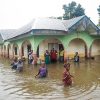
The Republic of Mauritius, an island nation, experienced its latest flash floods since the last bad one in 2013. These floods resulted in the loss of lives and hefty bills for car insurers with over 3000 cars have been damaged.
Snow Tales: ‘Too Little, Too Late,’ Say Climate Experts
Alpine skier, 28-year-old Muhammad Karim, has spent the winter with his eyes skyward, wishing and hoping for deep and abundant snow. “My bread and butter depend on the snow,” said the Olympian, who is also a ski trainer, at Naltar Ski Resort, in the valley by the same name nestled in the Gilgit-Baltistan’s Karakoram mountain range.
Under the Scorching Sun Kenyan Farmers Find New Ways to Beat Climate Change
In the tranquil village of Kotiang, perched on the shores of Lake Victoria in Kenya's lakeside region, Yvonne Atieno, a dedicated mother in her early thirties, tends to her fish pond under the relentless equatorial sun. Her young daughter eagerly joins her mother in this nurturing endeavor. Yvonne, a certified accountant by profession, reflects on how her decision to embrace regenerative farming has not only enriched her life but also imparted invaluable life lessons.
Beyond the Farm: How Empowering Women Farmers Drives Change in Jordan and Beyond
Dr. Zeinab Al-Momany, a prominent social entrepreneur, sheds light on the journey of empowering women farmers in Jordan and the Arab world, where women often work long hours for low pay and lack labour recognition.
PPPs’ Private Gain at Public Expense
At high cost and with dubious efficiency, public-private partnerships (PPPs) have increased private profits at the public expense. PPPs have proved costly in financing public projects.
Matchmaking for Green Cities? Accelerating Climate Finance in Urban Areas
Asia and the Pacific is home to 54 per cent of the world's urban population, who are disproportionately vulnerable to the impacts of climate change (ESCAP, 2023; IPCC, 2022). Why then, do climate action projects in cities commonly face delays in implementation?
Climate Change Is Taking a Major Toll on Agriculture. Here’s How to Support Farmers
Half the world eats rice. In Bangladesh, everyone eats it. The small, densely-populated nation is the third-highest rice-producing country in the world.
2024: A Year of Cautious Hope for African Economies Facing Worldwide Challenges
As African economies look to the new year, countries across the continent are poised to make moderate economic gains but must navigate the maze of domestic and international challenges.
The Impact of Climate Migration on Developing Nations
As the world is still gearing up to welcome 2024, let us find a moment to reflect on some of the key trends of the past year and pursue now to embrace the path towards hope and promise for everyone, everywhere.
New Era: Unlocking Africa’s Agriculture Potential Through CGIAR TAAT Model
As hunger and food insecurity deepen, Africa is confronting an unprecedented food crisis. Estimates show that nearly 282 million people on the continent, or 20 percent of the population, are undernourished. Numerous challenges across the African continent threaten the race to achieve food security; research and innovative strategies are urgently needed to transform current systems as they are inadequate to address the food crisis.
Why Should Climate Change and Biodiversity Loss Be Tackled Together?

Find the answer in this interview with Frédéric Castell, Senior Natural Resources Officer at FAO
Advanced Economies Must Let the IMF Play a Productive Role on Climate
The world faces the existential threat of a climate change crisis, and it is becoming increasingly clear that the outcome of the latest UN climate summit, COP28 — hosted as it was by the CEO of one of the world’s largest oil companies, and filled with a record number of fossil fuel lobbyists — is not going to do much to change that.
Cooperative Farming Makes Bangladesh’s Coastal Women Farmers Climate-Resilient
In the past, Salma Begum, 40, lost her crops every year due to natural disasters. She lives with her five-member family in Ashabaria village under Rangabali upazila, a remote coastal island in Patuakhali district. “We did not have enough livelihood options in the coastal area where we live. Cyclones, coastal floods, and tidal surges have been having adverse impacts on agriculture, making it difficult for my wage-laborer husband to find work regularly,” she said.
From Chemical Engineer to Climate Justice Avenger: A Journey with Yamide Dagnet
As a child on the French-Caribbean island of Guadeloupe, Yamide Dagnet dreamed of launching rockets into space. She stuck to science, discovering her path in chemical engineering. She became a scientist focused on critical reactions to solving real-world problems like improving water quality in the United Kingdom.
Nigeria Prioritizes Climate Action to Mitigate Natural Disasters
In 2022 alone, flooding killed at least 662 people, injured 3,174, displaced about 2.5 million, and destroyed 200,000 houses individuals. As far back as 2012, the World Bank reported that erosion was affecting over 6,000 square kilometres of land in the country, with about 3,400 square kilometres highly exposed.
Europe’s Shift to the Far Right and its Impact on Immigration
The recent elections in the Netherlands signals the increasing power of the far right in Europe. The populist party of Geert Wilders, the Party for Freedom, won a decisive, albeit unexpected, victory taking 37 seats out the 150 seat in parliament. Wilders will likely be the head of the next Government. His policies include stopping all immigration into the Netherlands, holding a referendum on leaving the EU, and banning mosques and the Quran.
Amidst a Horrendous 2023, Civil Society is Fighting Back Society
The year 2023 has brought so much tragedy, with incomprehensible loss of lives, whether from wars or devastating ‘natural’ disasters, while our planet has seen yet more records broken as our climate catastrophe worsens. And so as the clock ticks towards the (mostly western) New Year, readers are traditionally subjected by media outlets like ours to the 'yearender'—usually a roundup of main events over the previous 12 months, one horror often overshadowed by the next.
What’s in Store for Indian Farmers After Cop 28’s Conclusion in Dubai?
Durga Das*, a 59-year-old farmer from the Indian state of Maharashtra, committed suicide last year by ingesting a poisonous substance. He was unable to repay the loan he had taken from the bank for the renovation of his single-story house. This year, his 32-year-old son, Pradeep Das, a father of two children, is equally desperate. The family owns half an acre of cultivated land where they grow cotton. The harvest has been devastated due to intense heat waves, leaving farmers like Dass and his son Pradeep in dire straits. The loan the family had taken is yet to be paid, and the land they had mortgaged in the bank is about to be confiscated. This means no crops, no cultivation, no business, and no food.
Saving Energy, Saving Forests: How Kindle Stoves Are Changing Women’s Lives
Five years ago, farmer Sehlisiwe Sibanda would walk into a nearby forested area to fill a scotch cart with huge wood logs for cooking and heating; a pile of firewood would last her a week during the summer. But now she does not need a cartful of huge logs. Small branches and twigs are enough to last for more than a month.
Watching the Arctic Melt, Meteorologist’s Experience on Icebreaker Oden
Conflicting emotions greet the outcomes of COP28. After 28 years of climate conferences, an agreement has, for the first time, proclaimed that fossil fuels are the biggest culprit behind the warming of our planet and stated that it would encourage all nations to “accelerating action in this critical decade so as to achieve net zero by 2050 in keeping with the science." The agreement calls for, among other things, a tripling of renewable energy by 2030, but also an increased pace in the work to develop technical solutions for the separation and storage of carbon dioxide, an extremely expensive and, so far, limited effort.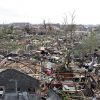
Weathering the Storm: Navigating Climate-Care Nexus in the Philippines
In a coastal community in Tacloban City in Leyte, Philippines, Maria's life was intricately woven with the ebb and flow of the sea. Her days were filled with caring for her two young children and selling fish caught by her husband at the market. Little did she know that winds of change were brewing far beyond the horizon.« Previous Page — Next Page »





As unsustainable human consumption and production systems are driving changes in average temperatures and weather patterns, "abnormal" is increasingly becoming the norm. So far, a lack of financing has been standing in the way of a comprehensive global plan for climate adaptation, and a global financial crisis has contributed to an increasing reliance on public-private partnerships. Our Climate Change page provides you with the latest news about international and local efforts to address what's frequently been called "the challenge of our time", the forces behind the climate change and the impact it has on the world's most vulnerable populations. Along the way, we bring you stories on growing citizen awareness, new scientific data, and emerging climate policies towards sustainable development.

The Week with IPS

Tracking global progress towards a sustainable world

