Languages
Wednesday, September 16, 2026



News and Views from the Global South
Conservation
While India’s RAMSAR Sites Tally Rises, Wetlands Remain Endangered
Late in February, India’s noted ornithologist and conservationist, Asad Rahmani, wrote a letter to a wildlife warden in north India expressing his satisfaction about the availability of water in four important wetlands in Kashmir, where migratory birds from central Asia and Europe arrive annually for wintering.
Want To Fix the World, Ubuntu (Humanity to Others) Can Help
The world needs an urgent fix and humanity could just be it.
Science-Backed Solutions Buoying Water Security in East Africa
In East Africa, climate change has made water a lifeline and threat. In a region highly dependent on rainfall for growing crops, climate change is threatening water security but science-backed solutions are helping turn the tide.
CGIAR Science Week Seeks Solutions for a Food-Secure, Climate Resilient Future
CGIAR and the Kenyan Agricultural and Livestock Research Organization (KALRO) are bringing together the world’s leading scientists and decision-makers in agriculture, climate, and health for the first CGIAR Science Week. This gathering will be a key moment to advance research and innovation, inspire action, and establish critical partnerships that can secure investment in sustainable food systems for people and the planet.
Forest Guards Risking Their Lives To Keep Malawi’s Forests Standing
In Malawi, being a forest guard isn’t a glamorous, sought-after job. And it has often been quiet, enjoying almost no publicity – until recently amid the worsening crashing down of the country’s forests, which is making the occupation increasingly perilous. In 2024 alone, a total of eight forest rangers got killed in separate incidents while in the line of duty, according to the Ministry of Natural Resources, which is responsible for the management of 88 forest reserves and 11 plantations across the country.
Bangladesh’s Ethnic People Safeguarding Forests and Wildlife
Kishore Kumar Chakma, a young man from an ethnic community in Rangamati district, voluntarily guards a village common forest (VCF) so that none can hunt wild animals and fell trees from it.
Seeds of Survival, Amid Conflict Sudan Is Saving Its Agricultural Future
Sudan’s diverse crops and agricultural heritage are at risk of being lost. The ongoing conflict in Sudan is claiming lives and threatening livelihoods and food security. In the chaos of conflict, scientists like Ali Babiker are fighting to protect Sudan’s future food security—not with weapons, but with seeds.
World Day for Glaciers
Glaciers Are in Threat, May Not Survive the 21st Century
Many glaciers in the world will not survive the 21st century, according to reports published by the United Nations. Five of the past six years have experienced the most rapid glacier retreat on record; 2022-24 was the largest three-year loss of glacier mass. 
How Rare Rhino, Tiger Conservation Has Locked Out Indigenous Communities
While a local community prides itself on caring for a sensitive biodiverse region, and despite centuries-long stewardship of the Kaziranga, a UNESCO World Heritage Site, the authorities rebuff—sometimes aggressively—their attempts to remain involved.
Papua New Guinea: Years of Environmental Clean Up Ahead Following New Report on Abandoned Bougainville Mine
Local communities are finally witnessing progress in their mission for justice, 36 years after the Panguna copper mine in Papua New Guinea’s Autonomous Region of Bougainville became the centre of landowner grievances about environmental damage.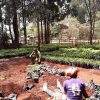
Activists Fear Kenya Forests Threatened Due to Government Development
After the controversial lifting of a six-year moratorium or temporary ban on logging activities in public and community forests by the Kenyan government in July 2023, trucks ferrying tree logs are frequently seen on major highways in total disregard of environmental concerns.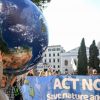
COP 16 Conference made Key Steps Towards a More Just Transition for Indigenous Peoples & Peasant Communities
With global temperatures continuing to break records and every global indicator of the health of the natural world showing decline, the need to quickly move away from fossil fuels and environmentally destructive practices has never been more apparent. But as has often been pointed out, how this ‘green transition’ is achieved matters.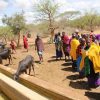
How Tanzania’s Farmers, Pastoralists Paid the Price for a World Bank Project
A hush had fallen over Mbarali District, but it was not the quiet of peace—it was the silence of uncertainty. Just months ago, the rolling plains were gripped by fear as government-backed rangers, dressed in olive green fatigues, roamed through villages, seizing cattle, torching homes, and forcing entire communities to the wobbly edge of survival. The REGROW project, a USD 150 million initiative funded by the World Bank to expand Ruaha National Park (RUNAPA), had promised tourism growth and environmental conservation. What it delivered was a brutal campaign of state-sanctioned land grabbing under the guise of protecting nature.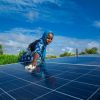
Decoding Africa’s Energy Journey: Three Key Numbers
At night, when the world lights up, large swathes of Africa remain cloaked in darkness—a stark reminder of the continent’s lack of reliable access to electricity.
Cooking up Success: Solar Kitchen Initiative Aims to Expand Access to Clean Energy in Angola
Access to energy is essential for sustainable development, but for many rural communities, it’s still out of reach. In Angola, according to the 2019-2020 agricultural census, most rural villages lack access to electricity.
Innovative Financing to Unlock Africa’s Blue Economy
Securing new financing for global good has become more challenging than ever. Negotiations at the recently-concluded COP16 on Nature and Biodiversity failed to reach an agreement on establishing a fund to support the implementation of the Framework for Nature agreed in 2022 under the Montreal-Kunming agreement.
Transformative Change Will Save a Planet in Peril—IPBES
Nature is at a tipping point. With human activity having pushed up to 1 million plant and animal species close to extinction, securing sustainable development and halting global biodiversity collapse is no longer just an option but a requisite for human wellbeing.
UNCCD COP16 Raises Hopes for Ambitious Global Land Action
While many delegates at the 16th meeting of the Conference of the Parties to the UN Convention to Combat Desertification (UNCCD COP16) hope that this could be the convention’s own Paris moment—referring to the historic Paris agreement inked by UNFCCC signatories—however, this hedges heavily on the UN parties’ seriousness to combat drought, desertification and land degradation.
Focus on Africa: IPBES Plenary Session Makes Inaugural Visit to Biodiverse Continent
The Intergovernmental Science-Policy Platform on Biodiversity and Ecosystem Services’ (IPBES) first Plenary session in Africa is a “crucial acknowledgement of Africa’s important contribution to biodiversity conservation, which is a global public good, a heritage that Africa has the privilege to share with the peoples of the world,” says Dr. Luthando Dziba, from South Africa, co-chair of the IPBES Multidisciplinary Expert Panel.
Bangladesh Bans Polythene Bags Again, Sparking Hopes for the Eco-Friendly ‘Sonali Bag’
After Bangladesh’s interim government banned polyethene bags, a new sense of hope has emerged for the Sonali bag—a jute-based, eco-friendly alternative developed in 2017 by Bangladeshi scientist Dr. Mubarak Ahmed Khan. Sonali bag, or the golden bag, is named after the golden fiber of jute from which it is made.
Signs of Things to Come As COP29 Presidency Releases New Draft Text
Today the COP29 Presidency released a much-awaited new draft text as the end draws near.
« Previous Page — Next Page »


The Week with IPS

NEXT STOP - SDGs
Tracking global progress towards a sustainable world
Tracking global progress towards a sustainable world
