Languages
Tuesday, October 27, 2026



News and Views from the Global South
COP28
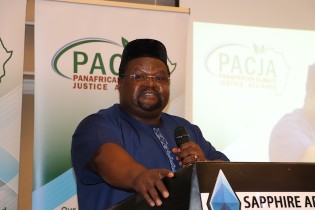
African Leaders Challenged To Unite Against Energy Transition Mineral Oppressors
Renewable energy and climate change activists have challenged African heads of state to take a united stance to safeguard essential mineral resources, particularly in the Democratic Republic of the Congo (DRC) and other parts of the continent, which are selfishly exploited by foreign miners with disregard for poverty-stricken local communities.
Walking with Wisdom: Whaia’s Mission to Bring Indigenous Knowledge to COP 29
Kaitiaki! Whaia says she is at COP29 to bring indigenous wisdom to influence policy and to provide guardianship (kaitiaki) of the climate negotiations.
UNDP’s Sustainable Energy Director Calls For Innovative Financial Solutions for Adaptation, Mitigation
Riad Meddeb, Director of the Sustainable Energy Hub at the United Nations Development Programme (UNDP), stressed the urgency of finding innovative financial solutions during COP29.
Countdown Begins in Defining Twelve Days to Historic Global Climate Deal
The 29th session of the Conference of the Parties on climate change has officially kicked off in Baku, Azerbaijan, with the promise of striking yet another historic global climate deal and finance adaptation, gender responsive action and financing, and forgotten issues such as food waste are top on the agenda as every action is as crucial as every fraction in the rise or fall of a Celsius degree.
COP 29: High Stakes for Small Islands Fighting for Climate Finance
Small Island Developing States (SIDS) are experiencing the most severe impacts of climate change. When leaders of those islands met in Antigua and Barbuda in May, they let the world know that achieving climate justice hinges on comprehensive climate finance.
Rural Survival: Guardians of Mother Earth Saving Mau, Revitalizing Native Lands
The Great Rift Valley is part of an intra-continental ridge system that runs through Kenya from north to south. A breathtaking, diverse mix of natural beauty that includes dramatic escarpments, highland mountains, cliffs and gorges, lakes and savannas. It is also home to one of Africa’s greatest wildlife reserves—the Maasai Mara National Reserve.
The Ocean People: Navigating Cyclones, Floods, and Climate Injustice in India
Cyclones and floods have become increasingly frequent across different parts of India, posing a significant threat to the country's population.
Climate Finance: The Planet is Speaking, Listen and Respond with Justice
As the planet groans under record-breaking temperatures and extreme weather events, Africa, which is responsible for only two to three percent of global emissions, stands out disproportionately as the most vulnerable region in the world. António Guterres, the United Nations Secretary-General’s special address on climate action titled ‘A Moment of Truth’ said 2024 was the hottest May in recorded history, and that this marks twelve straight months of the hottest months ever. For the past year, every turn of the calendar has turned up the heat.
Beyond the Fields: Unraveling Zambia’s Drought Crisis and the Urgent Call for Climate-Health Solutions
For most families in Zambia, April is traditionally a month of plenty—it is typically the beginning of a harvest season for various food and cash crops. Both fresh and dried maize, groundnuts, pumpkins, and a whole variety of both traditional and exotic food crops are usually in full supply and readily available for consumption, supporting household food security and nutrition.
Africa Pushing Limits To Boost Renewable Energy Supply Chain, Security
Investors, regulators, researchers, policymakers, and representatives of renewable energy companies, acknowledged the key challenges of shifting away from fossil fuels to renewable energy in Africa when they gathered in Abu Dhabi, United Arab Emirates (UAE) this week.
Road to COP29: Highest Climate Ambitions Needed to Decarbonize World
The road to COP29 has begun in earnest in the backdrop of a global climate report indicating that not only was 2023 the warmest year in a 174-year climate record, it was the warmest by far. Record-breaking temperatures, combined with El Niño, pushed vulnerable and poor nations in the Global South to the frontlines of extreme and severe weather events.
Prospects for Commonwealth Countries, Addressing Gaps and Shaping Expectations for COP29
The 28th Conference of Parties (COP28) to the United Nations Framework Convention on Climate Change (UNFCCC) marked a pivotal moment in the global efforts to combat climate change. Held in Dubai, United Arab Emirates (UAE) with the participation of delegates from around the world, COP28 showcased a commitment to drive genuine strides in climate action, bringing optimism and progress to the forefront. Here we explore the implications of COP28 outcomes for small and other vulnerable Commonwealth countries and identify the gaps that still need attention. Additionally, it will discuss concrete expectations for COP29, focusing on critical discussions held at COP28.
New Era: Unlocking Africa’s Agriculture Potential Through CGIAR TAAT Model
As hunger and food insecurity deepen, Africa is confronting an unprecedented food crisis. Estimates show that nearly 282 million people on the continent, or 20 percent of the population, are undernourished. Numerous challenges across the African continent threaten the race to achieve food security; research and innovative strategies are urgently needed to transform current systems as they are inadequate to address the food crisis.
From Chemical Engineer to Climate Justice Avenger: A Journey with Yamide Dagnet
As a child on the French-Caribbean island of Guadeloupe, Yamide Dagnet dreamed of launching rockets into space. She stuck to science, discovering her path in chemical engineering. She became a scientist focused on critical reactions to solving real-world problems like improving water quality in the United Kingdom.
What’s in Store for Indian Farmers After Cop 28’s Conclusion in Dubai?
Durga Das*, a 59-year-old farmer from the Indian state of Maharashtra, committed suicide last year by ingesting a poisonous substance. He was unable to repay the loan he had taken from the bank for the renovation of his single-story house. This year, his 32-year-old son, Pradeep Das, a father of two children, is equally desperate. The family owns half an acre of cultivated land where they grow cotton. The harvest has been devastated due to intense heat waves, leaving farmers like Dass and his son Pradeep in dire straits. The loan the family had taken is yet to be paid, and the land they had mortgaged in the bank is about to be confiscated. This means no crops, no cultivation, no business, and no food.
Watching the Arctic Melt, Meteorologist’s Experience on Icebreaker Oden
Conflicting emotions greet the outcomes of COP28. After 28 years of climate conferences, an agreement has, for the first time, proclaimed that fossil fuels are the biggest culprit behind the warming of our planet and stated that it would encourage all nations to “accelerating action in this critical decade so as to achieve net zero by 2050 in keeping with the science." The agreement calls for, among other things, a tripling of renewable energy by 2030, but also an increased pace in the work to develop technical solutions for the separation and storage of carbon dioxide, an extremely expensive and, so far, limited effort.
Caribbean Confidence High Post COP28, But Vigilant Follow-Through on Key Deals Needed
Buoyed by USD 800 million in pledges to the Loss and Damage Fund and an unprecedented agreement to transition away from fossil fuels, but grounded in the reality of the work ahead to meet key climate targets, the Caribbean will need to maintain its focus on sustainable agriculture, renewable energy, and climate resilience.
‘Imperfect COP28’ Gives Direction For Managed, Equitable Move From Fossil Fuels
While the outcomes of COP28 are being hotly debated in both the scientific and social justice arenas, the climate conference has taken an unprecedented step forward toward a just transition, says Yamide Dagnet, Director for Climate Justice at the Open Society Foundations.
COP28: Deal to ‘Transition Away’ From Fossil Fuels Agreed
It was an extraordinary COP Summit in a year characterized by record-breaking temperatures combined with El Niño, producing a climatic carnage in Africa—deaths from fatal floods in the Democratic Republic of the Congo, Kenya, and Libya, where floods wiped out a quarter of a city. Deadly cyclones in Malawi, Madagascar, Mauritius, Mozambique, and Zimbabwe; a severe drought in Kenya, Niger, Somalia, Ethiopia, Mauritania, and Djibouti; and a months-long winter heatwave in southern African countries—the need for COP28 to deliver the highest ambition on all items.
What Is the Cost of Phasing Out Fossil Fuels in Latin America?
One of the most heated debates at the annual climate summit coming to a conclusion in this United Arab Emirates city revolved around the phrasing of the final declaration, regarding the "phase-out" or "phase-down" of fossil fuels within a given time frame.
‘Stop Wars and Step Up ‘Measly’ Contributions’ to Climate Finance—Jeffrey D. Sachs
The United State's contribution to the Loss and Damage Fund equals nine minutes of Pentagon spending, says Jeffrey D. Sachs, a world-renowned economist, bestselling author, innovative educator, and global leader in sustainable development.Next Page »





The Week with IPS

NEXT STOP - SDGs
Tracking global progress towards a sustainable world
Tracking global progress towards a sustainable world
