Languages
Saturday, April 18, 2026



News and Views from the Global South
COP29
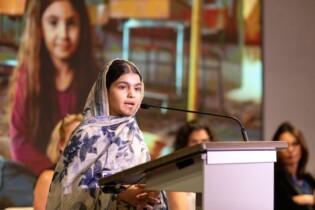
UNICEF Climate Advocate Urges World Leaders To ‘Include Children’ in Climate Discussions
The UN General Assembly High-Level Week (22-30 September) has been an opportunity for the world to convene on the most pressing issues of the day, from multilateralism, global financing, gender equality, non-communicable diseases, and AI governance.
Loss and Damage at COP30: Indigenous Leaders Challenge Top-Down Finance Models
As climate-induced disasters continue to devastate the Global South, nations are steadily mounting pressure at the United Nations for wealthier countries to deliver on long-promised climate reparations through the Loss and Damage Fund. For Indigenous peoples, whose territories are often the most ecologically intact yet most damaged by climate change, these negotiations define survival, sovereignty and recognition as rights-holders in global climate governance.
Smallholder Farmers Are Not ‘Beneficiaries’, but the ‘Co-Creators of Change’
Eliud Rugut comes from generations of farmers, yet his family expected him to move out of their home and pursue another career.
Not Seen in Living Memory: Kashmir’s Rivers Run Dry, Snow Disappears, and Hope Dissipates
The picturesque Kashmir Valley is battling nature’s fury. This time of year, its majestic mountains would typically be capped with thick snow, and its emerald streams would gush with fresh waters. However, none of these scenes are visible this year.
Who Will Save Nigeria’s Coastal City on the Brink of Extinction?
In 2021, Ojajuni Olufunsho, a 53-year-old resident of Ayetoro, a town along the Atlantic coast, southwestern Nigeria, saw her home swept away by the encroaching sea. What was once a spacious 10-room house, a sanctuary for Olufunsho and her five children, was swallowed by the relentless force of rising sea waters.
COP29: Advancing work for Climate Finance and for Climate-Adapted Agri-Food Systems
Frustrations over the pace of climate action and the size of the finance target agreed in Baku are valid from the perspective of low-income countries, especially Small-Island Developing States (SIDS). It is also important to recognize that there has been real progress in some countries at the agri-food-nutrition-climate-water-nature-livelihoods intersection, and this seems to be particularly the case in some countries in the Alliance of Champions for Food Systems Transformation (ACF).
Pacific Community Calls Out Urgency of Climate Loss and Damage Finance for Frontline Island Nations
Advancing development of the new Climate Loss and Damage Fund was a key call by Pacific Island nations at the COP29 United Nations Climate Change Conference being held in Azerbaijan in November. For Pacific Island Countries and Territories, the fund represents a critical step towards addressing what they consider a gross climate injustice: despite contributing less than 0.03 percent of global greenhouse gas (GHG) emissions, they bear the brunt of climate change's devastating impacts.
COP29 Falls Short on Finance
COP29, the latest annual climate summit, had one job: to strike a deal to provide the money needed to respond to climate change. It failed. This was the first climate summit dedicated to finance. Global south countries estimate they need a combined US$1.3 trillion a year to transition to low-carbon economies and adapt to the impacts of climate change. But the last-minute offer made by global north states was for only US$300 billion a year.
Youth-Led Landmark Climate Change Case Starts in The Hague
The intersection of law, diplomacy, and science will come under the spotlight at the International Court of Justice hearings starting today (Monday, December 2, 2024) in The Hague as the court starts its deliberations into the obligations under international law of UN member states to protect people and ecosystems from climate change.
Explainer: Why COP29 Baku Outcome is a Bad Deal for Poor, Vulnerable Nations
The culmination of bitter, difficult, and challenging climate negotiations concluded with an announcement from the COP29 Presidency of Azerbaijan of the "agreement of the Baku Finance Goal—a new commitment to channel USD1.3 trillion of climate finance to the developing world each year by 2035." This is on top of the USD 300 billion that the developed world is to extend to developing nations annually by 2035.
Can Pay, Won’t Pay—COP29 Outcome Far from Promised Historic Deal of a Lifetime
They say it is taboo to talk about money. But this is exactly what developing countries came for: to haggle and push for the climate finance deal of a lifetime, as the climate crisis is, for them, a matter of life and death. Wealthy nations also came for their own deal of a lifetime—to hoist the climate finance burden on the private sector as they take the bare minimum financial responsibility.
Global Climate Challenges: Perspectives from a Chinese COP29 Delegate
As COP29 draws to a close, voices from diverse regions have shed light on their contributions, challenges, and aspirations in tackling the climate crisis.
Insights From Negotiator into How COPs Move Needle Towards Healthy, Liveable Planet
Every year, the Conference of the Parties creates a global milestone for the climate movement, setting new standards and advancing action towards a net-zero planet to sustain all life on earth. COPs provide a platform for the global community to agree on what it would take to restore planet Earth and the contributions that all signatories to the Paris Agreement should make.
Once in a Blue Moon, Things Don’t Fall Apart
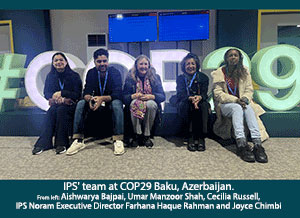
The drive home is uneventful. Our Bolt driver is a careful driver—the bright, half-moon provides a delightful end to an evening of song and good food. Our last night as an IPS team at COP29 in Baku, Azerbaijan.
Explainer: Green Climate Fund Draft Negotiations at COP29
The Green Climate Fund (GCF) negotiations brought attention to the progress, challenges, and future strategies for enhancing its effectiveness in fostering a just and sustainable energy transition.
Migration Remittances: Pursuit of Greener Pastures Opens Door for Climate Financing
COP29 delegates have elaborated on how Africa’s dependency on agriculture is becoming increasingly untenable amidst alarming levels of global warming, wrecking havoc on the sector. Coastal communities, pastoralists, and those in the drylands are in the thick of the climate chaos.
UN’s OCHA Calls to Correct the Imbalance in Climate Finance Allocation
As climate-induced disasters continue to wreak havoc worldwide, the Office for the Coordination of Humanitarian Affairs (OCHA), a UN body specializing in emergency response, has issued a clarion call for an ambitious and fair global climate finance goal at COP29. Greg Puley, Head of the Climate Team at OCHA, highlighted the pressing need for enhanced disaster risk reduction and climate resilience measures, particularly in vulnerable and conflict-affected regions.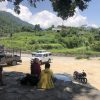
Where Is Mental Health in Global Climate Negotiations?
The mental health impacts of climate change are not widely discussed, but increasing evidence shows how climate change is affecting mental health and raising the risk of new mental health challenges. Experts say that existing systems are not equipped to cope with the current and additional challenges related to health and mental health caused by climate change.
Science Ignored, Promises Delayed: Bangladesh’s Environment Minister Expresses Dismay Over COP29 Outcomes
Syeda Rizwana Hasan, an adviser to the interim government of Bangladesh and as Minister of Environment, Forestry, and Climate Change, urged the global and regional leaders to prioritize ambitious, evidence-based climate targets in the climate negotiations.
Healing Minds, Empowering Women: Ghana’s Climate Change Battle
As climate change wreaks havoc across the globe, its effects are most acutely felt by those living in vulnerable coastal and rural communities.
Nigeria Day at COP29: Celebrating Diversity and Driving Climate Action
The Nigeria Pavilion came alive with vibrant colors, cultural pride, and meaningful discussions during the celebration of Nigeria Day this week at COP29.Next Page »


IPS COP29 Special Report

The Week with IPS

NEXT STOP - SDGs
Tracking global progress towards a sustainable world
Tracking global progress towards a sustainable world
