
Friday, November 6, 2026



News and Views from the Global South
Environment
From Climate Change to Covid, Are We Ready to Deal with Disasters?
In the last 20 years, disasters affected over 4 billion people. At global level we witness on average one sweeping disaster a day, the majority of which are floods and storms. From the Covid-19 pandemic to climate change, calamities are taking new shapes and sizes, infiltrating every dimension of society. From the emotional to the political, how do we deal with disasters? How can we create a whole-of-society approach to disaster risk reduction?
Damage to Coral Reefs Hurts Fishing Communities in Central America
As fisherman Luis Morán walked towards his small boat, which was floating in the water a few meters from the Salvadoran coast, he asked "How can the coral reefs not be damaged with such a warm sea?”
Scream of the World: Volcanos and Earthquakes
In February the killing of the Italian ambassador, Luca Attanasio, in the vicinity of the Virunga National Park in eastern Democratic Republic of the Congo, did for a short while put the global spotlight on this troubled area, where warfare, poverty and general insecurity generate immense human suffering.
Time to End Generational Injustice with a ‘Global Blue New Deal’ to Protect Oceans
Increasingly, youth are rising up to declare that they've had enough of the cyclical exploitation of the environment that jeopardizes their own future.
The Ocean’s Silent Killer: Breaking Down Overfishing
You don’t have to look too hard to find some news network or media outlet talking about water pollution, plastic waste, CO2 emissions, and climate change.
Fresh Air, Clean Water
You want to breathe fresh air and have access to clean water? I guess you do, just like all of us. As populations in the so-called developed countries, we love to go for holidays in places where on high mountains you get to breathe deeply and enjoy the fresh air, where the oceans or lakes are clean and refreshing. And how do we arrive there? Mostly by airplanes or cars, polluting the air whilst travelling to the desired destinations, causing harm to people and the planet. Interestingly, many people today, calculate their flight’s CO2 footprint and pay a certain amount of money to invest in renewable energy projects, in order to feel better about their travelling and to receive tax deductibility (depending on regulations of their country).
The Pandemic Should Not Leave Developing Countries Without a Voice (or a Vote)
Requiring in-person voting to elect the governing bodies of UN agencies may exclude the countries most affected by travel restrictions derived from the pandemic
UN’s Battle Against Climate Hazards Undermined by a Devastating Pandemic
The United Nations has been in the forefront of an ongoing battle against the growing hazards of climate change, including the destruction of different species of plants and animals, the danger of rising sea-levels threatening the very existence of small island developing states (SIDS), and the risks of oceans reaching record temperatures endangering aquatic resources.
On World Environment Day — Pakistan Showcases Ecosystem Restoration
Pakistan's Prime Minister Imran Khan has been making sure that all foreign dignitaries visiting the country get their hands dirty. With a shovel and a watering can, they are invited to plant a tree for one of the largest reforestation initiatives in the world — the Ten Billion Tree Tsunami Programme or TBTTP.
UN Urges Intense Restoration of Nature to Address Climate and Biodiversity Crises
Facing the triple threat of climate change, loss of nature and pollution, the world must deliver on its commitment to restore at least one billion degraded hectares of land in the next decade - an area about the size of China. Countries also need to add similar commitments for oceans, according to a new report by the UN Environment Programme (UNEP) and the Food and Agriculture Organization of the UN (FAO), launched as the UN Decade on Ecosystem Restoration 2021-2030 gets underway.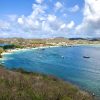
Life Below Water – the UN Calls for Action on Ocean Protection
President of the United Nations General Assembly Volkan Bozkir has told a high-level debate on oceans that the world cannot afford to delay action on ocean protection. “There is simply no scenario wherein we live on a planet without an ocean,” he said.
Bridging the Gaps Between Climate Action & Biodiversity Preservation
With the climate negotiations getting more and more intense in the light of ensuring meaningful achievements in the upcoming COP- 26 summit in Edinburgh, an event that is key to move forward the pathway towards a net zero future started in Paris, this year World Environment Day on June 5 assumes an even more emblematic meaning.
Sowing Water by Restoring Ancient Ditches in the Peruvian Highlands
In the highlands near the capital of Peru, more than 3,000 metres above sea level, ageold water recovery techniques are being used to improve access to water for 1,400 families, for household consumption and for crops and livestock.
Why Investing in Women Is Key to Achieving the Sustainable Development Goals
Last year, the Asia-Pacific region recorded its worst economic performance in decades. With the pandemic far from over, the region’s recovery is slow, fragile and highly uneven both across and within countries. As the region struggles to recover, how can countries rebuild their economies and revive their development?
2021: The Year that Matters for the Poorest People on the Planet
This year is being described as pivotal for climate change. That’s not only because we’re reaching a point of no return when it comes to the rise in global temperature, it’s because the 26th UN Climate Change Conference of the Parties – commonly known as COP26 – is due to take place in November in Glasgow.
World Environment Day 2021
 These are just some of the beautiful ecosystems that we are lucky to have on our planet.
An ecosystem is the interaction between living things and their surroundings – from plants to animals to people.

Is Sharing More than Water the Key to Transboundary Governance in the Meghna River Basin?
Kajol Miah is a rice farmer from the Bangladesh side of the Meghna River Basin. And in towns on the Indian side of the river basin, Bangladeshi rice is in great demand.
It’s Time to Reimagine Our Relationship with Nature
Our natural earth is dying. It is on the brink of collapse. Due to human impacts the planet is losing species – its biodiversity – at a rate so alarming it’s said to be comparable to the 5th mass extinction 65 million years ago, bringing the era of the dinosaurs to an end. Just 15% of the world’s forests remain intact, and only 3% of the world’s oceans are free from human pressures.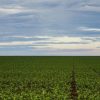
Illegal Clearing by Agribusiness ‘Driving Rainforest Destruction’
Deforestation in Latin America and the Caribbean accounts for 44 per cent of the global loss of tropical forests, with most of the conversion to agricultural land being carried out illegally, concludes a study by the non-profit organisation Forest Trends.
– Why Experts are Saying It’s a ‘Make or Break’ Moment for Forests –
On the occasion of World Environment Day, 5 June 2021, drawing from IPS’s bank of features and opinion editorials published this year, we are re-publishing one article a day, for the next two weeks. The original article was published on April 28 2021

Why Stakeholder Coalitions Could Be Key to the Glasgow Climate Summit’s Success
The past few weeks brought a burst of optimism on the climate front. It began on April 18 with the US-China announcement on climate cooperation. This was followed in quick succession by the EU Parliament’s vote to cut emissions 55% by 2030, the UK’s promise of a 78% cut by 2035, Japan nearly doubling their commitment from 26% to 46% based on 2013 levels and US President Biden’s pledge of a 50-52% reduction, also by 2030 (compared with 2005 levels).« Previous Page — Next Page »





Through our global network of local writers, we are continuing our award-winning coverage of global and local environmental challenges, with a focus on the people for whom the ecosphere matters in a direct way: rural dwellers who have little means to protect themselves against adverse conditions; communities that need to switch to sustainable development in order to survive; poor women and children, who are the most vulnerable in natural disasters. Sponsored by the United Nations Environment Program (UNEP), the United Nations Development Program (UNDP) and The World Bank (WB), IPS also maintains the award-winning Tierramérica, a specialised information service on environment and development.

The Week with IPS

Tracking global progress towards a sustainable world


