
Friday, November 6, 2026



News and Views from the Global South
Environment
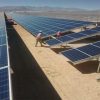
Where Will Global South Rank in New Green Economic Order?
With widespread calls for green transitions in the wake of the COVID-19 crisis, developing countries are predicted to remain at the bottom of the global economic ladder, a study claims.Change is Coming for Youth-led Ocean Activism
The youth’s role in environmental action remains crucial and leaders must ensure that they are given proper access under current circumstances to carry out that work, activists said at a online meeting held this week.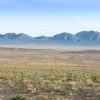
Curbing Land Degradation & Protecting the Environment in Mongolia
Mongolia is one of the most sparsely populated countries in the world. Yet, more than 70 percent of its surface is affected by land degradation. Mining activities in several parts of the country have been a source of humanitarian and environmental concern. However, different stakeholders are coming together to work towards restoration and rehabilitation.
Stay Home? Wash Hands? But 1.8 Billion Remain Homeless & 3.0 Billion Have No Access to Water
The relentless battle against the devastating coronavirus pandemic has been underlined by several widespread advisories from health experts – STAY HOME. WASH YOUR HANDS. WEAR MASK. KEEP SOCIAL DISTANCE.
We Cannot Let the Education Gap Widen at the Start of the Decade of Action
Prior to the COVID-19 pandemic, we estimated that 75 million children and youth - of whom 39 million are girls - were not able to access a quality education in countries impacted by armed conflicts, forced displacement, natural disasters and climate change-induced emergencies. The impact of COVID-19 has both globally and exponentially deepened the already existing critical education crisis.
COVID-19: Why We Must Reset Our Thinking
Covid-19 is the most significant event since the Second World War. It changes everything. It brings great sadness to many of us as we lose loved ones, as we see people losing their jobs, and as we see people around the world suffering immensely.
Why Reproductive Rights Must Be a Critical Part of Our Arsenal to Fight Pandemics
Sexual and reproductive health and pandemics might seem to be unrelated topics, but large and dense populations are drivers of the high velocity transmission of COVID-19, and there are lessons to be learned for the future.
COVID-19 Stimulus Measures Must Save Lives, Protect Livelihoods, and Safeguard Nature to Reduce the Risk of Future Pandemics
There is a single species that is responsible for the COVID-19 pandemic - us. As with the climate and biodiversity crises, recent pandemics are a direct consequence of human activity – particularly our global financial and economic systems, based on a limited paradigm that prizes economic growth at any cost. We have a small window of opportunity, in overcoming the challenges of the current crisis, to avoid sowing the seeds of future ones.
Why the International Day of Multilateralism Must Start a New World Order
In our current COVID 19 context of suffering and fear, that may sound like a strange and spooky quote. But let’s be clear: what we have achieved so far in the present is not - and shouldn’t be - indicative of what we can achieve in the future.
Haunting Forest Spirits – is Mother Nature Striking Back?
Epidemic diseases are not random events that afflict societies capriciously and without warning, on the contrary, every society produces its own specific vulnerabilities. To study them is to understand the importance of a society's structure, its standard of living, and its political priorities. […] Epidemics are a mirror, they show who we really are: Our ethics, beliefs, and socio-economic relationships. Frank Snowden 1
Time to Raise the Ambition for Climate Action
In recent days we have seen the understandable decision reached to postpone the UN climate change conference – COP26 – which was due to take place this November. As the world reels from the widespread impacts of the coronavirus crisis, it is the right call.
Bioenergy, the Ugly Duckling of Mexico’s Energy Transition
Rosa Manzano carefully arranges pieces of wood in a big mud igloo that, seven days after it is full, will produce charcoal of high caloric content.
The Cost of Coronavirus in Africa: What Measures can Leaders Take?
With the novel coronavirus COVID-19 having reached the African continent, countries are getting ready to manage the spread of the virus and ensure that their fragile health systems can cope. Images from China and Europe give many reasons for concern.
Asia-Pacific Response to COVID-19 and Climate Emergency Must Build a Resilient and Sustainable Future
The unprecedented public health emergency triggered by the COVID -19 pandemic and its multi-faceted impact on people’s lives around the world is taking a heavy toll on Asia and the Pacific. Countries in our region are striving to mitigate the massive socioeconomic impact of the pandemic, which is also expected to affect the region’s economic health. In its annual Economic and Social Survey of Asia and the Pacific 2020 launched today, the United Nations Economic and Social Commission for Asia and the Pacific (ESCAP)expectsgrowth in Asia-Pacific developing economies to slow down significantly this year.
The Boardwalk For Birds: Protecting Lake Victoria’s Dunga Beach Wetland
At around 11am on a Saturday, Luke Okomo arrives at Dunga Beach, on the outskirts of Kenya’s Kisumu City, and heads straight to what is known as the ‘Dunga Papyrus Boardwalk’.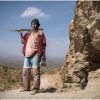
Growing Youth Activism for Environmental Protection in Africa
The mining sector in Africa is facing radical change as youth activists take action against the environmental degradation caused by mining industries. Tensions between activists and the mining industry have raised, however, concerns over human rights abuses.
Pandemic Crisis May Trigger Societal Restructuring
The Chinese word for crisis consists of two characters - “weiji”. Wei means danger and ji means opportunity. Every crisis is pregnant with danger and risks but also with opportunities – for some to make money, for others to learn valuable lessons, and for society to reorient or restructure its priorities, institutions and even the system.
Martin Khor, Third Worldist
Martin Khor Kok Peng passed away just after the end of the first quarter of 2020. He leaves behind an unusually rich legacy. Atypically for people mainly working in the worldideas, he was also a very practical and pragmatic activist who successfully built and sustained several important initiatives which will live on after him.
In memoriam ‒ Martin Khor
We are greatly saddened by the passing of Martin Khor, a long-time friend and colleague, an undaunted fighter for the poor and underprivileged, a passionate believer in a more balanced and inclusive multilateralism, a rare intellectual and eloquent orator, an icon of the Global South worthy of veneration, greatly respected for his struggle for justice and fairness against the dominance and double-standards of big economic powers.
Walking the Talk on Climate Change after the Pandemic: Reorienting State-Owned Enterprises towards Sustainability
This year started with the news of the appearance of a new virus, COVID-19. The impact and severity of its effects in public health, mortality and the world economy are overwhelming. No public health system was prepared for this crisis, and yet governments are reacting deploying different policies to mitigate the crisis, and recover as fast as possible.
GEF Project to be Game-changer for Trinidad Quarries
 A Trinidad and Tobago parliamentary report in 2018 made two disturbing observations about that country’s quarry sector:
- Of the 67 mining operators on record, only 6 were operating with current licenses;
- The State loses large sums in the form of unpaid/uncollected royalties from quarry companies.
« Previous Page — Next Page »





Through our global network of local writers, we are continuing our award-winning coverage of global and local environmental challenges, with a focus on the people for whom the ecosphere matters in a direct way: rural dwellers who have little means to protect themselves against adverse conditions; communities that need to switch to sustainable development in order to survive; poor women and children, who are the most vulnerable in natural disasters. Sponsored by the United Nations Environment Program (UNEP), the United Nations Development Program (UNDP) and The World Bank (WB), IPS also maintains the award-winning Tierramérica, a specialised information service on environment and development.

The Week with IPS

Tracking global progress towards a sustainable world


