
Friday, November 6, 2026



News and Views from the Global South
Environment

Harness Youth to Change World’s Future
Vanessa Nakate of Uganda may have been cropped out of a photograph taken at the World Economic Forum, but she along with Swedish activist Greta Thunberg have made the climate crisis centre stage.
Mexico’s Plan to Upgrade Hydropower Plants Faces Hurdles
Water security and profitability are the Achilles heels of the plan to modernise 60 hydroelectric plants in Mexico, drawn up by the administration of President Andrés Manuel López Obrador.
Zimbabwe’s Afforestation Challenge
“I have never planted a tree in my life,” laughs Jairos Saunyama, a tobacco farmer, revelling at the absurdity of the question of whether he is involved in the country's afforestation efforts. Sawunyama is one of thousands of farmers who are blamed by local conservationists for turning the country's forests into deserts and dust bowls.
A Positive Policy Turn for People Most Vulnerable To Drought Worldwide
The international community is developing policy measures and actions to help the people most vulnerable to drought to take early action to avoid loss of life, and the heavy and growing losses of livelihoods and damage to property and ecosystems following droughts.
Is It Time to Postpone the 2020 Climate Summit?
With the coronavirus pandemic sweeping the planet and the governments of both wealthy and poorer nations overwhelmed by the demands of managing a response, the scheduling of this year’s critical UN Climate Summit is suddenly in doubt.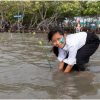
Why Empowering National Human Rights Institutions Helps on the Quest for Healthy Earth?
We are living in a critical time. As we face existential environmental challenges from climate crises to the mass extinction of species, it is difficult sometimes to see solutions and new ideas. This is why we all need to celebrate and give visibility to creative and courageous efforts of people and organizations striving towards a healthy planet for all.
Fisherfolk Fix Both Food and Climate by Closing Fishing Grounds
Samsul sounded very happy last Monday (Mar. 16) when recounting his experience of catching crabs worth more than $60 in a single day.
Air Pollution: A Problem We Can Solve in Our Lifetime
Over the past few years, worsening air quality in India—and in north India specifically—has awakened policy makers and civil society to take urgent action.
Women & Climate: Planting a Global Forest in a Connected World
In January of this year, Britain’s Prince Harry and his wife Meghan, the Duke and Duchess of Sussex, shocked much of the world when they announced they would be stepping down from their roles as senior royals.
3Returns Blog
On Thursday 20 and Friday 21 February, the Global Green Growth Institute (GGGI) in partnership with the Ministry of Natural Resources and Environmental Conservation (MONREC) and the University of Queensland (UQ) held a validation workshop on the 3Returns Model and Framework, presenting an Investment Case for Coastal Landscape Mangrove Restoration in Myanmar through the findings from an Economic Appraisal of Ayeyarwady Mangrove Forests, Bio-based Value Chains for Mangrove Restoration and Benefit Sharing Mechanisms. The event proved informative for both participants and presenters alike, providing critical insights and opening dialogue between multiple government departments.
Thirsting for Water Security?
Water is essential and indispensable for life on earth. We know that; and many of us have perhaps heard, written and uttered these words themselves a ‘million’ times.
Young People Bring Solar Energy to Schools in the Argentine Capital
"The idea came to a group of schoolmates and me in 2014, but we never thought it could become a reality," says Sebastián Ieraci, 23, as he points to a multitude of photovoltaic solar panels shining on the roof of the Antonio Devoto High School in the Argentine capital.
Coronavirus & Water Pandemics: Doing the Math
As the COVID-19 coronavirus pandemic spreads, guidance on how wash your hands and other measures intensifies. These recommendations are important, but they are hardly of value to the 40% of humanity lacking access to even the most basic hand washing requirements — soap and water 1.
Could the Coronavirus Pandemic have been Avoided if the World Listened to Indigenous Leaders?
Mina Setra remembers the story clearly. As a Dayak Pompakng indigenous person from Indonesia, when visitors from the city who came into her community; brought bottled water with them because they were worried about the water not being suitable for drinking.
Giant Itaipú Dam and Bacteria Join Forces for Clean Energy and Environment
 "It used to be complicated, I would have lunch with the flies," recalls Pedro Colombari, laughing, on his 400-hectare farm where he fattens 5,000 pigs and raises 400 cattle outside of a small town in southern Brazil.

Trinidad and Tobago Struggles to Meet its Biodiversity Targets
 Trinidad and Tobago, like many other signatories to the United Nations Convention on Biological Diversity, had made commitments in 2010, to achieve several biological diversity targets during the decade 2011 to 2020, commonly referred to as the Aichi targets. However, achieving most of those targets continues to be a work in progress.

Fight, Not Flight, Must Be the Strategy for Flattening the COVID-19 Curve
The number of coronavirus cases in Kenya has jumped to three after the government confirmed two more cases. President Uhuru Kenyatta has announced a raft of proactive measures to prevent the spread of the virus.
Changing Weather Patterns Spell Doom for Unprepared Pakistan Farmers
Unpredictable weather patterns in the form of excessive or prolonged rainfall are wreaking havoc for farmers across Pakistan as sowing and harvesting periods are severely affected.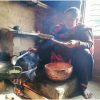
Air Pollution in South Asia: Biomass Burning Emissions & its Impact
A young adult man requires 15 m3 or 15 kg of air, 1.5 liters or 1.5 kg of water and 0.75 kg of solid food every day. This indicates around 87% of our everyday basic requirement is air.
An Ambitious Year for Climate Action Is a Big Year for Women’s Empowerment
This year, the Paris Agreement’s effectiveness as a global response to the climate crisis is being tested as governments are preparing to submit more ambitious national targets for mitigation and adaptation.
Landmark deep-sea mission to boost ocean action
A deep-sea scientific mission to uncharted depths in the Maldives and Seychelles will gather valuable data to support the Commonwealth Blue Charter on ocean action and train local scientists.« Previous Page — Next Page »





Through our global network of local writers, we are continuing our award-winning coverage of global and local environmental challenges, with a focus on the people for whom the ecosphere matters in a direct way: rural dwellers who have little means to protect themselves against adverse conditions; communities that need to switch to sustainable development in order to survive; poor women and children, who are the most vulnerable in natural disasters. Sponsored by the United Nations Environment Program (UNEP), the United Nations Development Program (UNDP) and The World Bank (WB), IPS also maintains the award-winning Tierramérica, a specialised information service on environment and development.

The Week with IPS

Tracking global progress towards a sustainable world


