
Tuesday, November 10, 2026



News and Views from the Global South
Environment
Opinion: Five Key Takeaways from India’s New Climate Plan
Last week, India announced its new climate plan, also known as its Intended Nationally Determined Contribution, or INDC. As the world’s third-largest emitter and a country that’s highly vulnerable to the impacts of climate change, it is encouraging to witness India investing in actions to tackle climate change while addressing poverty, food security and access to healthcare and education.
Shale Drives Uncertain New Geoeconomics of Oil
The emergence of fracking has modified the global market for fossil fuels. But the plunge in oil prices has diluted the effect, in a struggle that experts in the United States believe conventional producers could win in the next decade.
The Global South Will Make Its Contribution to Fighting Climate Change
Seen for years as passive actors in the fight against global warming, more than 100 countries of the Global South have submitted their national contributions to reducing greenhouse gas emissions and decarbonising their economies.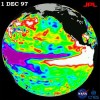
10 Million at Risk of Hunger Due to Climate Change and El Niño, Oxfam Warns
At least ten million of the poorest people face food insecurity in 2015 and 2016 due to extreme weather conditions and the onset of El Niño, Oxfam has reported.
Brazil’s Expanded Climate Targets Frustrate Environmentalists
Brazil’s greenhouse gas emissions reduction programme, hailed as bold, has nevertheless left environmentalists frustrated at its lack of ambition in key aspects.
Honduran Fishing Village Says Adios to Candles and Dirty Energy
A small fishing village on the Caribbean coast of Honduras has become an example to be followed in renewable energies, after replacing candles and dirty costly energy based on fossil fuels with hydropower from a mini-dam, while reforesting the river basin.
Opinion: The Party’s Over for U.N.’s Sustainable Development Goals
The Pope has left the U.N. and the traffic in Manhattan is back to normal. The hoard of government delegations, NGOs and civil society representatives are packing up and the press is moving on. The party’s over for the Sustainable Development Goals.
Pope’s Outspoken Views Rattle U.S. Conservatives but Not U.N.
Pope Francis’ outspoken views on some of the politically-charged hot button issues – including refugees, migration, human rights, climate change, Iran’s nuclear deal, U.S.-Cuban relations and the global arms trade – have touched a raw nerve in the United States.
Opinion: Secret Trade Negotiations Threaten Sustainable Development Goals
World leaders and Pope Francis met in New York Friday to announce 'a plan to transform our world', the Sustainable Development Goals.Brazil and Germany Take Lead in Tackling Climate Change
Brazil and Germany, the two largest national economies within their respective continents, are taking the lead in tackling climate change through outstanding policies and bilateral relations, according to experts.
Chile’s Altiplano Region Seeks Sustainable Tourism
Chile’s altiplano or high plateau region, pounded by the sun of the Atacama desert, the driest place in the world, is home to dozens of indigenous communities struggling for subsistence by means of sustainable tourism initiatives that are not always that far removed from out-of-control capitalism.
Opinion: Maldives Reflects its 50 Years at the U.N.
The 70th anniversary of the United Nations, which culminates at the high level segment of the General Assembly this week, has prompted numerous reflections on the organization’s many achievements: from its work to rebuild the world in the aftermath of war to scores of lifesaving health programs and peacekeeping efforts.
How to Fix Environmental Woes in Buenos Aires Shantytown
Children have been poisoned by lead in Villa Inflamable, a shantytown on the south side of the capital of Argentina. Resettling their families involves a socioenvironmental process as complex as the sanitation works in one of the most polluted river basins in the world.
Opinion: Indonesia’s Climate Commitment Ahead of Paris Talks
Indonesia’s Ministry of Environment and Forestry took a step forward on the road to Paris when it published a draft of its new climate plan, or Intended Nationally Determined Contribution (INDC), for public consultation on Sep. 1, 2015. As the world’s sixth-largest emitter of greenhouse gases, Indonesia’s climate commitment is an important piece of the global response to climate change.
Cuban Agroecological Project Foments Local Innovation
Armando Marcelino Pi divides his day between the university, where he teaches philosophy, work on his family farm, and coordinating a group of 33 agroecological farmers, in this mountainous rural municipality in western Cuba.
Opinion: Another U.N. General Assembly Talk Fest Begins
UNGA 70 formally commenced on Sep. 15. In accordance with custom, it elected a new President, Denmark's Mogens Lykketoft, who has picked as the theme for his tenure as the President, "The UN at 70 - A New Commitment to Action".
Africa Sees U.N. Climate Conference as “Court Case” for the Continent
As the clock ticks towards the United Nations climate change conference (COP21) in Paris in December, African experts, policy-makers and civil society groups plan to come to the negotiation table prepared for a legal approach to avoid mistakes made during formulation of the Kyoto Protocol.Strong Climate Deal Needed to Combat Future Refugee Crises
Climate change has been held responsible many of the social and economic woes affecting mainly the poorest in the global South and now many are seeing it as one of the root causes of refugee crises.
G20 Finance Ministers Committed to Sustainable Development
Finance ministers and central bank governors of the world’s 20 major economies, accounting for 66 percent of world population, have pledged to “promote an enabling global economic environment for developing countries as they pursue their sustainable development agendas”.
Mental Health Another Casualty of Changing Climate
Jun* is in chains, tied to a post in the small house that resembles a fragile nipa hut. His brother did this to prevent him from hurting their neighbours or other strangers he meets when he’s in a ballistic mood. Jun has been like this for three years now, but since Typhoon Haiyan hit the Philippines two years ago, his symptoms have worsened.
Women Revolutionise Waste Management on Nicaraguan Island
A group of poor women from Ometepe, a beautiful tropical island in the centre of Lake Nicaragua, decided to dedicate themselves to recycling garbage as part of an initiative that did not bring the hoped-for economic results but inspired the entire community to keep this biosphere reserve clean.« Previous Page — Next Page »





Through our global network of local writers, we are continuing our award-winning coverage of global and local environmental challenges, with a focus on the people for whom the ecosphere matters in a direct way: rural dwellers who have little means to protect themselves against adverse conditions; communities that need to switch to sustainable development in order to survive; poor women and children, who are the most vulnerable in natural disasters. Sponsored by the United Nations Environment Program (UNEP), the United Nations Development Program (UNDP) and The World Bank (WB), IPS also maintains the award-winning Tierramérica, a specialised information service on environment and development.

The Week with IPS

Tracking global progress towards a sustainable world


