
Monday, November 16, 2026



News and Views from the Global South
Environment
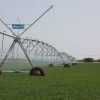
ARGENTINA: Water – Some Waste It, Some Want It
In Argentina, the availability of water far outstrips demand, yet 11 percent of the population still lacks piped water, while a large proportion of the rest squanders it without a second thought.West Papuan Conflict Begs Political Solution
The Indonesian government’s offer of development for West Papua, following the crackdown by security forces on a pro-independence meeting in Jayapura in October, is unlikely to succeed in the absence of political dialogue and calls for self-determination are expected to continue.
CLIMATE CHANGE: City Apartheid Built Turns Green
Something unusual is happening in Atlantis. Created in the 1970s to fulfill the apartheid government's agenda to evict "coloured" South Africans from Cape Town, Atlantis has always been best known as the city that apartheid built.
Civil Society organisations are sticking to their guns: Women will be hardest hit by the climate change
 Civil Society organisations are sticking to their guns: Women will be hardest hit by the climate change. Zuki Zimela reports from COP 17 in Durban.
PERU: Humala Surrounds Himself with Uniforms
Peruvian President Ollanta Humala is taking an increasingly hard-line stance against protests, and is losing important allies less than five months into his term.Op-Ed: Facing Peak Oil and Peak Gas: In Search of the Lesser Evil
The U.S. oil geologist Marion King Hubbert predicted, already in 1956, that the global production of oil will reach its all-time high roughly when we have used one half of the world's oil reserves. This is because geologists tend to find the biggest fields first, and because oil wells become tired during the production phase. The more is taken out, the more difficult it gets to bring the remaining oil to the surface.
Q&A: “‘Sustainable Development’ Is Often Used Gratuitously”
People are disillusioned with global conferences "that mobilise thousands of people and fail to achieve real global progress" in reducing greenhouse gas emissions, says Boris Graizbord, head of the sustainable development studies programme at one of Mexico's leading research universities in the social sciences
SOUTH SUDAN: Refugees Reluctant to Move to Safety as War Looms
In the sprawling settlement of Yida, just south of the Sudan border, more than 20,000 people have gathered after fleeing battles in the country's Southern Kordofan state. But they now find themselves caught up in a new conflict, as recent clashes along the frontier have some warning of the possibility of war.
EUROPE: Cranes Overstay Their Welcome as Weather Grows Warmer
Migrating flocks of cranes flying overhead are normally a harbinger of spring and autumn in Europe. But due to rising temperatures, the birds are sticking around increasingly longer in the fall before heading south.
SOUTH AFRICA: Climate Change Affecting Fisherwomen’s Livelihoods
Having observed changes in the sea and the life cycles of the rock lobsters that their livelihoods depend on, a group of fisherwomen from the Western Cape, South Africa are calling on government to adjust fishing seasons to adapt to what they claim are climate change-related alterations.
Forging Bond Will Be Test for Co-ops and Occupy Movement
Canadian cooperatives may grow as the global Occupy movement raises the profile of their business model through boosting interest in credit unions over traditional banks, but uncertainty remains about the degree to which the two camps will join forces from here on.
The Green Climate Fund
 The Green Climate Fund is meant to help developing countries with 100 billion dollars a year by 2020 to adapt to the effects of climate change. The creation of the GCF was approved during the COP16 in Cancun. Civil society and some developing nations noted that governments have made trillions of dollars available for the bank and financial sector and that the world's military budget is more than 10 times what is needed for the GFC. Up until now, countries have not been able to agree on a single mechanism to draw public funds.
Durban Platform
After two weeks and an additional 29 hours of intense and even bitter negotiations, the 193 nations participating in the United Nations climate talks agreed to a complex and technical set of documents called the "Durban Platform." The biggest development reached at dawn Sunday is an agreement to negotiate a new global treaty to reduce emissions by 2015. 
Global emissions from burning fossil fuels
Documents under negotiation in Durban, South Africa acknowledge the science-based emissions reduction target of 25 to 40 percent by 2020. Those reductions and that timeline are what is needed to stay below two degrees Celsius. The draft text says this would be the target to be agreed on at COP 18. The science shows that global emissions need to fall to 44 Gt by 2020 and continue to decline by two percent per year.
CLIMATE CHANGE-BRAZIL: Contradictory Goals in Agriculture
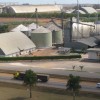
Brazil aims to meet its climate change targets in agriculture by stimulating techniques that have been proven to reduce greenhouse gas emissions – but which may increase the use of toxic agrochemicals, activists say.
MEXICO: Saving Native Seeds to Protect Food Heritage
When Guadalupe Ortiz planted gardens in Mexico, she was struck by the importance of saving and preserving the seeds, and decided to do something about the problem of seed supply.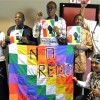
Indigenous Peoples Call for REDD Moratorium
A new coalition of indigenous peoples and local communities called for a moratorium on Reducing Emissions from Deforestation and Forest Degradation (REDD) programs, a key part of the negotiations for a new international climate treaty that took place over the last two weeks in South Africa.
Cranes Overstaying Their Welcome as Weather Grows Warmer
As a result of warmer autumn temperatures, cranes are remaining in Germany longer than usual, causing damage to crops and sparking conflicts between farmers and environmentalists.Ecobreves – HONDURAS: Landslide Risk Areas to be Stabilized
The city government of Tegucigalpa will allocate 12 million dollars to the stabilization of areas prone to landslides in the neighborhoods of El Berrinche and El Reparto.Ecobreves – BRAZIL: Record Increase in Transgenic Crops
The land area planted with genetically modified seeds in Brazil has increased 20.9 percent over the last year, reaching 31.8 million hectares, according to a study by the consulting firm Céleres.Ecobreves – ARGENTINA: Fundraising Drive for the Creation of a National Park
A campaign was launched at the beginning of December in Buenos Aires to raise the funds needed to expropriate a private landholding in northeastern Argentina and turn it into a national park.« Previous Page — Next Page »


Through our global network of local writers, we are continuing our award-winning coverage of global and local environmental challenges, with a focus on the people for whom the ecosphere matters in a direct way: rural dwellers who have little means to protect themselves against adverse conditions; communities that need to switch to sustainable development in order to survive; poor women and children, who are the most vulnerable in natural disasters. Sponsored by the United Nations Environment Program (UNEP), the United Nations Development Program (UNDP) and The World Bank (WB), IPS also maintains the award-winning Tierramérica, a specialised information service on environment and development.

The Week with IPS

Tracking global progress towards a sustainable world


