
Tuesday, November 17, 2026



News and Views from the Global South
Environment

Still Awaiting a Roadmap for Sustainable Development
The road to the crucial Rio+20 conference on greening the world economy next year has hit a setback with the breakdown of the 19th session of the U.N. Commission on Sustainable Development after 10 days of intense negotiations.
BRAZIL: Women Break Down Barriers in Heavy Construction
They represent just seven percent of the workers building the Santo Antonio hydroelectric dam on the Madeira River, which cuts across the Amazon jungle in northwest Brazil. But the women workers total 1,200, and many of them have had to break down barriers to jobs seen as the preserve of men.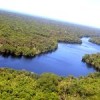
Guatemalan Beaches Threatened by Iron and Gas Operations
"If they come here to extract iron from the beach, it will mean the destruction of our natural wealth and the end of tourism," warned Leonel Palma, a hotel employee in Puerto de San José on Guatemala’s Pacific coast, where the government has granted mineral exploration licenses.
Pension Fund Investors May be to Blame for Escalating Food Prices
Long-term investors like pension funds are probably the reason why the prices of commodities, including crops, have been driven to a higher level than in 2008 when food riots erupted in 30 countries, according to the British nongovernmental organisation Christian Aid.
BRAZIL: New Forest Code Could Hinder Climate Goals
The adoption of a new Forest Code in Brazil could threaten efforts to curb Amazon deforestation, which was reduced 70 percent between 2004 and 2010.
DEVELOPMENT: Chinese Step In, Efficiently
For Jany Chen from Shanghai, concern often-raised in Europe and North America about the Chinese invasion of Africa is a lot of wasteful talk that deserves to be flushed down the toilet. Efficiently.KENYA: Legal Lacuna While Biotechnology Is Sneaked in
Farming with genetically modified organisms (GMOs) is becoming more widespread in Kenya due the promotion of biotechnology through clever schemes, exacerbated by the lack of a legal framework for the commercialisation of these controversial products.
Uganda Stoves Saving Fuel and Forests
Carbon finance is putting new and efficient charcoal stoves into hundreds of thousands of kitchens in Uganda – reducing charcoal use and protecting forests as well as saving money for poor households.
New Forest Code Could Hinder Climate Goals
Proposed amendments to the Brazilian Forest Code raise new alarm over Amazon deforestation.Ecobreves – ARGENTINA: Nuclear Accident Action Plan Proposed
An environmental organization in Argentina has proposed a citizen action plan in the event of a nuclear accident for use in Argentina, Chile, Uruguay and Paraguay.Ecobreves – BRAZIL: Nanotechnology Turns to Sugar Cane
The University of São Paulo Polytechnic School has developed a new technique to produce carbon nanotubes, microscopically thin cylinders of carbon atoms, using the gases generated by burning sugar cane bagasse, a by-product of sugar production.Ecobreves – HONDURAS: Clean-up of Yojoa Lake Begins
Over the past month, more than 33,000 square meters of parasitic plants have been removed from the waters of idyllic Yojoa Lake in western Honduras.Ecobreves – MEXICO: Cleaner Buses Take to the Streets
Public transportation contractors are introducing environmentally friendly buses in the eastern section of Mexico City.MEXICO: Little Oversight of Radiation Sources
In spite of the potential risks posed by unwanted or uncontrolled radioactive materials, Mexico lacks comprehensive mechanisms to keep track of these "orphan" sources, originally used in medicine or industry, and to prevent them going astray.PERU: Native Birds Under Threat from Illegal Logging
Unique species of native birds live in the transition zone in Peru between the Andes mountains and the Amazon rainforest, where illegal deforestation is destroying their habitat.Humanity Hitting the Resource Ceiling
Better living through using far fewer material resources is the only possible future, experts agree. Humanity is pressing up against the limits of a finite planet to provide resources like water, oil, metals and food, according to a new report released Thursday.
SIERRA LEONE: First Fruit Juice Company Adding Value to Farming
Crate loads of lush ripe mangos are stacked up, a sweet fragrance filling the air. Factory workers wait for their instructions, decked out in protective coats, rubber boots and hairnets. As they see each other kitted out for the first time, they break into giggles. This is a big week for Sierra Leone as its first fruit- processing plant goes into production.
Stray Dog Issue Hounds Animal Welfare in India
Moves to enact a new law on animal welfare in India have upset public health advocates, who fear it will interfere with efforts to control rabies-carrying stray dogs.U.N. to Host World Summit on Nuclear Safety
The severity of the recent nuclear accident at the Fukushima Daiichi power plant in Japan has prompted U.N. Secretary- General Ban Ki-moon to convene a high-level meeting of world leaders on a politically-sensitive issue: nuclear security.Seed Proteins May Help Plants Weather Drought
British researchers are working on techniques to improve seeds chances of surviving drought by tapping the potential of little-known proteins that regulate water intake.
INDIA: Waste to Energy Project Not So Green
A waste-to-energy (WtE) project in the heart of the Indian capital run by a powerful industrial family is testing the enforceability of the country’s environmental and zoning laws.« Previous Page — Next Page »


Through our global network of local writers, we are continuing our award-winning coverage of global and local environmental challenges, with a focus on the people for whom the ecosphere matters in a direct way: rural dwellers who have little means to protect themselves against adverse conditions; communities that need to switch to sustainable development in order to survive; poor women and children, who are the most vulnerable in natural disasters. Sponsored by the United Nations Environment Program (UNEP), the United Nations Development Program (UNDP) and The World Bank (WB), IPS also maintains the award-winning Tierramérica, a specialised information service on environment and development.

The Week with IPS

Tracking global progress towards a sustainable world


