
Thursday, November 19, 2026



News and Views from the Global South
Environment
In the End, U.S. Gets (Partial) Offshore Drilling Ban
As negotiators meet in Cancún to discuss how to mitigate the worst effects of climate change, the impacts of the oil spill disaster that unfolded earlier this year on the other side of the Gulf of Mexico are still rippling through Washington.ECUADOR: Oil Shake-Up Means Flat Fees for Foreign Companies
As the dust settles following contract negotiations with foreign oil companies, Ecuador is looking at a new map for its petroleum industry and trying to determine what it will mean in economic terms for this OPEC-member nation.Brazil Keeps a Grip on Bolivia’s Natural Gas Industry
Brazil's state-owned oil company Petrobrás maintains a solid and vigorous presence in natural gas production within Bolivian territory, even with the nationalisation of petroleum and gas in 2006 led by Bolivia's left-wing President Evo Morales.
UGANDA: Carbon Finance May Not Benefit Forest Communities
Uganda has lost more than two million hectares of forest since 1990, mostly converted to farmland by a growing population of smallholders. Carbon finance through the REDD programme is often presented as one way to arrest this destruction, but only if the benefits clearly translate to the grassroots.
PERU: Mineral-Rich Highlands Lack Legal Protection
More than 11 percent of Peruvian territory is distributed among mining concessions. Those mining blocks can include moors, river sources, and even protected natural areas.
CENTRAL AMERICA: Big Steps Forward for Nascent Recycling Industry
Waste recycling as a way to save money, create jobs and take care of the environment is finding footing in Central America, where hundreds of tonnes of paper, plastic, tyres and other products are now being marketed through innovative initiatives.
CLIMATE CHANGE: Will Year of Extremes End with a Whimper?
This year will likely be the warmest ever recorded, with soaring ocean temperatures resulting in a near record die-off of tropical corals, extreme heat and drought in Russia and massive flooding in Pakistan - all signs that climate change has taken hold.
Sharks Make It Through the Net, Bluefin Tuna Don’t
Governments have moved to ban the commercial fishing of at least two species of endangered sharks, but the Atlantic bluefin tuna received little protection at the end of a ten-day intergovernmental meeting here.CLIMATE CHANGE-INDIA: Scientists Warn, Gov’t Must Act
India’s first-ever major scientific assessment of its climate change scenario by the 2030s, released in November, has the report’s scientists rooting for the government to take concrete action.Ecobreves – HONDURAS: Company Fined for Environmental Damages
The thermal energy company San Lorenzo Light and Power (Lufussa), which operates in the southern Honduran city of the same name, will have to pay 32,000 dollars in fines for the damages resulting from a fuel spill in July 2009.Ecobreves – ARGENTINA: Another Setback for Law on E-Waste
The vote on a legislative bill about electronic-waste management, already with three years in the Senate, faced new objections and may not be passed until 2011.
Peru's Highlands Lack Legal Protection
Land-use regulations could put a halt to mining concessions in areas of Peru with high ecological value, like the highland plateaus of the north.Ecobreves – BRAZIL: Soy Biodiesel Produces Genetic Mutations
Contact with biodiesel, seen as an alternative fuel that is less harmful than fossil fuels, could be causing genetic mutations, concludes a doctoral thesis study by Daniela Morais Leme, at Brazil's State University of São Paulo.Ecobreves – MEXICO: Forest Communities Demand Effective Management
The indigenous communities that inhabit Mexico's forests should participate in all forest-use policies, according to a civil society campaign launched on Nov. 23.
CLIMATE CHANGE: Don’t Look to South Africa for Leadership
South Africa is Africa’s largest economy and the continent's biggest emitter of greenhouse gases. The country’s emissions per capita are on par with those of the United Kingdom, and more than twice as high as China’s emissions by the same measure.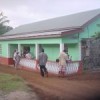
CARIBBEAN: Adapting to Disaster as the New Normal
Residents in the communities around Trinityville in the eastern parish of St. Thomas, Jamaica are used to being stranded for several days at a time.GUATEMALA: Legal Battle Over Wetland Oil Drilling
The 15-year extension of an oil-drilling contract in Guatemala's Laguna del Tigre National Park, one of Central America's most important wetlands, has triggered a legal fight against the government's decision, a battle waged by activists, academics and even government agencies.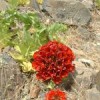
Genetic Flight of Chile’s Natural Jewels
Cactus, bushes, flowers and countless other plants are taken out of Chile daily to be studied, improved, marketed and patented. Due to the lack of regulations, the country can only stand by and watch them go.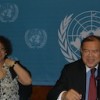
DEVELOPMENT: Economic Boom Worsened De-industrialisation of LDCs
Least developed countries (LDCs) in Africa did not use the commodity export boom of the mid-2000s to diversify their economies from commodity dependence to manufacturing value-added products. Significantly, the agricultural sector has also not benefited, with the result that LDC reliance on imported food has become even worse.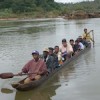
MADAGASCAR: New Livelihoods to Protect A River’s Life
The Nosivolo River has the greatest concentration of freshwater fish species in Madagascar. Strengthening protection of the river's biodiversity has involved transforming the livelihoods of local people.Hope and Pessimism Converge in Cancun
On Nov. 29, the 190-member Conference of Parties (COP) will flock to the Moon Palace Hotel, an all-inclusive luxury coastal resort in Cancún, Mexico, to discuss governments' progress on climate change.« Previous Page — Next Page »


Through our global network of local writers, we are continuing our award-winning coverage of global and local environmental challenges, with a focus on the people for whom the ecosphere matters in a direct way: rural dwellers who have little means to protect themselves against adverse conditions; communities that need to switch to sustainable development in order to survive; poor women and children, who are the most vulnerable in natural disasters. Sponsored by the United Nations Environment Program (UNEP), the United Nations Development Program (UNDP) and The World Bank (WB), IPS also maintains the award-winning Tierramérica, a specialised information service on environment and development.

The Week with IPS

Tracking global progress towards a sustainable world


