
Thursday, November 19, 2026



News and Views from the Global South
Environment
Ecobreves – CHILE: Last of the Huemul Deer in Danger
The construction of the Punilla hydroelectric dam in the Chilean region of Biobío poses a threat to some 40 huemul (Hippocamelus bisulcus), a type of deer living in that area of central Chile, warn local and foreign environmental groups.CLIMATE CHANGE: Recyclers Tout Benefits of Their Trade at Cancun Summit
Ezequiel Estay began collecting glass bottles in 1991 after losing his job with the Chilean media conglomerate Copesa. Now, years later, he heads Chile's National Movement of Recyclers and is a leader of the Latin American Recyclers' Network, which is questioning the climate benefits of the Clean Development Mechanism (CDM).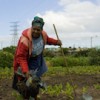
CLIMATE CHANGE: Turning Agriculture From Problem to Solution
Global agriculture contributes in the region of 17 percent to the greenhouse gas emissions that cause climate change, but according to the World Bank, climate smart agriculture techniques can both reduce emissions and meet the challenge of producing enough food for a growing world population.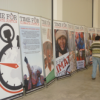
CLIMATE CHANGE: Rumours and Pessimism Reign Midway Through Cancun Summit
At the end of the first week of climate negotiations under way in this Mexican Caribbean resort city, it seems a distant possibility that the nearly 200 national delegations will agree on renewing the Kyoto Protocol, which expires in 2012.
CLIMATE CHANGE: REDD at Cancun Causes Angst in India
Forest rights advocates and indigenous community organisations from India are adding their voices to what promises to become the newest division in the climate talks here: the inclusion of Reducing Emissions from Deforestation and Degradation + in developing countries, or REDD+, as an agreement.INDIA: Brakes Applied to SUVs – ‘Socially Useless Vehicles’
Indian owners of sports utility vehicles (SUVs) and luxury cars, who have been benefiting from subsidies on diesel meant to help farmers, may soon have to pay real prices for their fuel.U.S.-WEST AFRICA: Report Urges Enhanced Maritime Security
The United States and its allies should give much more attention - and resources - to ensuring that weak West African governments along the oil- and gas-rich Gulf of Guinea can protect their territory and coastal regions from terrorists, drug and human traffickers, and other threats, according to new report by an influential think tank released here this week.
Southern Africa Collectively Gearing Up For REDD
The Southern African Development Community (SADC) is moving to support its member countries to tap into benefits from the reducing emissions from deforestation and forest degradation (REDD) framework.
LATIN AMERICA: Biodiversity Superpower Faces Development Dilemma
If Latin America is to sustain continued economic growth, it faces the dilemma of either threatening its rich biodiversity or transforming into a global leader in providing environmental services based on its unique ecosystems.
CLIMATE CHANGE: New Forest Agreement – REDD Hot Issue at Cancun
A large number of social organisations are not pleased with the international convention on Reducing Emissions from Deforestation and Forest Degradation (REDD) being negotiated at the COP16 climate summit.
CLIMATE CHANGE: Lost in Cancun
"The hurricane season officially ended on Nov. 30," a local shopkeeper told this journalist reassuringly as she entered his store with her hair blown in every direction by the wind on a drizzly, cloudy day.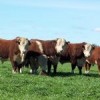
Quantifying Latin American Cattle Emissions a Vital Climate Tool
Some of Latin America's major cattle-producing countries will begin working as a team in 2011 to quantify the greenhouse-effect gas emissions from their bovine industry -- and to come up with options for reducing them.EUROPE: Talking Green, ‘Lending Unclean’
The European Bank for Reconstruction and Development is reneging on pledges to support low-carbon economic models in Eastern Europe, and is instead ramping up its lending for fossil-fuel energy projects, critics say.
ICELAND: Don’t Trust Those Fishy Certificates
New eco-labels on Icelandic seafood are misleading and unregulated, concealing practices that damage the environment, critics say.EU Plans to get Smart With Energy
The electricity grid in Europe is in desperate need of an IQ boost.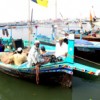
PAKISTAN: Too Many Nets, Too Little Fish
The last time Moazzam Khan saw sawfish in the Arabian Sea was in 1984. "At one time, salted and dried fish formed a large part of our exports," recalls Khan, director general of the Karachi Fisheries Department. "In the last 30 years, there may be other marine life that may have vanished of which we may not be aware."
ENVIRONMENT: Icelandic Fishing Quotas Turn a Blind Eye to Industry Practices
In Iceland, strict quotas on the fishing industry result in unnecessary waste and distort data, say critics of the system.COLOMBIA: Climate Science Reaching Out for Traditional Farmers’ Wisdom
The wide-ranging knowledge about climate variation possessed by native people and other small farmers, such as the people in one region of Colombia, is almost a perfect match to scientific measurements recorded on high-tech instruments.
Narco-Sharks Replacing Drug Mules
Sharks are facing a new threat: they are being fished off the Pacific coast of Central America and Mexico and used to smuggle cocaine to the United States, through Mexico.
AFRICA: Food Versus Biofuels Debate Continues
"We’re going to Cancún no better off than we were in Copenhagen," said Thuli Makama, the director of Friends of the Earth Swaziland, as she prepared to leave for the climate negotiations in Mexico.
Japan Under Fire for Abandoning Kyoto Pact
Japanese NGOs feel that Prime Minister Naoto Kan's categorical statement in parliament on Monday that his government would not under any circumstances be party to a continuation of the Kyoto Protocol, which was signed in that historic city in 1997, went "beyond irony".« Previous Page — Next Page »


Through our global network of local writers, we are continuing our award-winning coverage of global and local environmental challenges, with a focus on the people for whom the ecosphere matters in a direct way: rural dwellers who have little means to protect themselves against adverse conditions; communities that need to switch to sustainable development in order to survive; poor women and children, who are the most vulnerable in natural disasters. Sponsored by the United Nations Environment Program (UNEP), the United Nations Development Program (UNDP) and The World Bank (WB), IPS also maintains the award-winning Tierramérica, a specialised information service on environment and development.

The Week with IPS

Tracking global progress towards a sustainable world


