
Thursday, November 19, 2026



News and Views from the Global South
Environment
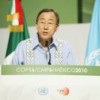
CLIMATE CHANGE: See the Green in REDD+, Say Top Leaders in Cancun
An entire body of leaders, spearheaded by U.N. Secretary- General Ban Ki-moon, is now looking at REDD+ as a panacea to global warming with multiple benefits thrown in.
Niger Herders Count Losses, Plan For the Future
Bacharou Gorel had 300 head of cattle before the food security crisis began in Niger. Today he has only 53 left.
Q&A: “Create a Protocol Based on Non-Emissions”
Latin America should create regional conventions to protect biodiversity and combat the impacts of climate change, according to Ecuadorian environmentalist Yolanda Kakabadse, president of the World Wild Fund for Nature International (WWF).
CLIMATE CHANGE: India Ups Ante with Offer for Binding Targets
A rough yardstick for identifying which Asian countries make the biggest ripples in Cancún is the number of journalists who crowd around the spokesperson immediately after a press conference.EL SALVADOR: Most Water-Stressed Country in Central America
Every night at 1:00 AM, Julio César Amaya gets up to turn on the faucet, because it is the only time that there is piped water in his neighbourhood - the poor district of San José, in the city of Soyapango, one hour east of the capital of El Salvador.
BOLIVIA: Madidi National Park and the Curse of Petroleum
Environmental organisations in Bolivia are waging a crusade to protect Madidi National Park against bids to tap into its petroleum reserves, build hydroelectric dams and promote human settlement in the country's largest nature preserve.OP-ED: Stimulate the Green Race to Tackle Climate Change
While negotiators in Cancún are struggling to make progress, there is something interesting happening in the world. And, it is good news. Countries have started to recognise and act upon the economic value in meeting the demand for green technology.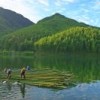
Latin America Puts Bamboo’s Climate Virtues to the Test
While a global agreement to fight the climate crisis may be off the table for now, many activists and experts are focusing on options for mitigating climate-changing gas emissions and the impacts of increasingly extreme weather. One such alternative is bamboo.
CLIMATE CHANGE: Protesters Say “No” to Climate Market
The short-cuts that the United Nations system is offering companies to profit from strategies against global warming were the target of loud protests on the Day of Action for Climate Justice.CLIMATE CHANGE: Juggling Carbon Consumption and Social Gains
The economies of Latin America are caught on the horns of a dilemma: how to reduce their carbon consumption without sacrificing economic and social development. Subsidies for the development of renewable energies and for learning new technologies need to be increased urgently, experts say.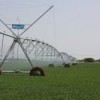
CLIMATE CHANGE: As World Warms, Southern Africa Swelters
Africa will be amongst the hardest hit regions of the world as the climate heats up, threatening the continent's food security, experts agree. If global temperatures rise 2.0 degrees C, southern Africa will warm an additional 1.5 degrees to a 3.5-degree increase on average.
CLIMATE CHANGE: Cancun Summit Gives Fossil Fuels a Free Pass
The main cause of climate change is the burning of fossil fuels, so why are billions of dollars being invested to find and produce more oil, coal and natural gas?LAOS: World Bank-backed Dam Powers Ahead, Despite Social Cost
As the World Bank returns to the big dam business with the inauguration of Laos’ largest hydropower project, it is coming under the scrutiny of familiar adversaries: green groups and grassroots activists.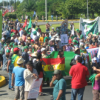
CLIMATE CHANGE: Straining Gnats and Swallowing Camels
What some people view as modest but real progress in the climate change talks, now in their second week in this southeastern Mexican resort city, others see as no more than smokescreens or "false solutions."
BRAZIL: Mitigating Impacts of Progress in Amazon Jungle
"We want real compensation," said Luis Nascimento de Freitas, a fisherman from Vila Teotonio, a ramshackle town on the banks of the Madeira River that will be flooded when the Santo Antonio hydroelectric plant is completed.CLIMATE CHANGE: Legislators Seek to Influence Cancun
"And what about after 2012?", when the Kyoto Protocol climate change treaty’s first period of commitments ends, was the question floating around an international meeting of legislators held over the weekend in the Mexican capital.
PHILIPPINES: Students Turn Trash into Tuition
Most people would not think twice about throwing out old plastic bags, empty soda cans, scrap metal and used shampoo bottles. But for the students of Cavite Institute in the Philippines, trash like these have become their ticket out of poverty.
Cancún Summit Gives Fossil Fuels a Free Pass
At the global summit on climate change, no country is being challenged for its plans to expand fossil fuel production, despite being the main source of climate-changing gas emissions.Ecobreves – BRAZIL: Food Industry Can Utilize Its Own Waste
Waste from the food industry could be utilized in its same productive process -- this is the surprising conclusion of a study by Brazil's Luiz de Queiroz College of Agriculture at the University of São Paulo.Ecobreves – CHILE: Last of the Huemul Deer in Danger
The construction of the Punilla hydroelectric dam in the Chilean region of Biobío poses a threat to some 40 huemul (Hippocamelus bisulcus), a type of deer living in that area of central Chile, warn local and foreign environmental groups.Ecobreves – VENEZUELA: Chevron Finances Indigenous Artisanry
The Tierra Viva Foundation launched an artisan training program, financed by the oil giant Chevron, for indigenous Warao communities living in the Orinoco River delta, in the far east of Venezuela.« Previous Page — Next Page »


Through our global network of local writers, we are continuing our award-winning coverage of global and local environmental challenges, with a focus on the people for whom the ecosphere matters in a direct way: rural dwellers who have little means to protect themselves against adverse conditions; communities that need to switch to sustainable development in order to survive; poor women and children, who are the most vulnerable in natural disasters. Sponsored by the United Nations Environment Program (UNEP), the United Nations Development Program (UNDP) and The World Bank (WB), IPS also maintains the award-winning Tierramérica, a specialised information service on environment and development.

The Week with IPS

Tracking global progress towards a sustainable world


