
Saturday, November 21, 2026



News and Views from the Global South
Environment

CLIMATE CHANGE: Willingly or Not, We Must Prepare for Geoengineering
So what do we do if COP15 does not bring adequate emission reduction targets or if the targets are not implemented by countries? What if we are faced with an ecological crisis in the next 15-20 years?
FRANCE: Sarkozy – Unlikely Champion of Environmental Action
For a centre-right politician, best known for his law-and-order stance and tough immigration policies, French President Nicolas Sarkozy would seem an unlikely champion of environmental issues
ENVIRONMENT: Darkness at Noon Clouds Cairo Skies
For the last decade, the autumn skies over Egypt - especially over capital Cairo, have been overshadowed by a thick haze people call "the black cloud".
CLIMATE CHANGE: From Dirty Fuels to Clean Technology
Tomorrow’s polluters are today’s emerging economies. To develop without retracing the polluting steps of the West, requires green technology, an expensive option for Africa.US: One Step Closer to Unilateral Sanctions Against Iran
Congress has given new momentum to a bill imposing unilateral sanctions on Iran - a move seen by many as an ineffective form of sanctions and potentially antagonistic against valuable U.S. allies on the U.N. Security Council. This comes ahead of the end of the year deadline set by U.S. President Barack Obama for Tehran to respond to a proposed agreement to export most of its enriched uranium for processing in Russia and France.
CLIMATE CHANGE: Latin American Women Want Modified Trade Rules
"We don't need to change the climate, we need to change trade," said Brazilian activist Marta Lago at Klimaforum, the civil society meeting held in parallel with the climate change summit in the Danish capital.SOUTH-EAST ASIA: Chinese Dams Expose Fault Line in Mekong Region
A heated debate about the future of the Mekong River at a media conference in this northern Thai city exposed a fault line triggered by the regional giant China’s plans to build a cascade of dams on the upper stretches of South-east Asia’s largest waterway.CLIMATE CHANGE: World Bank Touts Carbon Market
The World Bank proudly defended the global carbon market in the Danish capital Tuesday for its "contribution" to efforts to mitigate climate change, in spite of criticism from civil society.FINLAND: Biodiesel Breakthrough or Environmental Nightmare?
As Finnish energy major Neste Oil scales up production of its ‘green’ diesel NExBTL, environmental activists fear that more land will go under palm oil plantations at the expense of Southeast Asia’s threatened rainforests.
CLIMATE CHANGE: Brazil Defends Biofuels
Being the world’s largest producer and exporter of ethanol it is natural for the Brazilian government and its partners to push biofuels as the only real alternative for a world trying wean itself away from fossil fuels that contribute to global warming.
CLIMATE CHANGE: No Closed Doors at Parallel Summit
Two blocks from the Metro station on the busy M-1 Line, the first indication that pedestrians are slipping into the space-time continuum known as the "Free City" is the ubiquitous graffiti and occasional "boom!" of small explosive devices like M-80s echoing through the cobbled streets.
CLIMATE CHANGE: Latin America Between Hope and Realism
Latin America has come to Copenhagen with the goal that the wealthy nations of the North pay their climate debt by reducing greenhouse gas emissions and providing resources to developing nations. But facing the risk that this strategy could fail, the Latin American representatives are also willing to accept some compromises.
CLIMATE CHANGE: Poor Vendors in Swaziland Worried by ‘Flora Protection Law’
For close to three decades, Jeremiah Mkhonta has earned a living by selling firewood by the roadside. It's not exactly lucrative: the father of 15 often goes for a fortnight without even selling a single four dollar bundle of firewood.
CLIMATE CHANGE: Deal On Forests Likely, But…
As debate ratchets up ahead of working out a climate change deal, a Dutch study says emissions from deforestation and land degradation are far lower than has been assumed. Will this have an impact on a deal to protect forests in Africa?
OIL: A Market Psychology of Fear?
With or without a binding deal at the climate talks in Copenhagen this month, it seems the world may have to cut its oil consumption, as emerging geological and economic trends limit the availability and affordability of petroleum.
Q&A: “We Are Moving Towards Modest Cooperation”
Vested interests in fossil fuels have blocked major steps against global warming so far, according to José Goldemberg, who has played a leading role at key times in the climate crisis facing humanity.CAMBODIA: Pepper Farmers Get Ready for their Champagne Moment
Under a shady trellis of rice sacks in the province of Kampot in southern Cambodia, 42-year-old Nuon Yan tends his crop of pepper vines.
CLIMATE CHANGE: Beware of Carbon Trading Trap Warn Activists
As the climate change summit in the Danish capital moves into a second day, environmental groups warn that by pushing carbon offsetting and trade, governments of developed countries are bypassing their responsibility to significantly reduce domestic emissions and provide aid to developing countries.CLIMATE CHANGE: Greenhouse Gases Endanger Public Health – EPA
Twelve years after the climate change meetings in Kyoto, a much changed U.S. will show up at the Copenhagen conference this week, and, following recent developments in Washington, their ability to offer and agree to international climate actions has likely never been higher.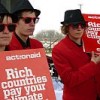
CLIMATE CHANGE: Rich Nations Resist Binding Commitments
Betrayal and backsliding by rich countries marks the beginning of the final negotiations for a global climate treaty, according to many developing world participants at the U.N.-sponsored talks here.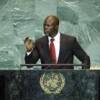
Q&A: “Copenhagen Should Target the Developed World”
Although a professional actor by trade, Djimon Hounsou takes his role as a campaigner against climate change at the U.N. seriously, and hopes to see a strong mandate reached in Copenhagen that puts the spotlight on developed countries to reduce their greenhouse gas emissions.« Previous Page — Next Page »


Through our global network of local writers, we are continuing our award-winning coverage of global and local environmental challenges, with a focus on the people for whom the ecosphere matters in a direct way: rural dwellers who have little means to protect themselves against adverse conditions; communities that need to switch to sustainable development in order to survive; poor women and children, who are the most vulnerable in natural disasters. Sponsored by the United Nations Environment Program (UNEP), the United Nations Development Program (UNDP) and The World Bank (WB), IPS also maintains the award-winning Tierramérica, a specialised information service on environment and development.

The Week with IPS

Tracking global progress towards a sustainable world


