
Saturday, November 21, 2026



News and Views from the Global South
Environment

CLIMATE CHANGE: Scientists Turn to Inuit for Clues
The Inuit people who live in and around the Arctic are among the worst victims of global warming, and scientists are now turning to their experience and indigenous knowledge to understand the staggering effects of climate change.
ARGENTINA: Solar Villages Light Up the Andes
The residents of the Puna, the dry Andean highlands in northern Argentina, are cut off from everything - except the sun. Living on arid land thousands of metres above sea level, they are on their way to becoming "solar villages."
CLIMATE CHANGE: Hope in 100,000 Flavours
The midpoint of a conference on climate change in which tremendous hope has been invested; unsurprising then that demonstrations of popular desire for decisive action against global warming took place around the world.
ENVIRONMENT-ICELAND: Do-it-Yourself Renewable Energy Catches On
When Innovation Centre Iceland (ICI) managers began courses in farming renewable energy in October they were unprepared for the enthusiastic response from citizens.
CLIMATE CHANGE: Portraits from the Summit
Among the thousands of people who have flocked to the Danish capital this week for the climate change summit and dozens of parallel activities are activists of all ages and stripes and representatives of the business community. TerraViva caught up to some of them to find out why they are here and what they hope to achieve.
ENVIRONMENT: Sun Greets “Flood for Climate Justice”
The sun came out in Copenhagen Saturday for the first time this week. But even though its rays were too weak to temper the bone-chilling cold, it shone brightly over the 5,000 people who braved the weather to participate in a demonstration organised by Friends of the Earth International (FOEI).
CLIMATE CHANGE: Bringing the Rainforest to Copenhagen
As delegates deliberate over the extent carbon emissions will be curbed in the closing days of the U.N. summit here, the environmental ramifications of that agreement are likely to be felt in places far removed from the negotiating table, particularly among indigenous people on the front lines of climate change.
CLIMATE CHANGE: Small Farmers Can Cool the World
Industrial agriculture may emit nearly half of climate-heating greenhouse gases, but that reality has gone unrecognised by negotiators at the climate treaty talks here, say farmers with La Via Campesina, an international movement of hundreds of millions of small-scale peasant farmers.ASIA: China’s PR Problem Rears Head at Mekong Forum
Powerful neighbour. A rising power. Old friend. Big, secretive investor. Big boy of the region. These were some of the terms participants at the just-finished Mekong Media Forum here used, when asked to share the images of China they get from the media.CLIMATE CHANGE: Asian Delegates Want ‘Political Accord’, For Now
Asian delegations to the ongoing global negotiations on climate change are insisting that a political agreement must be reached to pave the way for a legally binding treaty in the near future.ENVIRONMENT: Europeans Pay Companies to Pollute More
Some of the world's most polluting companies are receiving financial support from the European taxpayer to promote the continued use of the fuels that cause global warming, according to a new report.
CLIMATE CHANGE: Least Developed Countries Spell Out Demands
The world's poorest countries want two billion dollars from the developed world to replenish the Least Developed Countries Fund.
CLIMATE CHANGE: Adaptation Funds Must Reach Africa’s Women Farmers
One of the key components of global action on climate change will be measures to adapt to changes that are already unavoidable. The Global Gender and Climate Alliance argues that specific attention be paid to the needs of women.
CLIMATE CHANGE: The World Is Bogged Down in Copenhagen
Poor countries will suffer horrendous impacts if an agreement isn't reached by the end of the climate change summit in Copenhagen. That was the warning launched by the developing South Friday during the talks that remained as bogged down at the end of the first week as at the start.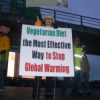
CLIMATE CHANGE: Cattle, the Ignored Predator
Because of its effect on the environment, cattle must be given the same priority in global agendas as nuclear weapons, wars and, in particular, climate change, says Brazilian activist João Meirelles Filho, author of two books on Amazon deforestation.
CLIMATE CHANGE: East Europe, Developed or Developing?
The European Union is presenting itself as a united front during negotiations in the Copenhagen climate change conference. But East European countries insist that they are developing nations and prefer to limit their aid and emissions commitments.CLIMATE CHANGE: Europe Makes Shy Commitments
"Decision-makers should stop thinking in realpolitik terms and acknowledge that we are out of time,’’ says Magda Stoczkiewicz, director of Friends of the Earth (FoE) in Europe.
CLIMATE CHANGE: Coastal Carbon Sinks in Dire Need of Protection
What would it be like if the air we breathe was 30 percent more acidic? The oceans are already 30 percent more acidic, and on their way to becoming 120 percent more acidic in 50 years at the current rates of carbon dioxide emissions.
CLIMATE CHANGE: ‘We Know Why We Are Dying’ – Africa
Few are more aware of the devastating legacy failure will leave than the teams of African negotiators in the Danish capital to hammer out a final position.
Q&A: “We’re Here to Insert Some Reality into an Unreal Situation”
Bill McKibben is a U.S. writer, environmentalist and the founder of 350.org, an international climate campaign. His first book, "The End of Nature", was published in 1989 and is regarded as the first book written for a general audience about climate change.
/CORRECTION/*CLIMATE CHANGE: “The G77 Is More United Than Ever”
"If there's ever been a time in which the G77 has been more united than ever, that time is right now," was the categorical statement made by Venezuelan negotiator Claudia Salerno to TerraViva, after a tiny island nation in the south Pacific stirred things up at the COP15 climate meetings.« Previous Page — Next Page »


Through our global network of local writers, we are continuing our award-winning coverage of global and local environmental challenges, with a focus on the people for whom the ecosphere matters in a direct way: rural dwellers who have little means to protect themselves against adverse conditions; communities that need to switch to sustainable development in order to survive; poor women and children, who are the most vulnerable in natural disasters. Sponsored by the United Nations Environment Program (UNEP), the United Nations Development Program (UNDP) and The World Bank (WB), IPS also maintains the award-winning Tierramérica, a specialised information service on environment and development.

The Week with IPS

Tracking global progress towards a sustainable world


