
Saturday, November 21, 2026



News and Views from the Global South
Environment
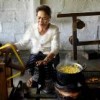
LAOS: The New Silk Road
At the age of 13, Kommaly Chantavong, now 64, walked over 600 kms to Vientiane from her home in Lao’s northern province of Huaphan. She walked through the buzzing war with the French in bare feet. All she took were heirloom pieces of woven silk, legacies from her grandmothers.PERU: Three Days of Anti-Government Protests
Wednesday was the second day of a three-day strike declared by trade unions and social movements in Peru to protest the economic policies of President Alan García.G8: The Five Throw a Challenge
"The world needs a new global governance," the G5 declared Wednesday, "the construction of which must be based on inclusive multilateralism." As rhetoric goes, this might sound like more of the same. But the time and place of that declaration gave the words a new significance.EQUATORIAL GUINEA: Elites Hoarding Oil Revenues, Report Charges
The government of Equatorial Guinea has looted billions of dollars in oil revenue instead of improving the lives of its citizens, Human Rights Watch (HRW) said in a report released Thursday.
FILM: Shattering the Myth of “Agrarian America”
"How is it that you can buy a 99-cent cheeseburger but not even a head of broccoli?" wonders Michael Pollan, author and co-narrator of the new documentary "Food, Inc.".
SOUTHERN AFRICA: Floods – Breaking the Cycle
The fourth largest river in Africa, the mighty Zambezi, is a lifeblood to 32 million people, from land-locked Zambia to Mozambique on the Indian Ocean. But its blessing is also its curse.HEALTH: Private Sector Boosts Public Toilets in Poorer Nations
The United Nations is disappointed that most governments in the developing world have made relatively little progress in providing basic sanitation facilities to nearly 2.5 billion people who still have no access to toilets.ENVIRONMENT-SOUTH AFRICA: How Friendly is Biodegradable Plastic?
Awareness of pollution and the amount of waste going into limited landfill space is encouraging the growing adoption of products with biodegradable plastic packaging. But environmentalists are challenging the claims made for these green products.
TRADE: Crisis Pushing Emerging Markets to Move Beyond the Dollar
The global economic crisis is pushing countries in regions with emerging markets, such as Russia and South Africa, to together move beyond the dollar-based economic model. Given their politico-economic similarities, these two countries should build on opportunities to share expertise and technology.AUSTRALIA: Scientist Pushes For Coral Triangle Action
While Australia remains committed to playing an ongoing role in assisting the six nations of the Coral Triangle Initiative (CTI) to protect their marine environments, a leading scientist here says that an Australian-style of management in the triangle will not work.G8: It Will Be a Tale of Two Summits
There is a reason that eight and five do not add up to 13 when it comes to the G8. And it is not just that the five developing countries that now attend the summit of the eight mighty ones as a matter of course are less rich. It's because they have their own way to go, and parallel with the G8 meet, their own summit to attend.
Q&A: "It’s Wrong to Burn Food of the Poor to Drive Cars of the Rich"
The world needs to overcome "the bizarre irony that rural areas, where food is grown, is home to cruel poverty and hunger," says Ismail Serageldin, former chair of the Consultative Group on International Agricultural Research (CGIAR).IRAQ: Is Another Conflict Inevitable?
Relations between Iraq's various Kurdish, Arab and Turkoman ethnicities are going through a new round of complications since a provision in the draft constitution of the country's northern Kurdistan region declared a range of disputed areas part of the historical Kurdish homeland, infuriating non-Kurds in the country.
AGRICULTURE: A Stormy Time for Indigenous Wisdom
Indigenous peoples risk losing control over their traditional knowledge if the World Intellectual Property Organisation (WIPO) insists on strict standards for managing access to information.TRANSPORT-BRAZIL: Recharge Your Batteries Here
Brazil has long been committed to developing alternatives to fossil fuels to power its vehicle fleet, to the extent that 90 percent of new cars sold in the country are flex-fuel, running on ethanol or gasoline in any proportion. Now the government is embarking on another technological field: electric vehicles.G8: Not Everyone Is Following the Leaders
Many civil society organisations are staying on in Sardinia island in support of a region severely affected by the economic crisis, after the G8 leaders summit was moved from there to the city of L'Aquila.ENVIRONMENT-LAOS: Rubber Plantations Spawn Social Strife
For decades, rubber plantations in the country's Mekong region have reaped huge profits for local businessmen. However, this industry, long regarded a blessing, is now increasingly becoming a source of social strife.
Gold Conflict in Colombia's Central Mountains
The Colombian authorities could determine this month whether they will move forward on a giant gold mining project in a nature preserve in the central mountain range.
A Stormy Time for Indigenous Wisdom
The World Intellectual Property Organization is making an effort to protect indigenous knowledge, but its criteria put it on a collision course with the indigenous concept of knowledge itself.Ecobreves – BRAZIL: Invention to Curb Industrial Pollution
Industrial sulfate pollution could be practically eliminated using a biological process discovered at the Engineering School of the University of São Paulo.Ecobreves – MEXICO: Grass for Ethanol
From greenhouse-grown grasses in the southern Mexican town of Atlixco, some 150 km from the capital, a new type of biofuel could ultimately emerge.« Previous Page — Next Page »


Through our global network of local writers, we are continuing our award-winning coverage of global and local environmental challenges, with a focus on the people for whom the ecosphere matters in a direct way: rural dwellers who have little means to protect themselves against adverse conditions; communities that need to switch to sustainable development in order to survive; poor women and children, who are the most vulnerable in natural disasters. Sponsored by the United Nations Environment Program (UNEP), the United Nations Development Program (UNDP) and The World Bank (WB), IPS also maintains the award-winning Tierramérica, a specialised information service on environment and development.

The Week with IPS

Tracking global progress towards a sustainable world


