
Saturday, November 21, 2026



News and Views from the Global South
Environment

Q&A: The Threatened Have Some Friends
Declining amphibian populations, dwindling fish stocks, waning ocean biodiversity, loss of forests...All scientists acknowledge that the rate of species loss is greater now than at any time in human history.ENVIRONMENT-BRAZIL: Take the Squeaky Clean Hydro Bus
The government of the state of Sao Paulo in southern Brazil has launched the first hydrogen-fuelled bus in Latin America - the first step towards environmentally sustainable public transport of the future.EDUCATION: Mother Tongue Absent in Thousands of Classrooms
Millions of children across the world fail to receive a basic education not only because they are born into poverty, but because local authorities do not allow them to read and write in their native language at school.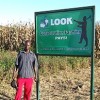
ZAMBIA: Conservation Agriculture Gaining Ground
Not even the least alert of drivers can miss the sign along the busy road 30 kilometres south of Lusaka: "Look, Conservation Farming Pays!"
GUATEMALA: Relentless Devastation of Mangroves
"This place used to be beautiful. It was truly a mangrove forest. When the shrimp farmers arrived, we lost 60 percent of it because of the logging," said Francisco Vásquez, manager of a hotel on the Pacific coast, in the southeastern Guatemalan department of Jutiapa.
PERU: Going to School Still a Feat for Rural Girls
María Belén Sabio, a 30-year-old Awajun woman from Peru’s northeastern Amazonia province, was able to complete a teacher training programme despite having five children to raise. "Life here in the countryside is not easy, and I’ve had a hard time getting ahead," she told IPS.
ENVIRONMENT-MAURITIUS: Hold Your Fire
Mauritius appears to have a happy problem with the 400,000 tons of waste it produces each year. The island's only landfill is full and the government must decide whether to turn to incinerating waste - generating electricity in the process - or to compost it, to the benefit of farmers.ENERGY: Germany Gets Some Nuclear Jolts
The faults at the nuclear plant at Kruemmel near Hamburg surfaced just three days after Chancellor Angela Merkel declared nuclear energy "indispensable" to Germany.SCIENCE: G8 Failure to Launch on Climate
The G8's failure to make meaningful commitments on climate last week pushes the world ever closer to global climate catastrophe, experts warn. Without commitments to take action, there is little comfort in G8 countries' agreement to keep overall global warming below 2.0 degrees Celsius.
COLOMBIA: Gold vs Preservation in the Central Mountains
In a protected area of the Cordillera Central, Colombia's central mountain range, gold mining plans are clashing with the desire of farmers, activists and environmental officials to preserve forests and water resources.
Red Card for Porto Alegre?
The 2014 soccer World Cup has created a dilemma for the southern Brazilian city of Porto Alegre: real estate and tourism development or environmental preservation?
Unstoppable Devastation of Guatemalan Mangroves
Guatemala's priceless mangroves are disappearing because efforts to slow the pace of deforestation have failed, warn environmentalists.Ecobreves – CHILE: Mapuches Unite for Rights
Leaders of the Mapuche, the largest indigenous group in Chile, announced a new offensive against the Michelle Bachelet government to demand greater land, political and cultural rights.Ecobreves – VENEZUELA: Weed Problem Worsens in Lake Maracaibo
The lemna sp, or duckweed, extends like a skein about 30 centimeters thick over Lake Maracaibo in western Venezuela. The weed covers 13 percent of the lake's 12,000 square kilometer surface.Ecobreves – BRAZIL: Creating a Market for Industrial Waste
Brazil's National Waste Exchange will help set up trade in industrial waste among companies through an Internet site.Ecobreves – HONDURAS: A Boost to Food Security
The Special Program for Food Security (PESA for its Spanish name) in two years has improved the living conditions of more than 14,000 families in rural Honduras, an official source reported to Tierramérica.YEMEN: Problems Go Far Beyond Narrow U.S. Focus on Terror
Yemen's recent reappearance on the U.S. radar due to its reputation as a safe haven for al Qaeda has brought more attention to the country of 23 million and its persistent underlying problems – the least of which may be terrorism.RIGHTS-AUSTRALIA: Uplifting Aboriginals, a Matter of “Urgent National Significance”
In this remote Aboriginal town, 420 km south-west of Darwin, Northern Territory’s capital, third world living conditions still prevail despite the Australian government’s efforts to improve life for its oldest inhabitants.CLIMATE CHANGE: G8 Declares a Lack of Promise
The G8 summit is no climate change meeting, and not formally associated in any sense with the series of negotiating meetings leading up to the climate change conference in Copenhagen in December. But the outcome of a G8 sponsored forum on climate change should get environmentalists worried about any outcome in Copenhagen.AFRICA: FAO Paper On Land Grab Is "Wishy-Washy"
The boom in the acquisition of arable land in Africa by foreign companies and governments has stirred an international debate between international institutions such as the United Nations’ Food and Agriculture Organisation (FAO) and non-governmental groups and independent experts.SPAIN-EQUATORIAL GUINEA: More Trade, Little Pressure
Trade between Spain and Equatorial Guinea is flourishing, amidst calls by activists for the government of Spanish Prime Minister José Luis Rodríguez Zapatero to push for democracy in this tiny country on the Atlantic coast of Africa, still under the yoke of dictatorship.« Previous Page — Next Page »


Through our global network of local writers, we are continuing our award-winning coverage of global and local environmental challenges, with a focus on the people for whom the ecosphere matters in a direct way: rural dwellers who have little means to protect themselves against adverse conditions; communities that need to switch to sustainable development in order to survive; poor women and children, who are the most vulnerable in natural disasters. Sponsored by the United Nations Environment Program (UNEP), the United Nations Development Program (UNDP) and The World Bank (WB), IPS also maintains the award-winning Tierramérica, a specialised information service on environment and development.

The Week with IPS

Tracking global progress towards a sustainable world


