
Saturday, November 21, 2026



News and Views from the Global South
Environment
POVERTY-SWAZILAND: Planning Oversight Halts Food Security Programme
A Food-for-Work programme, which cleverly aims to combat both environmental degradation and food shortages, has come to a halt due to lack of long-term planning.TRADE: African Producers Press Rich Nations on Cotton Subsidies
Representatives from four major cotton-producing African countries came to Washington this week to engage in a dialogue about what they consider to be unfair U.S. trade practices.
ENERGY-CHILE: Geothermal Debate Simmers in El Tatio
El Tatio geyser field, a tourist destination in the northern Chilean region of Antofagasta, is at the heart of a controversy over a geothermal energy project being developed four kilometres away. The entire area is claimed by Atacama indigenous communities, who now stand divided.
BRAZIL: When the Arid Northeast Turns Green
The rain - usually much desired because it is so scarce - has come in excess this year, destroying many crops. But in this farming district in far north-eastern Brazil, the impact of the heavy rainfall was less marked than in the past, thanks to the diversification of crops and productive activities.ARGENTINA: Mining Funds Pose Ethical Conflict for Universities
An Argentine non-governmental organisation has warned that a mining consortium under scrutiny for polluting the environment has been funding public universities for the past two years, bringing into question the independence of any technical reports the universities may be asked to submit.
LESOTHO-WATER: One Dollar Per Square Metre, Now Move
The construction of a two billion dollar dam in Metolong, some 35 kilometres outside of Lesotho’s capital Maseru, is being welcomed by people in and around the city who will gain access to clean and safe drinking water when construction is completed in 2013.CLIMATE CHANGE-CHINA: Reluctance to Curb Emissions
China has welcomed Obama administration’s efforts to lead a global movement to curb greenhouse gas emissions, but it has spawned concerns in Beijing that international pressure to cap emissions could mount, thus slowing the pace of economic growth.ENVIRONMENT-GUATEMALA: Mines Bring No Benefits to Local People
The new draft law on mining before the Guatemalan parliament does not strictly regulate water use and environmental protection, does not provide for community consultation, and sets royalties payable to the state at too low a level, say environmental and social organisations.
Q&A: Sanitation No Longer a Dirty Word in India
In India, many moons ago, nobody dared talk about toilets - a subject that was taboo, particularly at mealtime.INDIA-U.S.: Hurdles Aplenty Before Nuclear Deal Goes Commercial
As U.S. Secretary of State Hillary Clinton began talks with Indian officials in New Delhi on Monday to take a forward a civilian nuclear cooperation agreement, signed by the previous Bush administration, it was apparent that there were many roadblocks to be cleared before deals worth an estimated 10 billion dollars are signed.SUDAN: Ruling on Oil-Rich Border Area Fraught With Tension
The international community, in particular the U.S., has a responsibility to ensure that this week's upcoming legal decision on the boundary of Abyei, an oil-rich and contested region along the disputed north-south border within Sudan, is respected and that the residents of Abyei and the affected surrounding areas are protected from violence, said a strategy paper by the Enough Project released Monday.
When Brazil's Arid Northeast Turns Green
The green landscape of Irapuá doesn't look like the usual postcard of Brazil's Northeast of dry, twisted bushes and parched grasses.
Geothermal Debate Simmers in El Tatio
El Tatio, the world's third largest geyser field, is in the sights of energy, tourism and conservation interests.Ecobreves – BRAZIL: Agrarian Reform to Pay for Reforestation
Farmers who received land in an Amazonian distribution will receive about 50 dollars a month to reforest their plots, announced the government's national settlement and agrarian reform agency, INCRA.Ecobreves – ARGENTINA: Restrictions on Sábalo Fishing
Given the national government's delay in setting a quota for exports of the sábalo fish (Prochilodus lineatus), an overexploited river species, the eastern province of Santa Fe established the maximum for catches until year end.Ecobreves – HONDURAS: A Law to Fight Natural Disasters
The Honduran parliament last week passed its first law to prevent and mitigate risks related to natural disasters and to establish greater institutional coordination for confronting such events.Ecobreves – MEXICO: A Factory of Green Ideas
Mexico's University of the Environment (UMA) will begin in September a program in environmental law and public policy.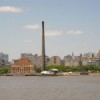
ENVIRONMENT-BRAZIL: Red Card for Porto Alegre?
The southern Brazilian city of Porto Alegre, a pioneer in participatory budgets and environmental policies, and habitual host of the enormous World Social Forum, has returned to the international stage.MIDEAST: Turkey Gets Boost from Pipeline Politics
The political geography of the modern Middle East has been affected for one hundred years by the appetite of westerners and other outsiders for the region's hydrocarbons.AFRICA: Organic Farming Could be Answer to Food Insecurity
Commercial farmers sometimes fail at organic farming because they switch over too quickly, ditching all chemicals, which is as traumatic for the soil as "a drug addict going cold turkey".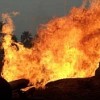
ENVIRONMENT-NIGERIA: Playing With Fire
Nigeria's gas flare-out date has once again been extended - this time to 2011. The decision follows 25 years of political procrastination by the federal government and illegal behaviour on the part of major oil multinationals engaged in flaring associated gas (AG), the byproduct of oil production in the Niger Delta.« Previous Page — Next Page »


Through our global network of local writers, we are continuing our award-winning coverage of global and local environmental challenges, with a focus on the people for whom the ecosphere matters in a direct way: rural dwellers who have little means to protect themselves against adverse conditions; communities that need to switch to sustainable development in order to survive; poor women and children, who are the most vulnerable in natural disasters. Sponsored by the United Nations Environment Program (UNEP), the United Nations Development Program (UNDP) and The World Bank (WB), IPS also maintains the award-winning Tierramérica, a specialised information service on environment and development.

The Week with IPS

Tracking global progress towards a sustainable world


