
Saturday, November 21, 2026



News and Views from the Global South
Environment
ENERGY-BRAZIL: Two-Pronged Policy
The Brazilian government announced it is overhauling the country's energy basket with more emphasis on renewable resources, while continuing to plan for future expansion of local production of traditional fossil fuels, like oil and gas.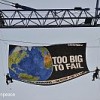
CLIMATE CHANGE: Biggest Emitters Seek an Early Consensus
A two-day meeting in Washington of the 17 nations that collectively emit three-quarters of the world's greenhouse gases concluded Tuesday with optimism that it helped provide a springboard toward more comprehensive talks on a successor to the Kyoto Protocol at the end of the year.
RIGHTS: Indigenous Wisdom Against Climate Change
While industrialised countries like Canada continue to emit ever-higher levels of greenhouse-effect gases, indigenous peoples around the world are working to survive and adapt to an increasingly dangerous climate.ICELAND: Taking the First Turn Left
Iceland's Social Democratic Alliance and the Left-Green Party won the majority of the seats in the Apr. 25 election, and will continue to work together for the next four years as the ruling coalition.
EDUCATION-US: Women Reach for Technology Lifeline
When Brunila lost her job as a flight attendant after 10 years on the job, she realised she needed to find a more stable career.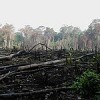
CLIMATE CHANGE: Burden Lies with Rich Polluters, Native People Say
Already suffering significant impacts from climate change, indigenous peoples at the close of an international summit here rejected the concept of carbon trading and offsets. Many also called for a moratorium on all new oil and gas exploration in their traditional territories and the eventual phase-out of fossil fuels.
Indigenous Wisdom Against Climate Change
Native peoples, with their ancestral links to the land, have learned some useful lessons over the millennia about how to fight and adapt to climate change.
Wanted: A Truly Clean Development Mechanism
The international climate rules that emerge in 2012 should contain a reformulated Clean Development Mechanism, says German expert Lambert Schneider in this Tierramérica interview.Ecobreves – BRAZIL: New National Science Team for Climate Change
Brazil has created its own 300-scientist panel to assess climate change. The team will update the national inventory of greenhouse-effect emissions, which is still based on 1994 data.Ecobreves – ARGENTINA: Eco-Promoters for Polluted River
Argentina's Secretariat for Environment and Sustainable Development signed an agreement with the National University of La Matanza to train community environment promoters for the Matanza-Riachuelo Basin, the country's most polluted, located south of Buenos Aires.Ecobreves – HONDURAS: Forest Fires Claim 17,000 Hectares
In the first three months of this year, forest fires destroyed 17,000 hectares of forest in the southern, northeastern and Atlantic regions of Honduras, say official sources.Ecobreves – MEXICO: School Kids Turn Eco-Monitors
Esteban Carrillo, 12, committed his parents to reducing electricity and water consumption at their home in the state if Mexico, neighboring the capital. Along with 549 children, he was named an ecological monitor for his district.
TECHNOLOGY-BRAZIL: E-Waste Can Produce Marvels
Using pieces from all sorts of useless equipment, students at the Computer Recovery Centre in the southern Brazilian city of Porto Alegre have put 1,700 computers into operation in three years.ENERGY-LATIN AMERICA: US Proposes “Variable Geometry”
The United States will work on energy issues with the other countries of the Americas based on "a variable geometry," allowing governments to choose to cooperate in some areas but not others, said Jeremy Martin, head of the energy programme at the Institute of the Americas at the University of California San Diego.CHILE: Scientist Warns of Threats to Rock Glaciers
A new government policy on glaciers adopted by Chile "is a step forward, but it doesn’t resolve all of the problems," German geographer Alexander Brenning, who blames mining companies for threats to this South American country’s rock glaciers, told IPS.
ENVIRONMENT: U.N. to Celebrate “Mother Earth Day”
"Mother Earth is not an object or merchandise. Mother Earth cannot be bought or sold," said Bolivian President Evo Morales, speaking at a heavily-attended news conference here at U.N. headquarters on Earth Day.
CLIMATE CHANGE: Native Peoples Sound Dire Warning
Humanity's hot carbon breath is not just melting the planet’s polar regions, it is disrupting natural systems and livelihoods around the world, indigenous people reported this week at a global meeting on climate change in Anchorage, Alaska.
WATER-SOUTHERN AFRICA: Strengthening River Basin Management
Many of the adverse effects of floods which swamped northwest Botswana in early March could have been avoided if the Okavango River Basin Commission (OKACOM) had an early warning system in place.
SOUTHERN AFRICA: Climate Change to Shrink Agricultural Production by Half
Environmental researchers predict Southern Africa will be hit heavily by climate change over the next 70 years. Agricultural production is projected to be halved - a development that will threaten the livelihoods of farmers in a region where 70 percent of the population are smallholder farmers.EUROPE: Corporate Giant Casts a Shadow
Peter Sutherland, chairman of British Petroleum, never realised his goal of becoming president of the European Commission. Back in 1994, Britain recommended him for that post – at a time he was director-general of the World Trade Organisation - yet he failed to secure the crucial backing of the government in his native Ireland.ENVIRONMENT: Indigenous Peoples Demand Greater Role in Climate Debate
While indigenous peoples from around the world are meeting in this Alaskan city to seek a greater role in global climate negotiations, the rapidly warming Arctic is forcing some Inuit villages to be relocated.« Previous Page — Next Page »


Through our global network of local writers, we are continuing our award-winning coverage of global and local environmental challenges, with a focus on the people for whom the ecosphere matters in a direct way: rural dwellers who have little means to protect themselves against adverse conditions; communities that need to switch to sustainable development in order to survive; poor women and children, who are the most vulnerable in natural disasters. Sponsored by the United Nations Environment Program (UNEP), the United Nations Development Program (UNDP) and The World Bank (WB), IPS also maintains the award-winning Tierramérica, a specialised information service on environment and development.

The Week with IPS

Tracking global progress towards a sustainable world


