
Saturday, November 21, 2026



News and Views from the Global South
Environment
DEVELOPMENT-AFRICA: New Nile Pact Stalled
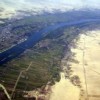
Ten years of negotiations over a new protocol governing shared use of the Nile River are hanging in the balance, with Egypt and Sudan refusing to give up their present power over how much water is used by countries further upstream.
CUBA: Anti-Hurricane Green Map
The wind was ripping the tiles off the roof of her house, her father-in-law felt his body trembling to the bone, and her husband tried to protect her with a table propped up by mattresses, but as she lived through the worst moment of her entire life, Cuban teacher Gladis San Jorges could think of only one thing: "Oh God, the school! The school!" she cried.ECONOMY-BOLIVIA: Strong 2008 Performance, Uneasy Start to 2009
The Bolivian government of Evo Morales enjoyed a third consecutive year of strong economic growth in 2008, but business leaders warn that the drop in commodity prices will hurt export revenues and lead to a rise in unemployment in the months to come.PERU: Navy Intelligence Agents Arrested for Moonlighting as Private Spies
Peruvian prosecutors and police have busted a ring of active and retired Peruvian navy intelligence agents who moonlighted as telephone tapping experts allegedly engaged in spying.EUROPE: Trucks Get a Free Ride to Emit
Carbon dioxide emissions from using Europe's road to transport goods will increase by more than 50 percent within the next two decades, a new study has predicted.BALKANS: In a New Search for Alternative Energy
The gas crisis has unleashed new interest in turning to alternative energy sources in the Balkans.EASTERN EUROPE: Go with Putin, or Go Nuclear
The gas crisis has placed environmental concerns on the backburner, and raised demands for nuclear production at plants once considered unsafe.MIDEAST: Energy Security Guides China’s Approach
China's pro-active stance in finding a settlement to the latest crisis in the Middle East - a trouble spot which does not normally figure on Beijing's list of top foreign policy priorities - suggests heightened attention to energy security for the country's power-hungry economy.Ecobreves – BRAZIL: Green Seal for Technology
The University of Sao Paulo closed the year 2008 with two important environmental initiatives: the green seal for technological equipments, and the project for a Sustainable Environments and Climate Studies Center.Ecobreves – VENEZUELA: When Garbage Becomes a Problem
Groups of vandals set fire to a landfill where 65,000 tons of solid waste, collected in the north-western Venezuelan city of Maracaibo over the last week of December and the first days of January, had been dumped.Ecobreves – CUBA: More Organic Fertilizers from Sugarcane
Cuba’s sugar industry is setting out to increase its organic fertilizer production and use, as it recognizes that these fertilizers are not only good for the environment, but also for the economy as they cut back on imports of chemical fertilizers.Ecobreves – HONDURAS: New Forestry Map Announced
In six months Honduras will have a new forestry map that will enable it to accurately identify its ecosystems, woodland coverage, and biodiversity, Agriculture and Cattle Minister Héctor Hernández said to Tierramérica.
Anti-Hurricane Green Map
Using a Green Map -- a portrait of an area’s cultural, social and ecological resources -- a Cuban municipality was able to rebuild a hurricane-ravaged school on its own.
Toward an Environmental Rationality
The conflict between economy and ecology and that impossible goal that is “sustainable development” give rise to concern over the feasibility of an alternative economy, writes Mexican environmental researcher Enrique Leff in this exclusive column for Tierramérica.Ecobreves – CHILE: Certified Organic Crops on the Rise
During the 2007-2008 season, 30,443 hectares were certified as organic in Chile, according to a report by the governmental Office for Agricultural Studies and Policies (ODEPA).EUROPE: Caught in Freezing Crossfire
Central Europe and the Balkans face a halting of industrial production, closed schools, frozen water supply pipes and eventual economic paralysis as suspension of gas deliveries stops life in the region.CHILE: End of the Copper Boom
Chile’s anti-crisis plan, announced this week, is based on windfall copper earnings saved up over the last few years. But soaring copper prices are a thing of the past, due to the global economic meltdown that originated in the United States, say analysts.EUROPE: Political Chill May Outlast the Big Freeze
As Russia suffers from the financial crisis and Ukraine heads towards bankruptcy, nobody can tell who is to blame for a spat that threatens to freeze Central Europe and the Balkans.CLIMATE CHANGE-BRAZIL: Calls for Adaptation Unheeded
Torrential rains have deluged several Brazilian states since November, causing nearly 200 deaths so far and reinforcing environmentalist campaigns calling for urgent climate change adaptation measures.MEXICO: Fishermen on Strike over High Fuel Prices
Thousands of fishermen in Mexico have gone on strike over the last few days to protest the rise in the cost of diesel fuel which, they say, has reduced their profit margin to zero. But the industry's problems, which have been simmering for decades, go beyond the question of fuel prices.
PERU: A Mining Town’s Woes
A four-hour drive from the Peruvian capital, the town of Morococha ("coloured lake" in the Quechua language) is a living example of what the mining industry has brought to many poor rural villages and towns in this country.« Previous Page — Next Page »


Through our global network of local writers, we are continuing our award-winning coverage of global and local environmental challenges, with a focus on the people for whom the ecosphere matters in a direct way: rural dwellers who have little means to protect themselves against adverse conditions; communities that need to switch to sustainable development in order to survive; poor women and children, who are the most vulnerable in natural disasters. Sponsored by the United Nations Environment Program (UNEP), the United Nations Development Program (UNDP) and The World Bank (WB), IPS also maintains the award-winning Tierramérica, a specialised information service on environment and development.

The Week with IPS

Tracking global progress towards a sustainable world


