
Sunday, November 22, 2026



News and Views from the Global South
Environment
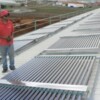
ECONOMY-MAURITIUS: Textile Manufacturing Goes Green and Clean
‘‘The cost of production is high in Mauritius as we are far away from our main markets. Our island is so small that at times our clients do forget us. We no longer benefit from any trade preferences. We don’t have any natural resources but we have plenty of sunshine and wind and we have decided to use these resources.’’BURMA: China’s Thirst for Oil Ignores Environment, Rights
The largest island off Burma’s west coast is emerging as another frontier for China’s expanding plans to extract the rich oil and gas reserves of military-ruled Burma.BIODIVERSITY: Unraveling the Mysteries of Salmon Migration
Tiny juvenile salmon have been electronically tracked for the first time from their natal rivers in the Rocky Mountains 2,500 kilometres north to Alaska.
ECONOMY: Global Crisis Should Spell End of Laissez-Faire Doctrine
The real question to ask about the global financial crisis is whether ‘‘it will go deep enough for the big economies to realise that the market should be controlled more. The philosophy of laissez-faire simply does not work’’.CHILE: Maize Contaminated with Transgenics
The Institute of Nutrition and Food Technology (INTA) at the University of Chile has detected genetically modified organisms in four samples of conventional maize grown near fields where transgenic maize seeds are being produced for export.PERU: Prosecutors Investigate Wiretapping Operation
Prosecutors in Peru are investigating illegal wiretapping allegedly committed by private security companies or police and military intelligence bodies.CUBA-US: A Thaw Fuelled by Oil?
The discovery of a significant offshore oilfield in Cuban waters in the Gulf of Mexico could persuade the United States to modify its policy towards the Caribbean island nation, experts say, while warning that this possibility could also entail risks.MEXICO: Oil Reforms Leave State in the Red
The oil industry reforms approved by the Mexican Congress and applauded by the government and most of the country’s parties, with the exception of factions on the left and part of the business community, will deprive the state of a source of funding that currently finances 40 percent of the public budget.PAKISTAN: Quake Survivors Await Relief
Poor infrastructure and communications are making it difficult for rescue and relief teams to reach scattered hamlets in the mountainous plateau area affected by the 6.4 magnitude earthquake that struck Pakistan’s Balochistan province at dawn on Wednesday.
DEVELOPMENT-AFRICA: Water and Improved Livelihoods
"Sanitation may hold the key to success or failure of the MDGs. It is really a time bomb in terms of health and the environment, waiting to be detonated," Professor Damas Mashauri told participants at a seminar on water and sustainable development taking place in Johannesburg, South Africa.
ARGENTINA: Illegal Embankment Continues to Harm Wetlands
The government of the northeastern Argentine province of Corrientes has been unable to enforce the ruling of the district's highest court, which nearly a year ago ordered the removal of a 30-kilometre embankment that is damaging the valuable wetlands ecosystem known as the Esteros del Iberá.ENVIRONMENT-CHINA: Coal Far Costlier Than Thought – Study
Often criticised for its massive coal-based industries that jeopardise international efforts to combat global warming, China is undoubtedly the biggest victim of its voracious coal consumption.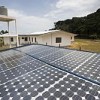
ENVIRONMENT: Massive Shift to Clean Energy Could Start Tomorrow
An aggressive shift towards renewable power generation and energy effiency could save the world from the most devastating impacts of climate change, and at the same time create a multi-billion-dollar industry and save trillions of dollars in future fuel costs, experts say.ENVIRONMENT: Europe Casts a Net for Dying Fish
The European Union has resisted calls for a ban on fishing for bluefin tuna in the Mediterranean despite warning signs that the species is being exploited towards extinction.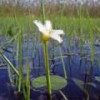
Illegal Embankment Continues to Harm Argentine Wetland
An unprecedented ruling in Argentina's environmental jurisprudence has seen almost one year pass while awaiting compliance.Ecobreves – GLOBAL: UN Day Dedicated to Climate Change
Possible actions to confront climate change were the focus of United Nations Day, celebrated Oct. 24 with a seminar at the UN University headquarters in Japan.Ecobreves – HONDURAS: Award for Indigenous Ecotourism Project
The Moskitia Route, an ecotourism project involving four indigenous communities in Honduras, has received the global prize "Tourism for the People".Ecobreves – BRAZIL: Climate Plan Up for Public Debate
Citizens and activists have until Oct. 31 to suggest modifications to the National Climate Change Plan proposed by a committee made up of seven government ministries.Ecobreves – CUBA: Biogas Plant Begins Operating
A new biogas plant located at the capital's largest dump and with the capacity to process 20 tons of urban waste per day will generate enough electricity to supply 120 fully equipped households.Ecobreves – CHILE: Eco-Education in Preschool
The National Environment Commission (CONAMA) of Santiago is premiering on Oct. 29 the first manual for environmental education for kindergarteners and first and second graders.Ecobreves – VENEZUELA: Like a Big Garbage Dump
Venezuela produces some 27,000 tons of garbage each day, and most of it ends up in one of the 800 open-air dumps, which contaminate water, land, flora and fauna and contribute to the spread of disease among the population.« Previous Page — Next Page »


Through our global network of local writers, we are continuing our award-winning coverage of global and local environmental challenges, with a focus on the people for whom the ecosphere matters in a direct way: rural dwellers who have little means to protect themselves against adverse conditions; communities that need to switch to sustainable development in order to survive; poor women and children, who are the most vulnerable in natural disasters. Sponsored by the United Nations Environment Program (UNEP), the United Nations Development Program (UNDP) and The World Bank (WB), IPS also maintains the award-winning Tierramérica, a specialised information service on environment and development.

The Week with IPS

Tracking global progress towards a sustainable world


