
Sunday, November 22, 2026



News and Views from the Global South
Environment
Ecobreves – BRAZIL: Climate Plan Up for Public Debate
Citizens and activists have until Oct. 31 to suggest modifications to the National Climate Change Plan proposed by a committee made up of seven government ministries.Ecobreves – CUBA: Biogas Plant Begins Operating
A new biogas plant located at the capital's largest dump and with the capacity to process 20 tons of urban waste per day will generate enough electricity to supply 120 fully equipped households.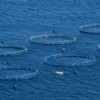
ARGENTINA: Caution and Enthusiasm for Fish Farming
Fish farming is expanding in Latin America, fuelled by the demands of a global market that is facing the stagnation of commercial fishing. But some people are warning about the limits of industrial production of fish and the environmental and social risks.ENERGY: Harsh Blow for OPEC
In an unexpected reaction, oil prices continued to slide, by up to six percent Friday, despite OPEC’s decision to cut output by 1.5 million barrels a day as of Nov. 1.
NETHERLANDS: When the Electricity Is in Your Feet
As everyone knows, the wind and the sun produce energy. But now there is also a way to generate electricity by dancing.
KENYA: Biofuels Boom and Bust
The Kenyan government has hailed bio-diesel as an innovation that combines green politics with poverty reduction. But recent drops in biofuel prices have caused concern about the sustainability of alternative fuel production.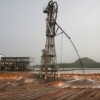
MINING-WEST AFRICA: ECOWAS Stirs Up Trouble With MOU
The Economic Community of West African States has taken the unprecedented step of inviting Oxfam America to coordinate the drawing up of a mining code for the region. The decision has infuriated some civil society organisations.PHILIPPINES: 'Women Take the Brunt of Climate Change'
Filipina farmer Trinidad Domingo views the coming rice harvest season with trepidation. A typhoon destroyed much of her crop and Domingo estimates that her two-hectare plot will produce less than the usual 200 sacks of rice.
DEVELOPMENT: Is The Media Doing Enough?
The media has a key role to play in effectively addressing the two major challenges of the 21st century - sustainable development and climate change. But is it doing enough?
INDIA: Water Privatisation – 'No Need For Costly Consultants'
The Indian corporate conglomerate, Tata, says it is ready to provide water services in this vast country and also prove that privatisation does not have to involve expensive foreign consultants and providers.DEVELOPMENT: Harmonious Cities – a Social and Environmental Solution
Sao Paulo emits only a tenth of the greenhouse gases that San Diego produces, even though this Brazilian metropolis is four times larger than that city in California, according to a report released today by the United Nations Human Settlements Programme (UN-Habitat).
ENVIRONMENT: Worst Forms of Pollution Killing Millions
Gold mining and recycling car batteries are two of the world's Top 10 most dangerous pollution problems, and the least known, according a new report.BURMA: Cyclone Relief – Distrust of Junta Deters Donors
Burma’s military regime is struggling to attract international aid nearly six months after the powerful Cyclone Nargis tore through the country’s Irrawaddy Delta. The financial shortfall has more to do with distrust of the junta than donor fatigue.
Q&A: ‘Media Must Find a Way for the Message’
While there is clear evidence of growing global warming, "the political will to address it is still lacking," says Mohan Munasinghe, co-winner of the 2007 Nobel Peace Prize as vice-chairman of the United Nations Intergovernmental Panel on Climate Change (IPCC).CORRUPTION-PERU: Officials Charged in Oil Contract Scandal
An anti-corruption Peruvian prosecutor brought charges against one current and three former high-level officials and 10 other people in a scandal over alleged bribes in lucrative oil contracts awarded to Discover Petroleum, a Norwegian company.CLIMATE CHANGE: Window of Opportunity Closing Rapidly
The global financial crisis has pushed climate change off the front pages despite new evidence that it is happening faster and with stronger impacts than previous projections, a new report warns.ECONOMY-CUBA: “Impossible to Escape Impact” of Crisis – Experts
After three years of high growth, uncertainty is hovering over the Cuban economy once again, although experts are not yet ready to predict exactly what impact the current global financial turmoil will have on the island.
ENVIRONMENT-AUSTRALIA: Eat Kangaroos to Save Climate?
Representations of kangaroos are used on everything from Australia’s coat of arms to the national airline, military markings and sporting teams. But the nation’s iconic marsupial may also be able to make significant contributions to reducing Australia’s greenhouse gas emissions.ENVIRONMENT: Crisis Could Ease Pressure, But Not for Long
The global economic recession or slowdown that will result from the financial crisis that broke out in the United States could bring some benefits for the environment in the short-term - such as a reduction in power consumption and in the deforestation of the Amazon rainforest -, but the overall effect may turn out to be negative in the long run.DEVELOPMENT: Cell Phone Service, But No Toilets
It is a fact of the 21st century that some of the poorest regions of the world have good mobile phone coverage but no toilets or safe drinking water.
Q&A: “Profit Is Enemy Number One of the Environment”
The global financial debacle is evidence that capitalism "is more alive than ever" and can only be stopped by policies that extinguish all forms of profit or by the end of life on Earth, says Chilean professor and activist Marcel Claude.« Previous Page — Next Page »


Through our global network of local writers, we are continuing our award-winning coverage of global and local environmental challenges, with a focus on the people for whom the ecosphere matters in a direct way: rural dwellers who have little means to protect themselves against adverse conditions; communities that need to switch to sustainable development in order to survive; poor women and children, who are the most vulnerable in natural disasters. Sponsored by the United Nations Environment Program (UNEP), the United Nations Development Program (UNDP) and The World Bank (WB), IPS also maintains the award-winning Tierramérica, a specialised information service on environment and development.

The Week with IPS

Tracking global progress towards a sustainable world


