
Thursday, October 22, 2026



News and Views from the Global South
Environment
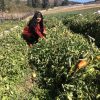
Drought and Unequal Water Rights Threaten Family Farms in Chile
Lack of water threatens the very existence of family farming in Chile, forcing farmers to adopt new techniques or to leave their land. The shortage is caused by a 15-year drought and exacerbated by the unequal distribution arising from the Water Code decreed in 1981 by the 1973-1990 dictatorship of General Augusto Pinochet, which turned water into a tradable commodity and gave its owners rights in perpetuity.
Using Industrial Waste to Fight Pollution in Brazil
Biogas sounds like redemption, the conversion of the sinner. Its production involves extracting energy from filth, from the most disgusting environmental pollution, and at the same time avoiding the worsening of the global climate crisis.
Education Cannot Wait Interviews Amy Clarke, Co-Founder and Chief Impact Officer for Tribe Impact Capital LLP
Amy Clarke is Co-Founder and Chief Impact Officer of the multi award-winning Tribe Impact Capital, a dedicated impact wealth manager and B Corps, based in London. She has over 29 years of experience in sustainability, both leading in-house teams (Microsoft and Bank of America) and as a management consultant specialising in climate and sustainability (PwC and EY). Amy serves as a Trustee to B Lab UK and is also an Advisor to fellow B Corps, Greenheart Consulting and Black Seed Ventures. She sits on the Global Steering Group of the Global Ethical Finance Initiative (GEFI) and the Investment Committee of The Blue Cross (having previously served as a Trustee). Amy has both BSc and MSc degrees in environmental studies. In her spare time, she serves as Head of Catering and Entertainment for her three-legged rescue Staffordshire Bull Terrier.
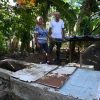
Cuban Family Harnesses Biogas and Promotes its Benefits
Just to obtain a good fertilizer it was worth building a biodigester, says Cuban farmer Alexis García, who proudly shows the vegetables in his family's garden, as well as the wide variety of fruit trees that have benefited from biol, the end product of biogas technology.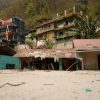
Climate Crisis in Mountains: Borderless Struggle for Frontline Communities
For the last three years, Sambhunath Guragain has been waking up every morning to a view he doesn't want to see: discarded agricultural land where he and his family used to grow food, including rice, but the flood in 2021 changed everything. “We don’t have any crops now, but we are farmers,” Guragain said in November 2021, while looking towards a quietly flowing Melamchi river. This was six months after the massive flash flood in Helambu-Melamchi in Sindhupalchowk district in Nepal. After three years, the situation hasn’t changed.
Harnessing Science-Policy Collaboration: The Vital Role of IPBES Stakeholders in Achieving Global Nature Targets
In December 2022, the fifteenth meeting of the Conference of the Parties to the Convention on Biological Diversity (CBD) saw governments worldwide unite behind a set of ambitious targets aimed at addressing biodiversity loss and restoring natural ecosystems, through the Global Biodiversity Framework – known now as the Biodiversity Plan.
AI Policy Can’t Ignore Climate Change: We Need Net Zero AI Emissions
Artificial intelligence provides amazing potential for advancement across fields, from medicine to agriculture to industry to the entertainment business, even as it generates significant concerns. AI can also improve the efficiency of energy production and use in ways that can reduce greenhouse gas emissions.
Another Climate Victory in Europe… and Counting
A group of senior Swiss women recently won a powerful victory offering renewed hope for tackling climate change. Earlier this month, the European Court of Human Rights ruled that the government of Switzerland is violating human rights because it isn’t doing enough to cut greenhouse gas emissions.
Small Island States Fostering Effective Energy Transition To Achieve a Blue Economy
Small Island Developing States (SIDS), a distinct group of 39 states and 18 associate members, are making efforts to promote the blue economy as they possess enormous potential for renewable energy relying on the sea. Experts predict that switching to renewables will help SIDS countries decarbonize power generation as an appropriate option for islands to cut their carbon dioxide (CO2) emissions, fulfill Paris Agreement pledges and contribute to the global fight against climate change.
Rich Nation Hypocrisy Accelerating Global Heating
Rich nations’ climate hypocrisy is accelerating global heating, pushing the planet closer to irreversible catastrophe, with its worst consequences borne by the poorest, both countries and peoples.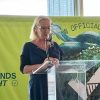
UN Live’s CEO Katja Iversen Talks About the Power of Popular Culture and ‘Sounds Right’
UN Live’s CEO, Katja Iversen, says the way to engage people in the environment is through popular culture—film, music, gaming, sports, food, and fashion. She is excited about the Sounds Right project, which puts the sounds of nature—bird songs, waves, wind, and rainfall—at the center of a campaign to support those involved in climate action.
‘Toasting the World’s Most Natural Talent’: UN Museum Campaign Recognizes NATURE’s Contributions to Music
Spearheaded by the Museum for the United Nations, a new campaign brings together music and ecology to spark people's interest and engagement in environmental conservation through consciously listening to music.
Urgent Global Action Is Essential To Stop Wave of Plastic Pollution
There is a growing wave of plastics, smothering our countryside and lapping at our shores.
Making the Global Financial Architecture Work for Emerging Markets and Developing Countries (EMDEs)
The world is facing multiple crises that must be tackled quickly, with innovative approaches and brave decisions. The global financial architecture is an area that needs reform and thinking outside the box. The system created 80 years ago is not able to deal with today’s problems that range from climate change to pandemics, to increasing inequality, to conflict and fragility, to food insecurity and poverty.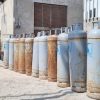
Fine, Sanctions, or Waiver: Iranian Gas Will Come at a Price for Pakistan
When Iranian President Ebrahim Raisi visits Pakistan this week (April 22, 2024), experts say the two issues topmost on his mind that he will want to discuss with his Pakistani counterpart, President Asif Ali Zardari, will be border security and the Iran-Pakistan gas pipeline.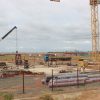
‘Living in Fear’: Landowners in Uganda’s Oil Field on Brink of Eviction
When Mugisha Jealousy Mulimba learned that the government of Uganda was dragging him to court, he expected justice. But he says he has realized these courts are being used to deprive him of his rights to a fair hearing and the right to fair and adequate compensation for his land and property.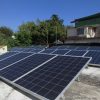
Better Incentives Needed to Expand Solar Energy in Cuba
With a bolder policy and flexible payment mechanisms, perhaps Alexis Rodríguez would have opted for solar panels for his home, instead of the portable generator that has made it possible for him to weather the frequent blackouts caused by Cuba's recurrent energy crises.
Africa Pushing Limits To Boost Renewable Energy Supply Chain, Security
Investors, regulators, researchers, policymakers, and representatives of renewable energy companies, acknowledged the key challenges of shifting away from fossil fuels to renewable energy in Africa when they gathered in Abu Dhabi, United Arab Emirates (UAE) this week.
Solar Power and Biogas Empower Women Farmers in Brazil
A bakery, fruit pulp processing and water pumped from springs are empowering women farmers in Goiás, a central-eastern state of Brazil. New renewable energy sources are driving the process.
Migration in the Americas: A Dream That Can Turn Deadly
The Darién Gap is a stretch of jungle spanning the border between Colombia and Panama, the only missing section of the Pan-American Highway that stretches from Alaska to southern Argentina. For good reason, it used to be considered impenetrable. But in 2023, a record 520,000 people crossed it heading northwards, including many children. Many have lost their lives trying to cross it.
Pioneering Digital Initiative Empowers Pacific Islands to Tackle Climate Disasters
Winning a battle for survival requires understanding the opponent. And, for the peoples of 22 island nations and territories scattered across more than 155 million square kilometres of Pacific Ocean, the volatility and wrath of the climate are their greatest threats.« Previous Page — Next Page »





Through our global network of local writers, we are continuing our award-winning coverage of global and local environmental challenges, with a focus on the people for whom the ecosphere matters in a direct way: rural dwellers who have little means to protect themselves against adverse conditions; communities that need to switch to sustainable development in order to survive; poor women and children, who are the most vulnerable in natural disasters. Sponsored by the United Nations Environment Program (UNEP), the United Nations Development Program (UNDP) and The World Bank (WB), IPS also maintains the award-winning Tierramérica, a specialised information service on environment and development.

The Week with IPS

Tracking global progress towards a sustainable world


