
Thursday, October 22, 2026



News and Views from the Global South
Environment
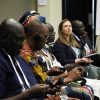
Democracy, Civic Space and Fundamental Freedoms Are under Attack, but Civil Society Is Here to Stay
During the Forus network’s General Assembly which took place in Gaborone, Botswana, civil society organisations from across 65 countries highlighted the challenges facing them globally in an increasingly polarised and crisis-hit world.
Education Cannot Wait Interviews Bruno Maes, UNICEF Representative to Haiti
Bruno Maes is the UNICEF Representative in Haiti. He officially took office in August 2020. A Belgian national, Mr. Maes previously served as UNICEF Representative in Madagascar from 2007 to 2012, in Chad from 2012 to 2015, and recently in Egypt from September 2015 to 2020.

Education Cannot Wait’s #ShareTheirVoices Global Advocacy Campaign Launched by ECW Executive Director Yasmine Sherif in Lead Up to United Nations Summit of the Future
In the lead up to United Nations Secretary-General António Guterres’ Summit of the Future, taking place on 22-23 September 2024, Education Cannot Wait is supporting the global #ActNow Campaign with an urgent call to increase funding for the +226 million crisis-impacted children worldwide urgently in need of an education through ECW’s global #ShareTheirVoices campaign.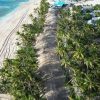
Small Island Developing States can be Nature-Positive Leaders for the World
Small island developing states (SIDS) are scattered across the globe, dotting the Pacific Ocean, the Caribbean, the west and east coasts of Africa and the Indian Ocean.
Panama’s Elections: Has Impunity Prevailed?
Regional experts called it Panama’s most important election since the 1989 US invasion that deposed de facto president General Manuel Noriega. Panamanians went to the polls amid high inflation and unemployment, with a stagnating economy. Endemic corruption was also high on their long list of concerns, along with access to water, education and a collapsing social security system.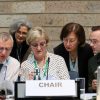
Biodiversity Meet Suggests New Guidelines on Synthetic Biology Amid Persisting Questions
After a week-long discussion by delegates from 196 countries, the 26th meeting of the Subsidiary Body of Scientific, Technical, and Technological Advisors (SBSTTA) of UN Biodiversity has concluded with a set of recommendations on several issues, including living modified organisms (LMOs) and synthetic biology. All nations must consider the recommendations, discuss them, and possibly adopt them at the Biodiversity COP in October. However, many questions remain unanswered and unclear.
International Diplomat Erik Solheim on Politics, Climate Change, Much-Needed UN Reform and Trump
Erik Solheim, a senior internationally renowned politician and diplomat, has long been an advocate for combining development assistance with private investment and better taxation systems in recipient countries.
Rising Temperatures Drive Human-Wildlife Conflict in Zimbabwe
Rising temperatures are being blamed for an increase in human-wildlife conflicts in Zimbabwe as animals such as snakes leave their natural habitat earlier than usual.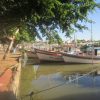
Women Organize to Fight Coastal Erosion in Southeastern Brazil
Coastal erosion has been aggravated by climate change and has already destroyed more than 500 houses in the town of Atafona in southeastern Brazil. Movements led largely by women are working to combat the advance of the sea and generate economic alternatives.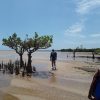
Ocean Action on Global Agenda as Negotiations to Save Biodiversity Deepen
The oceans are as fascinating as they are mysterious. Home to the largest animals to ever live on Earth and billions of the tiniest, the top 100 meters of the open oceans host the majority of sea life, such as fish, turtles, and marine mammals. But there is another world far below the surface. In the belly of the ocean, there are seamounts—underwater mountains that rise 1,000 meters or more from the seafloor.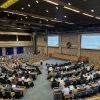
SBSTTA and SBI—Biodiversity Meetings Crucial for the Global South Begin
The 26th meeting of the Subsidiary Body of Scientific, Technical, and Technological Advisors (SBSTTA) of the United Nations Convention on Biological Diversity (UNCBD) started in Nairobi, Kenya, on Monday. Over 1,400 delegates, including 600 representing signatories or parties from over 150 countries, are present for the seven-day meeting at the headquarters of the United Nations Environment Programme (UNEP). A large number of members from Indigenous Peoples and other observer organizations, including women’s groups, are also attending the meetings.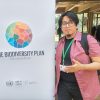
Biodiversity Masterplan: Negotiations on Crucial Science, Technology for Implementation Underway
The triple planetary crises of climate change, biodiversity loss, pollution, and waste are escalating. At the current pace, the world is on track to lose one quarter of all plant and animal species by 2030, with one species already dying out every 10 minutes. One million species face extinction. Human activity has already altered three-quarters of the land on Earth and two-thirds of the ocean.
Latin America and the Caribbean Hit with Record-Breaking Heat and Other Climate Effects in 2023
Every year for the last four years, a collaborative effort involving scientists and other experts has assessed the state of the climate in Latin America and the Caribbean. The findings have revealed increasingly alarming trends for the world’s second-most disaster-prone region.
Dissenting Voices at Nairobi Soil Health Forum Over Increased Fertilizer Use
As the Africa Fertilizer and Soil Health Summit convened in Nairobi to review the progress made in terms of increasing fertilizer use in line with the 2006 Abuja Declaration, experts, practitioners, activists, and even government officials pointed out that accelerated fertilizer use may not be the magic bullet for increased food production in Africa.
Choose Hope: Standing at the Crossroads of the Future
We are at the tipping point in human history, facing major existential crises. The conflict between Russia and Ukraine has heightened the risk of a nuclear weapon being used since the Cold War. Furthermore, the climate crisis is accelerating. In these crises, the most affected are those in vulnerable situations.
Beyond the Fields: Unraveling Zambia’s Drought Crisis and the Urgent Call for Climate-Health Solutions
For most families in Zambia, April is traditionally a month of plenty—it is typically the beginning of a harvest season for various food and cash crops. Both fresh and dried maize, groundnuts, pumpkins, and a whole variety of both traditional and exotic food crops are usually in full supply and readily available for consumption, supporting household food security and nutrition.
LDCs Need Concessional Grants, Not Loans, Say Experts
Olaide Bankole was born and raised in Nigeria, and he observed how climate change was evident in the country with temperature rises and rainfall variability and how drought, desertification, and sea level rises have been affecting its people. He is also aware of how rising sea levels threaten southern Nigerian cities like Lagos and coastal areas, increasing their vulnerability to flooding and waterborne diseases.
UN Secretary-General’s message for World Press Freedom Day
 The world is going through an unprecedented environmental emergency which poses an existential threat to this and future generations.
Rainy Chiloé, in Southern Chile, Faces Drinking Water Crisis
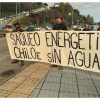
The drinking water supply in the southern island of Chiloé, one of Chile's rainiest areas, is threatened by damage to its peatlands, affected by sales of peat and by a series of electricity projects, especially wind farms.
We Should Aim to be at Peace with Nature, Says David Cooper of UN Convention on Biological Diversity
In a world faced with habitat loss and species extinction, climate change, and pollution, it’s crucial that countries develop their national action plans and create a society that lives in harmony with nature, says David Cooper, Acting Executive Secretary of the UN Convention on Biological Diversity (CBD), in an exclusive interview with IPS.
Press Freedom and Climate Journalism: United in Crisis
Journalism is in crisis, again. The challenges to press freedom are enormous and multi-faceted and they are deepening -- in “free” and open societies as well as autocracies. And there are no simple solutions. For individuals and entire media outlets the crisis is existential.« Previous Page — Next Page »





Through our global network of local writers, we are continuing our award-winning coverage of global and local environmental challenges, with a focus on the people for whom the ecosphere matters in a direct way: rural dwellers who have little means to protect themselves against adverse conditions; communities that need to switch to sustainable development in order to survive; poor women and children, who are the most vulnerable in natural disasters. Sponsored by the United Nations Environment Program (UNEP), the United Nations Development Program (UNDP) and The World Bank (WB), IPS also maintains the award-winning Tierramérica, a specialised information service on environment and development.

The Week with IPS

Tracking global progress towards a sustainable world


