
Thursday, October 22, 2026



News and Views from the Global South
Environment
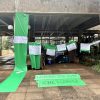
Biodiversity Meetings in Nairobi End, All Eyes Are Now on COP16
Regions struggling to revise and update their National Biodiversity Plans aligning them with the Global Biodiversity Framework adopted at COP15, will now be given the technical and scientific support to develop and submit their plans on time. This was one of the key decisions of the 4th meeting of the Subsidiary Body on Implementation (SBI)—the crucial pre-COP meetings of the United Nations Convention on Biodiversity (UNCBD)—to review the status and challenges of implementing the Global Biodiversity Framework (GBF), which started on May 22 and ended in Nairobi late in the evening of May 29, 2024.
Commonwealth Secretary-General Calls for Concrete Finance Commitments for Small Island Developing States
Commonwealth Secretary-General Baroness Patricia Scotland is calling for concrete commitments to climate finance that will acknowledge the multi-dimensional vulnerability faced by the world’s small island developing states (SIDS).
The Dilemma for Small Island Developing States: Recovery or Development?
“We are facing unenviable decisions, between the recovery of today or the development of tomorrow”. These were the words of Fiamē Naomi Mataʻafa, of Samoa at the opening of the 4th International Conference on Small Islands Developing States (SIDS4).
Maggot Farming Creates Entrepreneurs, Saves Farming Costs in Zimbabwe
Three years ago, 43-year-old Benard Munondo was an "ordinary" Zimbabwean teacher at a local primary school, but now he has turned maggots into gold. Thanks to maggot farming, Munondo, who has never owned a home nor driven a car, now has both. In 2020, a week’s training on maggot farming changed his world.
Plastic Soup, Plastic Islands: How Small Island Developing States can end Plastic Pollution
Scattered over the vast area of our oceans, Small Island Developing States (SIDS) are often pictured as blue, serene and beautiful paradises. However, we are risk losing the beauty of these islands, due to the triple threats of climate change, loss of biodiversity, and pollution, especially marine plastic debris.
UN, International Partners Coordinate Aid to Papua New Guinea Landslide Disaster
As the communities of Enga province in Papua New Guinea contend with the landslide that has devastated the residents of Yambani, the United Nations and its partners have been active on the ground addressing the immediate humanitarian needs, according to agencies.Papua New Guinea’s prime minister, James Marape, says “extraordinary rainfall” and weather pattern changes were responsible for multiple disasters in the Pacific Island nation this year, including the landslide last Friday.
Explainer: Why Is It Important for Venezuela to Adopt Escazú Agreement in the Coming Year?
Venezuela is one of the few countries outside the Escazú Agreement, a treaty in Latin America and the Caribbean ratified by 16 member countries that guarantees access to environmental information, public participation in environmental decisions, and environmental justice.
South Suffering Due to Powerful Nations’ Policies
The World Bank expects the international economic slowdown to be at its worst in over four decades in 2024. This is mainly due to powerful Western nations’ contractionary macroeconomic and geopolitical policies.
People at Risk Need Protection Before Another Hot Summer
Spring has traditionally brought a welcome new beginning: daylight increases, flowers bloom and temperatures are pleasantly warm. However, in recent years, it’s also brought justified fears about extreme heat with summers in Southern Europe getting increasingly hot because of climate change. Older people, children, people with disabilities, and people with mental health conditions are among those at higher risk.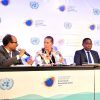
Uniting for Climate Action: UN, World Bank and UNDRR Leaders Push for Climate Finance, Justice and Nature-Based Solutions for SIDS
As leaders of Small Island Developing States (SIDS) meet for the 4th International Conference on SIDS in Antigua this week, top United Nations and World Bank officials are calling for urgent action to help SIDS tackle their unique challenges and plan for the next decade.
To Tackle Climate Crisis, the World Bank Must Stop Financing Industrial Livestock
Last week, the World Bank Group released a new report that highlights the urgent need to drastically reduce GHG emissions to address the climate crisis and calls on countries to act. However, while the World Bank’s acknowledgment of the damaging climate impacts of industrial agriculture is a crucial step forward, it’s simply not enough.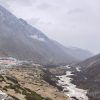
Explainer: Why GLOFs Are Growing Concern in the Himalaya
Phu Chhettar Sherpa, who worked as an icefall doctor (a Sherpa who fixes ropes for climbers) for seven years from 2015 to 2021 on Mt. Everest, vividly recalls his fear of possible flash floods after the huge earthquake in Nepal in 2015.
Small Island Nations Demand Urgent Global Action at SIDS4 Conference
“This year has been the hottest in history in practically every corner of the globe, foretelling severe impacts on our ecosystems and starkly underscoring the urgency of our predicament. We are gathered here not merely to reiterate our challenges, but to demand and enact solutions,” declared Antigua and Barbuda Prime Minister Gaston Brown at the opening of the Fourth International Conference on Small Island Developing States on May 27.
Impressionism Festival Taps Into Global Concerns
On a clear, chilly evening, the words of African American poet Maya Angelou filled the air in the centre of Rouen, as a vivid light show played across the façade of the French town’s imposing cathedral, and as a bright full moon rose in the sky.
Explainer: Understanding Carbon Trading and its Rationale
Carbon trading has gained growing popularity on the African continent and is considered by many governments as a viable way to achieve their climate targets while building communities. IPS takes a look at what's behind the carbon market.
Malawi Moves To Regulate Carbon Trading Amid Transparency Concerns in Global Market
Malawi is increasingly pitching carbon trading as a source of revenue it needs to bolster the economy, which is suffering from foreign exchange shortages caused by a large trade imbalance and being buffeted by several shocks, including the climate crisis.
Countdown to Critical Conference for Small Island Developing States
Delegates from small island developing states (SIDS) worldwide are meeting in Antigua and Barbuda to strategize for the next decade.
Lessons From Youth-Focused ‘Future Action Festival’ Ahead of UN Summit of the Future
The world has crossed the halfway point to the end of the Sustainable Development Goals (SDGs) era amid multiple, unprecedented, and significantly destructive global shocks. Two of the most pressing global challenges are the climate crisis and the threat of nuclear armament. Of serious concern is a severe lack of youth engagement on issues of critical global importance. Speaking to IPS during the 2024 UN Civil Society Conference, the outcome of which will inform high-level discussions when the UN hosts hundreds of world leaders, policymakers, experts, and advocates in September at the Summit of the Future in New York, Tadashi Nagai stressed the importance of coalition and movement building and youth engagement to escalate progress towards attainment of the SDGs.
Democracy, Civic Space and Fundamental Freedoms Are under Attack, but Civil Society Is Here to Stay
During the Forus network’s General Assembly which took place in Gaborone, Botswana, civil society organisations from across 65 countries highlighted the challenges facing them globally in an increasingly polarised and crisis-hit world.
Education Cannot Wait Interviews Bruno Maes, UNICEF Representative to Haiti
Bruno Maes is the UNICEF Representative in Haiti. He officially took office in August 2020. A Belgian national, Mr. Maes previously served as UNICEF Representative in Madagascar from 2007 to 2012, in Chad from 2012 to 2015, and recently in Egypt from September 2015 to 2020.

Education Cannot Wait’s #ShareTheirVoices Global Advocacy Campaign Launched by ECW Executive Director Yasmine Sherif in Lead Up to United Nations Summit of the Future
In the lead up to United Nations Secretary-General António Guterres’ Summit of the Future, taking place on 22-23 September 2024, Education Cannot Wait is supporting the global #ActNow Campaign with an urgent call to increase funding for the +226 million crisis-impacted children worldwide urgently in need of an education through ECW’s global #ShareTheirVoices campaign.« Previous Page — Next Page »





Through our global network of local writers, we are continuing our award-winning coverage of global and local environmental challenges, with a focus on the people for whom the ecosphere matters in a direct way: rural dwellers who have little means to protect themselves against adverse conditions; communities that need to switch to sustainable development in order to survive; poor women and children, who are the most vulnerable in natural disasters. Sponsored by the United Nations Environment Program (UNEP), the United Nations Development Program (UNDP) and The World Bank (WB), IPS also maintains the award-winning Tierramérica, a specialised information service on environment and development.

The Week with IPS

Tracking global progress towards a sustainable world


