
Sunday, October 25, 2026



News and Views from the Global South
Environment

Brazil’s Biofuel Potential Set to Expand Thanks to Sustainable Aviation Fuel
Brazil is counting on biofuels to assert itself as an energy powerhouse in the near future, as a decisive supplier of low-carbon jet fuel, a requirement of the climate crisis. The electrification of automobiles has tended to curb the strong ethanol and biodiesel agribusiness developed in the country since the 1970s. But demand for sustainable aviation fuel (SAF) now offers the possibility of significant new expansion for many decades to come.
LPG, a Useful “Transitional” Fuel for the UN’s Clean Cooking Effort
One of the key efforts under the United Nations (UN) Sustainable Development Goals is to provide poor households with access to clean cooking technologies to replace, in particular, the burning of solid biomass (e.g., fuelwood and charcoal) in traditional open stoves that kills millions of women and children.
Pollution – a Threat To Our Groundwater Resources
Groundwater pollution significantly affects the prevalence of waterborne diseases. This form of pollution occurs when hazardous substances, such as pathogens, chemicals, and heavy metals, seep into underground aquifers, the primary source of drinking water for approximately 70% of the 250 million people living in the SADC region.
It’s Africa’s Time To Shine, says UN Under Secretary Claver Gatete
With 20 percent of the global population and vast untapped natural resources, not forgetting its human capital, it is time Africa had its rightful seat at the global table, the United Nations Under Secretary and Executive Secretary of the Economic Commission for Africa (ECA), Claver Gatete, has called.
International Women’s Day, 2024
Inside Women Dominated Seaweed Farms in Kenya’s Indian Ocean Waters
Nearly two kilometers into the Indian Ocean from the Mwazaro beach coastline in Lunga Lunga Sub-County, Kwale County, women can be spotted seated in the shallow ocean waters or tying strings to erected poles parallel to the waves. It is a captivating sight to see rows of seaweed farms in the Indian Ocean. 
Into the Abyss: The Scramble for the Ocean Floor
Beneath the vast expanse of the ocean surface lies another world. At first, around the shores, the continental shelf is little more than an extension of the adjoining landmass. But then one reaches the edge of the abyss and, with the sudden drop that follows, everything changes. Remarkably, in view of what is known about the rest of the planet, and even outer space, most of the ocean floor remains largely a mystery. The scientific consensus is that only 5% of the deep sea has been explored in any detail. When a passenger jet was lost somewhere in the Indian Ocean in 2014, rescuers floundered without definitive maps of the maritime space and its currents at different depths that might have helped in their search.
Celebrating Tenacity of Women Farmers: an Incredible Catalyst for Socio-Economic Transformation
International Women's Day 2024 serves not only as a celebration of women's achievements across different sectors but also as a reminder of the persistent obstacles hindering gender equality. In line with the 2024 theme, "Inspire Inclusion," it is imperative for every individual and organization to actively engage in promoting inclusive environments. The adoption of such initiatives fosters safe and respectful spaces where women's contributions are valued and celebrated.
International Women’s Day, 2024

On March 8th, we celebrate International Women’s Day. A day to honour the resilience, achievements, and potential of women worldwide. The world faces crises—geopolitical conflicts, poverty, and climate change.

UN Environmental Assembly Call for Action to Address Planetary Triple Threat
The Sixth United Nations Environmental Assembly (UNEA-6) ended with delegates calling for firm actions to address the triple planetary crisis of climate change, nature loss, and pollution. The assembly also reaffirmed its call for “environmental multilateralism” in seeking solutions to the threats, noting that time was running out fast before the threats could besiege the planet and make life a bigger nightmare, especially for the underprivileged.
Venezuela Bids Farewell to Its Last Glacier, Wrapped in Plastic
Venezuela has undertaken the task of covering the remains of its last glacier, La Corona, on Humboldt Peak at 4,900 meters above sea level in the Andes mountains in the southwest of the country, with plastic "blankets" to slow the inevitable end of this icy patch of its mountain landscape and source of legends.
From Gas to Ash: The Struggle of Nigerian Women Amidst Surging Cooking Gas Prices
One sunny mid-morning in Omu-Aran village, a community in Kwara State, North Central Nigeria, Iyabo Sunday sat beside a firewood stand observing her pot of beans with rice (a combination enjoyed by many in Nigeria). The 52-year-old widow used her plastic dirt parker to fan the flames, occasionally blowing air through her mouth for speed and frantically shielding her face from the wisps of smoke that curled from the firewood.
Salvadoran Poultry Farms Produce Biogas, Easing Socio-environmental Conflicts
In a win-win relationship, a segment of El Salvador's agribusiness industry is taking steps to ease the tension of the historic socio-environmental conflict caused by poultry and pig farms, whose waste has caused concern and anger in nearby communities.
Air Quality Sensors Boosting Nairobi’s Fight Against Air Pollution
Deborah Adhiambo (43) has been battling mild asthma since 2022, a condition she describes as “both a health and economic burden.’’ The mother of three lives within Dandora Estate, nine miles east of Kenya’s capital, Nairobi. Dandora is home to Kenya’s largest open landfill, which receives more than 2,000 metric tonnes of waste daily.
IPBES Invasive Alien Species Assessment
At the tenth session of the IPBES Plenary, held in Bonn, Germany from 28 August - 2 September 2023, the IPBES Thematic Assessment of Invasive Alien Species and their Control was accepted and its summary for policymakers was approved. The Report is the result of four years of work by 86 experts from 49 countries, and synthesizes information from over 13,000 references into a comprehensive scientific assessment and concise summary document for policy makers.
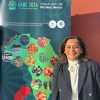
‘I Haven’t Forgotten Where I Came From,’ says Yvonne Pinto, Incoming IRRI Chief
Growing up on a small farming station in Holetta (Ethiopia), Yvonne Pinto would accompany her agriculturist father to the farm, where she would spend her time cross-fertilizing plants. Her tiny fingers making the task easier, as she would marvel at the end product of a prospective new and higher yielding variety. These formative years laid the foundation for her career in agricultural science.
Bali’s Ancient Canine Guardians on the Brink of Extinction
Bali's Island's ancient canine guardians, the proud descendants of lineages tracing back tens of thousands of years, stand on the brink of extinction. Culling triggered by rabies outbreaks and interbreeding is pushing these living cultural treasures towards a tragic end.
The World Social Forum: The counterweight to the World Economic Forum
This week the 2024 annual meeting of the World Social Forum (WSF) was held in Nepal. There were fifty thousand participants from over 90 countries, exchanging strategies to address the multiple global crises, from climate catastrophes to unfettered capitalism, inequality, social injustice, wars and conflict.
Unpacking 2023, the Warmest Year on Record
2023 was the warmest year on record. The latest Copernicus Climate Change Service highlights that February 2023 to January 2024 was the first time that we experienced 12 consecutive months of temperatures 1.5-degree hotter than the pre-industrial era.
#UNmute: Over 350 Civil Society Organizations Ask for Real Inclusion in UN Summit of the Future Negotiations
A coalition of over 350 civil society organisations part of the #UNmute initiative, shared concerns over the current engagement mechanisms for civil society at the UN – particularly in light of the upcoming Summit of the Future.
Coastal Indigenous and Minority Women Driving Kenya’s Blue Forest Conservation Efforts
Tsunza Peninsula is a natural wonder that sits just inside the many inlets of Mombasa Island on the border between Mombasa and Kwale Counties—a little-known spectacle of lagoons, islands, and thick mangroves in Kinango Sub-County, Kwale County, on Kenya’s coastal region.
Inside Kenya’s Seed Control Battle: Why Smallholder Farmers Want to Share Indigenous Seeds
A group of 15 smallholder farmers in Kenya petitioned the country’s High Court, seeking to compel the government to review sections of a law that bans the sharing and exchange of uncertified and unregistered seeds.« Previous Page — Next Page »





Through our global network of local writers, we are continuing our award-winning coverage of global and local environmental challenges, with a focus on the people for whom the ecosphere matters in a direct way: rural dwellers who have little means to protect themselves against adverse conditions; communities that need to switch to sustainable development in order to survive; poor women and children, who are the most vulnerable in natural disasters. Sponsored by the United Nations Environment Program (UNEP), the United Nations Development Program (UNDP) and The World Bank (WB), IPS also maintains the award-winning Tierramérica, a specialised information service on environment and development.

The Week with IPS

Tracking global progress towards a sustainable world


