
Sunday, October 25, 2026



News and Views from the Global South
Environment

Who Wants to Live by the Sea?
For most of history, only those who made their living from the sea chose to live on the coast. Fear of being battered by storms, not to mention vulnerability to attacks from foreign navies, kept most people inland. Gradually that changed and, along with fisherfolk and their families, the idea of a coastal location became something of a cult. High property prices still reflect its popularity. But is it any longer so desirable?
Cambodia’s Declining Fish Catch: Can the Tide Be Reversed?
Living in a floating village means embracing the rhythm of the ever-changing water. As I stroll through Kampong Khleang, flanked by wooden stilt houses lining sandy streets, I witness daily life unfolding. Alongside staircases, people prepare meals or run their little shops.
Small Island “Digital” States: Charting the Course for Transformation
Small Island Developing States, or SIDS, have long been pioneers in international development, often compelled by the challenges they face. Positioned on the frontlines of climate change, they lead efforts in mitigation, adaptation, and advocacy, and despite their geographical dispersion, they are innovating approaches to resilience and sustainability.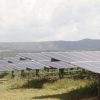
Phasing out from Fossil Fuels: An Imperative for Climate Justice
Climate change made 2023 the warmest year on record. As urgency mounts to address this worldwide crisis, phasing out the use of fossil fuels is a necessary step that all nations must take. This is because fossil fuels—coal, oil and gas -- are the primary drivers of the climate crisis accounting for over 75% of global greenhouse gas emissions and nearly 90% of all carbon dioxide emissions.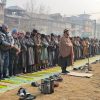
Snowless Winter and a Climate Crisis: Kashmir’s ‘Unprecedented’ Weather
Abdul Gani Malik, a 75-year-old goldsmith living in Kashmir’s capital, Srinagar, has witnessed eras of tranquility and turbulence in the Himalayan region. What he has not seen, however, is a snowless Kashmir during the winter.
Women Biomass Producers: Energy’s Largest and Largely Invisible Workforce
The International Energy Agency (IEA) held its annual ministers meeting last week in Paris, marking the 50th anniversary of the world’s leading energy organization. Critical topics on the agenda included energy security issues linked to Russia’s invasion of Ukraine and geopolitical tensions in the Middle East, as well as advancing a clean energy transition to meet global climate change goals.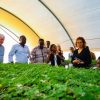
Smallholder Farmers Are Key to CGIAR Response to Hunger Crisis
Dr Ismahane Elouafi has her work cut out. As the new executive managing director of CGIAR, a global network of agricultural research centers, her mandate, simply put, is to tackle the world’s most severe hunger crisis in modern history. And it is in Africa that the former Chief Scientist of FAO with a PhD in durum wheat genetics faces her greatest challenges, both in terms of developing science-based innovations and technologies and lobbying governments to adopt responsible policies.
Inequality Also Afflicts Clean Energy in Latin America
The specter of blackouts hovers over the Mexican city of La Paz, the capital of the state of Baja California Sur in Mexico's far northwestern corner, as summer approaches, due to increased electricity demand from air conditioning and insufficient capacity in the local grid.
Grassroots Voices Unite to Call for Climate Justice
Kiprotich Peter from the East African country of Kenya is trying to convey his climate crisis message using the platform of the World Social Forum (WSF) taking place in the mountain nation of Nepal, which has also been battered by the impacts of climate change.
What if Super Bowl 2025 Attendees and All Stadium Food Selling Stores Carry Food Grown In Urban Areas?
Recently, a group of non-profit organizations launched the Inaugural Souper Bowl of Caring - a nationwide movement to address hunger-related challenges. It was an opportunity for VIP guests to engage and lend their support to end food insecurity as part of the Super Bowl. The goal is to encourage every viewer of the Super Bowl to contribute $1 or one can of soup.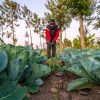
Start-ups Powering up Africa’s Solar Energy Ecosystem
Often referred to as the “Sun continent,” Africa receives more hours of bright sunlight than any other continent. But even with 60 per cent of the world’s solar resources, Africa has only one per cent of solar generation capacity, according to the International Energy Agency (IEA).
Nepal Farmers Face Another Year of ‘Agricultural Drought’, Threatening Food Security
Najboon Khatun looks up at the sky every day, searching for the possibility of rain. Clouds come and go without a drop of water. “Winter crops like wheat and vegetables need water, but like last year, there has been no rainfall yet,” says 65-year-old Khatun, expressing her anguish. In her village in Dhanusha, one of the agricultural hubs in the southern plains of Nepal, farmers mostly depend on rain as a source of irrigation. However, they are facing yet another year of drought, affecting winter crops, including wheat, mustard, lentils, and vegetables.
State of the World’s Migratory Species Report ‘Alarming’ Threats, Global Action Urged
A groundbreaking State of the World’s Migratory Species report is calling for accelerated global conservation measures to counter the threat of extinction faced by 1 in 5 of all migratory species.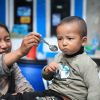
Climate Change Is Amplifying Households’ Food Insecurity, Putting More Pressure on Women’s Mental Health
Studies have long shown that some women’s lower status in Nepali households could mean that they eat last and less and as a result lack nutrition. Experts are now looking into how this could affect their mental health, and if the growing impacts of climate change might amplify the process.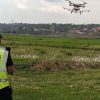
Proven Vector Control Interventions Needed to Stem Malaria Infections in Africa
Experts recommend that the current prevention of malaria in highly endemic countries in Africa should integrate "locally appropriate" control measures to cope with the highest burden of mosquito-borne disease on the continent.
Is Anti-Woke a Grass-Root Movement?
“Woke” was for a century, especially among black people in the US, an inspirational concept. However, almost overnight it turned into a pejorative. Like using the term “politically correct” as an insult, calling someone “woke” came to imply that the referred person’s views are excessively ridiculous, or even despicable. Being “anti-woke” has become an indication that you do not belong to an assumed group of “do-gooders”, who at the expense of right-minded “ordinary” citizens assert the demands of interest groups, which declare themselves to be discriminated against due to their ethnicity/race, gender, sexual preference, and/or physical or psychological disabilities.
Embodying the Spirit of the Dragon
The Year of the Dragon is upon us. UN Secretary-General António Guterres said in his message for this Lunar New Year, “The dragon symbolizes energy, wisdom, protection and good luck. We need these qualities to rise to today’s global challenges.”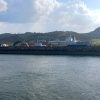
Drought Narrows the Panama Canal, Delays Shipping
At the bar that Sandra manages in Panama City's central financial district, the variety offered on the menu has shrunk due to delays in ship traffic through the Panama Canal, one of the world's major shipping routes.
Hit by Climate Change, Authorities Seek to Improve Saffron Yields in Kashmir
Saffron, the expensive spice from the Kashmir Himalayas, has been facing challenges for years, mostly related to yields and inadequate irrigation compounded by the climate crisis.
Road to COP29: Highest Climate Ambitions Needed to Decarbonize World
The road to COP29 has begun in earnest in the backdrop of a global climate report indicating that not only was 2023 the warmest year in a 174-year climate record, it was the warmest by far. Record-breaking temperatures, combined with El Niño, pushed vulnerable and poor nations in the Global South to the frontlines of extreme and severe weather events.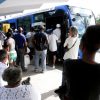
Cubans Are Waiting for a Major Boost to Low Emissions Transport
Jorge Sarmientos said he made a good investment when he bought an electric motorcycle to get around and avoid the anxiety suffered by the users of Cuba's deficient public transportation system or the high prices of private alternatives.« Previous Page — Next Page »





Through our global network of local writers, we are continuing our award-winning coverage of global and local environmental challenges, with a focus on the people for whom the ecosphere matters in a direct way: rural dwellers who have little means to protect themselves against adverse conditions; communities that need to switch to sustainable development in order to survive; poor women and children, who are the most vulnerable in natural disasters. Sponsored by the United Nations Environment Program (UNEP), the United Nations Development Program (UNDP) and The World Bank (WB), IPS also maintains the award-winning Tierramérica, a specialised information service on environment and development.

The Week with IPS

Tracking global progress towards a sustainable world


