Languages
Wednesday, July 1, 2026



News and Views from the Global South
Water & Sanitation

MALAWI: Women Get Dirty to Stop Water Scarcity
Ethel James cannot wait for the gravity-fed water scheme in her area to be fixed so that she and the other women in her village will no longer have to wake up before dawn everyday to queue for water.ZIMBABWE: Mending the City’s Water Leaks
Thomas Njini is used to working with burst sewers and water pipes. It is a daily experience for him to respond to calls where he has to shovel human waste to clear blocked sewers. It is a job he continues to do with unenviable dedication in this city of two million people.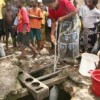
SOUTHERN AFRICA: Majority Still Lack Access to Safe Water
Only two in every five people in the Southern African Development Community has access to safe water for drinking and household use. Three quarters of those lacking access, live in rural areas and the majority of these are women and children.
SOUTH AFRICA: Scientists Find Green Method to Purify Toxic Water
South African scientists have developed an environmentally friendly method to clean highly toxic water and convert it into drinkable water. Once available commercially, the method could drastically reduce the negative impact industry has on water pollution worldwide.
SOUTHERN AFRICA: Trying to Access Funding for Climate Change
Leaving out non-governmental organisations in climate finance strategies will result in little impact on the ground in the southern Africa region.
CLIMATE CHANGE: Water Sources Need to be Protected
Seventy-five-year-old Verdiana Protas is worried that the 20 cattle she bought with her pension money will soon die because the 10-kilometre-long river in her village in northwest Tanzania has been dry for two years now and finding alternative sources of water is getting more and more difficult.
SOUTHERN AFRICA: Getting Water to the People
The Southern African region is underutilising its water – a resource to which its citizens already have limited access.
ZIMBABWE: Harvesting Water for Food Security
Earth mounds running across her field hold back the water that Caroline Ndlovu uses to grow maize, pumpkins, beans and watermelons long after the short rainy season in this arid part of Zimbabwe.
DR CONGO: Water Shortages Grip the Capital
In recent months, no one in the Congolese capital has been spared the effects of water shortages. Where spending entire days criss-crossing Kinshasa in search of water with battered containers in hand was previously the unhappy task of women and children, now men in suits have joined the fray.MALAWI: Power Interconnection Project Costly but Needed
In Malawi’s administrative and commercial capitals, Lilongwe and Blantyre, two things are clear, especially at night: blackouts and the sound of generators in various workplaces.
HEALTH: Water, Sanitation Could Erase Cholera and Guinea Worm
The World Health Assembly could adopt landmark resolutions asking governments to improve water and sanitation to eradicate cholera and guinea worm, the latter of which exists in just four countries in Africa. While safe drinking water and toilets are the most cost-effective public health measures, they have not been a priority for most developing countries.
DEVELOPMENT: Chinese Step In, Efficiently
For Jany Chen from Shanghai, concern often-raised in Europe and North America about the Chinese invasion of Africa is a lot of wasteful talk that deserves to be flushed down the toilet. Efficiently.
DEVELOPMENT: Women Demand Access to Water and Energy
"Women in LDCs bear the brunt of economic and social hardships," said Wubitu Hailu, managing director of an Ethiopian NGO, the Kulich Youth Reproductive Health and Development Organisation. The failure to provide access to basic services like clean water and electricity is a major factor preventing women from realising their full potential.DEVELOPMENT: Swazi Village Tastes Sweet Success with Sugarcane
The previously impoverished community of Malibeni, previously ravaged by drought, is bustling with farmers who have transformed the area into a bread basket. Lush green fields of sugarcane and vegetables have replaced an expanse of dry shrubs near this community in northeastern Swaziland.WATER-SOUTH AFRICA: Managing Flooding on the Orange River
Many farms and crops were devastated when the January floods hit South Africa at the start of this year. Farmer organisation Agri South Africa (AgriSa) estimated damages as high as 270 million dollars.
SOUTHERN AFRICA: Assessing the True Value of Water
As water resources in Southern Africa come under pressure from growing population, climate change and increasing industrial and agricultural use, economic accounting for water is among the tools that could aid better management.BOTSWANA: Capital Upgrade for City’s Sewers
The evidence of Gaborone's inadequate sewerage system hangs in the air over the Botswana capital's low income area. Pit latrines dominate, and residents complain that the city doesn't empty them frequently enough. But the end may be in sight.KENYA: Sustainable Energy in the Heart of the Slums
Talk about foul foundations: the Katwekera Tosha Bio Centre is built on the stuff that goes into toilets. This community centre in the Nairobi slum of Kibera goes well beyond solving sanitation problems - it is a model for green energy, a meeting place for locals, and turning a profit for its operators.
MADAGASCAR: Applying Local Resources to Sanitation
"We're calling on all citizens," said Riovoarilala Rakotondrabe, putting the final touches on a giant poster announcing a massive community clean-up for the coming Sunday.Heaviest Ever Floods in Northern Namibia
North-central Namibia is experiencing the heaviest floods ever recorded, but unlike in previous years, the area is fully prepared.Peak Water Has Already Come and Gone
Canadian Kevin Freedman is celebrating World Water Day Tuesday by living on 25 litres of water a day, instead of the North American average of 330 litres per day. And he has enlisted 31 others in his "Water Conservation Challenge" to go water- lean, using just 25 litres per day for cooking, drinking, cleaning, and sanitation for the entire month of March.« Previous Page — Next Page »


The Week with IPS

NEXT STOP - SDGs
Tracking global progress towards a sustainable world
Tracking global progress towards a sustainable world
