Languages
Tuesday, October 20, 2026



News and Views from the Global South
Featured

The Inter-American Development Bank Invest Talks Growth– but Ignores People Bearing the Cost
In Asunción, Paraguay last month, finance ministers, central bank presidents, and private sector leaders gathered for the Inter-American Development Bank’s (IDB) Annual Meetings to talk about growth.
It Is Time For Africa to Fund Its Health Security
Relying on foreign aid is bad for Africa's health and it must stop if the continent is to enjoy health security.
ITALY: ‘White Supremacist Concepts Are Entering Mainstream Political Discourse on Migration’
CIVICUS discusses Italy’s restrictive immigration policies with Eleonora Celoria, a researcher at FIERI (Forum Internazionale ed Europeo di Ricerche sull’Immigrazione), a research centre on migration, and a member of the Association for Legal Studies on Immigration (ASGI), an Italian legal organisation that defends migrants’ and asylum seekers’ rights through advocacy, public awareness and strategic litigation.
UN80: UN General Assembly Adopts Resolution on Mandate Review
UN Member States made progress toward the UN80 initiative by adopting a resolution that would implement a mandate review, which is set to pave the way to strengthen the process of mandate creation and implementation.
MC14 Exposed US Heavy Hand at the WTO; Developing Countries Need Each Other
The WTO's 14th Ministerial Conference (MC14), which took place from 26 to 30 March 2026 in Cameroon, was reported as a collapse resulting from the stand-off between Brazil and the United States on the extension of the e-commerce moratorium. This is one screen shot of a bigger unfolding story where the US is attempting to enforce its will on the organization, while some are resisting.
Artisanal Miners in Western Kenya Move Away From Mercury
They call this land Bushiangala. Gold has been mined here for nearly a century. In 1931, colonial prospectors arrived after traces were found in the nearby Yala River, setting off a rush that changed this quiet corner of western Kenya.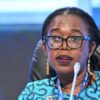
UNECA Warns Africa Risks Remaining Uncompetitive, Urges AI Adoption
Africa must move swiftly to harness data and frontier technologies such as Artificial Intelligence (AI) to drive its economic growth and make the continent globally competitive in the digital economy, a senior official at the United Nations Economic Commission for Africa (ECA) has told policymakers.
CONGO: ‘The Result Was Already Decided Before Polling Stations Opened’
CIVICUS discusses the presidential election in the Republic of the Congo with Ivan Kibangou Ngoy, executive director of Global Participe, a civil society action-research organisation focused on democratic governance based in Pointe-Noire.
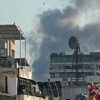
Escalation in Middle East Reverses more than a Year of Economic Growth in the Region
New estimates by the United Nations Development Programme (UNDP) suggest the military escalation in the Middle East, now into its fifth week, may cost economies in the region from 3.7 to 6.0 percent of their collective Gross Domestic Product (GDP).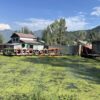
Once Evicted From This Kashmir Lake, People Now Seen as Its Saviours
For the past few weeks, residents living in and around Dal Lake in Indian Kashmir have witnessed “a different phenomenon” as a green sludge has accumulated on the once pristine water. Photos circulating widely on social media triggered a public outcry.
The United Nations Needs a Secretary-General of Courage, Not Convenience
The United Nations was not founded to be comfortable; it was founded to be necessary. Created in the aftermath of catastrophe, its purpose was clear: to maintain international peace and security, to uphold international law, to defend human rights and to promote human dignity and development.
Experts, Rights Groups Warn of Crisis of Obstetric Violence
Government and medical professionals must implement systematic changes to deal with a “crisis” of obstetric violence (OV) across Eastern Europe and Central Asia (EECA), experts and rights campaigners have said.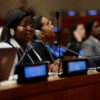
CSW70: Women’s Equality under Siege
On 19 March, the Commission on the Status of Women (CSW) did something unprecedented in its eight-decade history: it held a vote. The Trump administration, having spent two weeks attempting to defer, amend and ultimately block the session’s main outcome document, known as the agreed conclusions, cast the only vote against its adoption. That dissenting vote said a lot, as it came from the world’s most powerful government, backed by financial leverage, bilateral reach and a network of anti-rights states and organisations that are making inroads at many levels.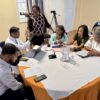
Caribbean Leaders and Civil Society Prepare for Global Push on Fossil Fuel Phase-Out
As the world edges closer to breaching key climate thresholds, Caribbean policymakers, scientists and civil society leaders gathered in Saint Lucia this month to coordinate the region’s position ahead of a landmark global meeting on transitioning away from fossil fuels.
War in Iran, Middle East Threatens Global Agrifood Systems
The current conflict in Iran and the Middle East region threatens to disrupt the global energy and agri-food sectors, as the closure of the Strait of Hormuz affects oil and fertilizer exports for farmers during critical harvest seasons.
PORTUGAL: ‘The Far Right’s Electoral Legitimacy Can Eventually Become Governmental Power’
CIVICUS discusses Portugal’s presidential runoff election and the rise of the far-right Chega (Enough) party with Jonni Lopes, Executive Director of Academia Cidadã (Citizen Academy) and a Steering Committee member of the European Civic Forum, an organisation working on civic engagement, democratic participation and the protection of civic space at national, regional and international levels.

Torture and Physical Abuse of Children in Gaza Declared War Crimes
The ongoing Israeli-Palestinian conflict, which began October 2023, has claimed the lives of more than 73,600 Palestinians and about 1,195 Israelis. But there are widespread charges accusing Israel of war crimes, genocide, torture and the abuse of Palestinian detainees in Israeli jails.
Nepal’s Gen Z Electoral Revolution
Less than six months after Nepal’s Generation Z rose up in protest, the country has a new prime minister. A 35-year-old former rapper who soundtracked the protests swept to power in a landslide in the 5 March election.
EXCLUSIVE: Water Laureate Kaveh Madani on Arrest, Exile and Fight for Science
Professor Kaveh Madani of Iran has been named the 2026 Stockholm Water Prize laureate. The award will be formally presented by King Carl XVI Gustaf of Sweden in August during World Water Week in Stockholm.
As East Africa’s Migratory Fish Vanish, a Food Security Crisis Surfaces
By the time the auction begins at Nangurukuru fish market in Tanzania’s southern Lindi region, the crisis is already visible. Wooden canoes that once returned from the Rufiji River with heavy catches now bring only a fraction of what they used to. Traders scan for the long-whiskered catfish that once defined the market but find none.
What the US Really Wants from MC14 in Yaoundé
As trade ministers gather in Yaoundé, Cameroon, for the WTO’s 14th Ministerial Conference (MC14) on 26–29 March 2026, the preparatory process has produced a dense fog of competing reform proposals, draft ministerial statements, and work plans.« Previous Page — Next Page »





The Week with IPS

NEXT STOP - SDGs
Tracking global progress towards a sustainable world
Tracking global progress towards a sustainable world
