Languages
Wednesday, November 11, 2026



News and Views from the Global South
Featured

UN Takes Preventive Measures Following 5,660 Lab-Confirmed COVID-19 Cases System-Wide
As we navigate the COVID-19 pandemic response, I would like to assure you once again that the health and safety of personnel and delegates continues to be our number one priority.
UN’s $5.1 Billion Shortfall Threatens Operations Worldwide
When the United Nations was struggling to cope with a cash crisis back in April 1996, one of the many drastic measures it undertook was to cut down on its staff.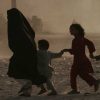
Women in War-Ravaged Afghanistan Fight Back for Their Rights
Bullets, bombs, tyranny and torture. Children crying for food, civilians struggling to survive, women unable to walk out of their homes freely. When we are not under siege from bombs and landmines, ordinary Afghans suffer from hunger, natural hazards and poverty.
Forced Child Marriage & Conversion: Public Discussion & Legal Reforms Called for in Pakistan
October 13 began like any other day at the Lal house as Raja Lal and his wife Rita Raja left for work at 7:30 am. "I made the usual breakfast of anda paratha (egg and flat bread) and told my eldest to lock the door from inside," Raja, who works as an ayah in a school, told IPS. Their 13-year old daughter, the youngest of their four children, did not go to school that day as her school shoes no longer fit and her parents hadn’t bought her a new pair yet. Little did they know that that day was the beginning of a nightmare for the Lal household. Their daughter would then allegedly be "abducted, forcefully converted and married in just one day”, Lal, a Christian, told IPS.
UN at 75: Slow Death or a New Direction – Part 2
Kofi Annan’s Secretary-General-ship was a second honeymoon for the UN, coming six years after the fall of the Berlin Wall it was a moment of hope and alignment between the major powers of which he took ample advantage.
Solving the Challenge of Food Security Key to Peacebuilding in the Sahel
In 2013, when Jamila Ben Baba started her company, the first privately owned slaughterhouse in Mali, she did so in the midst of a civil war as Tuareg rebels grouped together in an attempt to administer a new northern state called Azawad. Ben Baba, who is originally from Timbuktu, in northern Mali — where much of the civil war conflict took place — based the business in the country’s western region of Kayes and grew it into what is considered the largest private slaughter house in the West African nation.
UN at 75: Slow Death or a New Direction – Part 1
Let me begin with an appeal to our venerable friend, the UN: get down on the ground with the grandchildren. Just having celebrated its 75th birthday, we can hear your knees creak! The UN, for as long as I have known it up close- since its thirties- has often seemed prematurely old.
Building Blocks for Nuclear Ban Treaty: NPT & Advisory Opinion of the International Court of Justice
The Treaty on the Prohibition of Nuclear Weapons (TPNW) will become binding law for participating states on January 22, 2021. Entry into force was triggered on October 24, the date marking the 75th anniversary of the United Nations, when Honduras become the 50th state to ratify the TPNW, reaching the threshold set by the treaty.
Driving Climate Change from the Top in the Dominican Republic
When President Luis Abinader arrived at his inauguration in an electrically driven car as a symbolic gesture of his Government’s intentions to make sustainable development one of its main objectives – he signalled the start of addressing climate change commitments in the country.
The Rape of India’s Dalit Women: It’s All about Gender & Class Subordination
Shabnam*, a young woman from Northern India’s Haryana state, is two years away from becoming a law graduate. She sees parallels between her own rape and that of the 19-year-old Maha Dalit woman whose brutal rape and torture by a group of men from a “dominant” or “higher” caste in the neighbouring state of Uttar Pradesh triggered nationwide protests.
Economic Trends and What’s Important in Life
US third quarter GDP numbers released two weeks ago delighted stock markets and President Trump. Output had picked up by 7.4%, annualised as 33.1%, the largest quarterly economic growth on record, almost double the old record of 3.9% (annualised as 16.7%) in the first quarter of 1950, seven decades ago.
Q&A: COVID-19 has Pushed Women Peacebuilders from Key Leadership Roles
Women need to be given roles as negotiators, not just offered representation through advisory groups, Agnieszka Fal-Dutra Santos from the Global Network of Women Peacebuilders (GNWP) told IPS.
20th Anniversary of UNSCR 1325: Much Remains to Be Done
In 2010, at the opening session of the civil society forum observing the tenth anniversary of UN Security Council Resolution 1325 on “Women and Peace and Security”, I had the honor to declare 1325 as “the common heritage of humanity” indicating the wide-ranging nature of the potential benefits which will flow from the landmark resolution’s full and effective implementation by all at all levels.
In the Face of a Pandemic, the World Turns to Trade
Greatly affected by the coronavirus pandemic, international trade can play a key role in the economic recovery, but it must overcome obstacles, such as protectionism and commercial disputes, especially between the United States and China.
Nuclear Arms Control in Crisis While US Exerts Pressure on Treaty Signatories
Responding to a question, Albert Einstein, the German-born physicist who won the 1921 Nobel Prize for Physics, predicted rather ominously: “I do not know with what weapons World War III will be fought, but World War IV will be fought with sticks and stones.”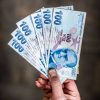
Crisis alla Turca II – From Currency Crisis to Debt Crisis?
The meltdown of the Turkish currency that began in 2018 has continued unabated with the decline reaching unprecedented proportions in recent days. The causes of that turmoil including underlying financial fragilities and political shocks were discussed in a previous piece by this author. Since then the economy has become even more vulnerable in these respects.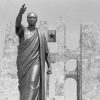
Reclaiming Africa’s Early Post-independence History
In 1965, Kwame Nkrumah described the paradox of neocolonialism in Africa, in which “the soil continue[s] to enrich, not Africans predominantly, but groups and individuals who operate to Africa’s impoverishment.” He captured what continues to be an essential feature of Africa’s political economy.
Distributed Generation Provides Hope of Energy for the Poor in Brazil
"Showing solidarity is consuming the energy generated in your own municipality" - this is the motto of a project of distributed electricity generation in one of Brazil's many poor neighbourhoods.
Cultivating an Eco-friendly Culture in Indonesia’s Schools
In West Jakarta, Indonesia, teachers at the private Santo Kristoforus High School are so environmentally conscious they make other schools seem a little bit green when it comes to environmental education.
Global Data Community’s Response to COVID-19
The world is currently counting more than 42 million confirmed cases of the COVID-19 and over 1 million deaths since the start of the pandemic.1
The Mental Health Consequences of the Lekki Toll Gate Attack
On October 20, 2020, young Nigerians who were protesting against police brutality were shot by men in Nigerian military uniforms. Unarmed, peaceful citizens were massacred at the Lekki Toll Gate in Lagos, southwest Nigeria.« Previous Page — Next Page »





The Week with IPS

NEXT STOP - SDGs
Tracking global progress towards a sustainable world
Tracking global progress towards a sustainable world
