Languages
Wednesday, November 11, 2026



News and Views from the Global South
Featured
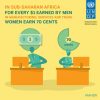
African Employers for Gender Equality
Africa has over 700 companies with an annual revenue of more than $500 million, including 400 with revenue above $1 billion. The ability of these companies to thrive rests on building and retaining talented women and men.
Eswatini makes Progress on NDCs thanks to Crucial Partnership Support
Barry de Maine, the director of Green Cross Pharmacy, lost about $ 7,675 worth of stock when The Mall, the largest shopping centre in Mbabane, was flooded back in 2003. But when the flash floods hit again this year, he had already installed a flange to stop water from coming in. “This is the best I could do under the circumstances,” De Maine told IPS, adding: “Otherwise since we started experiencing floods at The Mall (17 years ago) nothing has been done.”
Our Development Priorities Have Shifted to the Immediate Task of Saving Lives & Livelihoods.
We have come to the point in the agenda where we must take a ‘deep-dive’ in reviewing the lessons learnt so far in our response to the COVID-19 pandemic, in order to chart a way for the future. But the future, by its very definition, must be relative. Flexibility and change will define policy making and the scope of action needed for development.
COVID-19 Compounding Inequalities
The United Nations’ renamed World Social Report 2020 (WSR 2020) argued that income inequality is rising in most developed countries, and some middle-income countries, including China, the world’s fastest growing economy in recent decades. Inequality dimensions While overall inter-country inequalities may have declined owing to the rapid growth of economies like China, India and East Asia, national inequalities have been growing for much of the world’s population, generating resentment.
Reversing the Rohingya Crisis: One Woman at a Time
“This is a crisis without a quick fix that could take years to resolve unless there are concerted efforts to address its root causes”, says Manuel Fontaine, UNICEF Director of Emergency Programmes.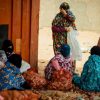
The Silence of the International Community on Western Sahara
For my entire life, I have been forgotten. I am a Sahrawi refugee, born and raised in the Algerian desert, where my people have remained displaced for 45 years, awaiting the moment when we can finally return to our homeland, Western Sahara.
WFP – ‘Focus on Starvation, Destabilisation and Migration to Avert a COVID-19 Global Food Crisis’
Food security has become a priority in the Caribbean as COVID-19 pandemic travel restrictions have hit the tourism-dependent region hard.
African Languages Matter: Is There Still Time to Prevent Cultural Genocide?
As a 10 year-old newly arrived in Lagos from England, I recall listening intently to how the Yoruba language - my father's language - was spoken. I would constantly repeat in my head or verbally repeat what I thought I had heard. I was not always successful. Many times, what would come out of my mouth would throw my friends into fits of laughter.
US Republican Party’s Soul in Danger as Trump Hijacks the GOP
What has happened to the Republican Party? Picking Donald Trump in 2016 as the Republican candidate, giving him victory in primary after primary and later tolerating his idiosyncrasies and unpredictably dangerous behaviour and policy decisions were bad enough however much one tries to digest them as vagaries of the democratic tradition.
Secretive Mega-Trade Deal Rules Could Harm Asia’s Covid-19 Recovery
Fifteen countries will sign a mega-trade deal at the ASEAN conference this weekend imposing secretive restrictions on how governments help workers through the pandemic, trade union leaders and parliamentarians have warned.
Global Summit of Development Banks Fails to Learn from Destructive Past
This week, 450 public development banks from around the world met for the Finance in Common Summit at the Paris Peace Forum. They gathered to discuss how they can direct their combined investments of over USD 2 trillion - 10% of total investments in the world - “to support the transformation or the global economy” and “build new forms of prosperity that take care of people and the planet.”
Vietnam Takes the Lead on Indo-Pacific Economic Integration
This was the year that Vietnam was poised to make progress on its rise as a regional leader. Under the auspices of Vietnam’s ASEAN chairmanship, a breakthrough in global trade has been achieved despite rising protectionism and a global pandemic.
Despite Conflict and COVID-19, Children Still Dream to Continue Their Education in Afghanistan
As if four decades of war were not enough, then came the pandemic. For each of the past five years, Afghanistan has been identified by the United Nations as the world’s deadliest country for children and, despite progress made in peace talks between the government and the Taliban, child and youth casualties from the ongoing conflict continue to mount in 2020.
Trump’s “America First” Foreign Policy Faces an Unceremonious Burial
The ouster of Donald Trump from the US presidency last week may well be the dawn of a new era for multilateralism – and perhaps for a besieged United Nations— after nearly four years of misguided political rhetoric emerging from the White House.
The Covid Pandemic: Broadening the Discourse
SARS-CoV-2, the corona virus that causes COVID-19, has been spreading exponentially across the world over the last ten or so months. As of November 6th, according to the Center for Systems Science at Johns Hopkins University, there have been 49,195,581 cases of COVID-19, including 1,241,031 deaths.
Is Development for the World Bank Mainly Doing Business?
The World Bank has finally given up defending its controversial, but influential Doing Business Report (DBR). In August, the Bank “paused” publication of the DBR due to a “number of irregularities” after its much criticized ranking system was exposed as fraudulent.
Q & A: Escalating Tensions in Ethiopia adds to Tenuous Refugee Setting
Already reeling from conflict, extreme weather events and growing displacement due to the COVID-19 pandemic, escalating tensions in Ethiopia’s Tigray region have placed the country on the brink of civil war and many are looking to Nobel Peace Prize-winning Prime Minister Abiy Ahmed to avert a potential humanitarian disaster.
Chile’s Energy Revolution Has an Achilles’ Heel
The Atacama Desert, a giant reservoir of solar power, is the battering ram of the transformation undertaken by Chile to decarbonise its energy mix, in a country with enormous potential in non-conventional renewable sources.
Q&A: How Desert Dust Storms Supply Vital Nutrients to the Oceans
When sand and dust storms (SDS) rage in the Sahara Desert, more than 10,000 km away in the Caribbean Sea the very same storms have a range of effects on the 1,360 species of shorefish that populate the waters there.

From Paraguay to Italy: Development at All Costs
I am speaking with Gladys and Raúl about civic space in Paraguay, when Raúl suddenly tells me about the fires. Thick smoke has reached the capital Asunción where he is based. In October, Paraguay became Dante’s Inferno.
Punches & Insults: Why Zimbabwe’s Women Candidates Want to Change the Political Playing Field
“I have long given up on active politics,” Gertrude Sidambe, a 36-year-old member of one of Zimbabwe’s opposition parties, tells IPS. When female members of the ruling Zimbabwe African National Union – Patriotic Front complained last month about political violence as male members chose brawn over brains to solicit for positions, the party’s National Secretary for Women’s Affairs Mabel Chinomona advised that they enter the punch-and-insult battlefield and “fight” like everyone else.« Previous Page — Next Page »





The Week with IPS

NEXT STOP - SDGs
Tracking global progress towards a sustainable world
Tracking global progress towards a sustainable world
