Languages
Wednesday, November 11, 2026



News and Views from the Global South
Featured
Africa Needs a DOVE Fund: Or Should We Starve So We Can Pay our Debts?
Sub-Saharan Africa has a debt problem. According to the most recent World Bank debt statistics, in 2018 the region had about $493 billion in long term external debt.
Covid-19 Straw Breaks Free Trade Camel’s Back
Economic growth is supposed to be the tide that lifts all boats. According to the conventional wisdom until recently, growth in China, India and East Asian countries took off thanks to opening up to international trade and investment.
Coronavirus Leads to Nosedive in Remittances in Latin America
Remittances that support millions of households in Latin America and the Caribbean have plunged as family members lose jobs and income in their host countries, with entire families sliding back into poverty, as a result of the COVID-19 health crisis and global economic recession.
Forced Marriage, Organ Trafficking Rife in Asia Pacific – Part 2
A single mother, Mai (name changed) had the responsibility of providing for her young son and grandparents, who had brought her up in a poor rural province in southern Vietnam’s Mekong Delta. While she was looking for employment, somebody approached her on social media with an offer of a high-paying job in China. When she arrived in China, she was sold into a forced marriage.
United States Leads the World in Covid-19 Deaths
It’s an indisputable fact: the United States leads the world in the number of Covid-19 deaths. As of 15 May, three months after the country’s first confirmed coronavirus death, the US death toll from the pandemic has reached a remarkable 88,000 deaths. That rising figure is more than double the number of coronavirus deaths of the next highest country, the United Kingdom at 34,000 deaths.
South Africa Must Respond – & Lead– on COVID-19 & SDGs
Sitting on the southern tip of Africa during a time of social distancing, while the entire planet fights Covid-19, we cannot help but reflect on how vulnerable our country is to this scourge.
My Adherence My Fallacy: Stigma and Mental Health
The World Health Organization (2019) states that every 40 seconds someone dies by suicide. Annually, this represents over 800,000 people, more than the number of people who die in conflict and by homicide put together. Every suicide is a tragedy that has long-lasting effects on the people left behind and most cases stem from prolonged mental health issues and abuses that are not reported.Change is Coming for Youth-led Ocean Activism
The youth’s role in environmental action remains crucial and leaders must ensure that they are given proper access under current circumstances to carry out that work, activists said at a online meeting held this week.
Modern Slavery in Asia Pacific Fuelled by Widespread Poverty, Migration & Weak Governance – Part 1
Aged 17, Moe Turaga was saddled with the responsibility of providing for his mother and young siblings when a family member approached him with the promise of a job and education in Australia. Dreaming of a bright future for himself and his family, he seized the opportunity and left the protective confines of his home in Fiji, only to find himself trapped in modern slavery on a remote agriculture farm in the state of Victoria.
Curbing Land Degradation & Protecting the Environment in Mongolia
Mongolia is one of the most sparsely populated countries in the world. Yet, more than 70 percent of its surface is affected by land degradation. Mining activities in several parts of the country have been a source of humanitarian and environmental concern. However, different stakeholders are coming together to work towards restoration and rehabilitation.
Stay Home? Wash Hands? But 1.8 Billion Remain Homeless & 3.0 Billion Have No Access to Water
The relentless battle against the devastating coronavirus pandemic has been underlined by several widespread advisories from health experts – STAY HOME. WASH YOUR HANDS. WEAR MASK. KEEP SOCIAL DISTANCE.
Beyond Trump— US, UN & Global Health Governance
US President Donald Trump’s battle with the World Health Organization (WHO) hides two important issues. One, the long running love-hate relationship between the US and the UN, and two, a better understanding of how global public health is governed and in the overall context of global governance.
The UN Is Hunting for a New Medical Director, Based in New York City
“Are you a senior medical executive with expertise in healthcare management with oversight of clinical services and occupational health at a facility, state, national or international level? The United Nations Secretariat is seeking a Medical Director at the D-2 level in the Department of Operational Support,” an ad posting on the UN’s job portal reads.
The Commonwealth’s Response to COVID-19
The Coronovirus pandemic has been an unforgiving test of advanced economies. Health systems in the United States, France, Italy, Spain, and the UK have been put under immense pressure, with shortages of doctors, ventilators, personal protective equipment and the capacity to test for the virus. Their economies have been battered and the consequences are spoken of in terms of the Great Depression.
On the Agenda of Iraq’s New Government: An Empty Treasury, Low Revenue, and COVID-19
Iraq’s newly-announced leader has brought hope to a country embroiled in a 17-year-long conflict, but authorities must ensure that issues such as swift and rapid response to COVID-19, security concerns, and corruption among others are addressed with urgency, experts said on Tuesday.
Malawi’s Vulnerable Shortchanged in Human Trafficking Prevention Efforts
Malawi is not doing enough to enforce its laws on human trafficking, resulting in a number of cases against perpetrators being dismissed by the courts, according to a local rights group. But local officials say that this Southern African nation — one of the poorest countries in the world — just doesn’t have the financial resources to do so.
Why Some National Health Care Systems Do Better than Others
In public health discussions, it is generally recognized that the social returns to health care investments are greater than the private returns, and much of such investments should be financed by the state.
Housing is Both a Prevention & Cure for COVID-19
Public health officials are calling the “stay home” policy the sacrifice of our generation. To flatten the curve of COVID-19 infections, this call of duty is now emblazoned on t-shirts, in street art and a celebrity hashtag.
COVID-19: Zimbabwe’s Smallholder Farmers Step into the Food Supply Gap
Bulawayo, Zimbabwe' second city of some 700,000 people, has experienced a shortage of vegetables this year, with major producers citing a range of challenges from poor rains to the inability to access to bank loans to finance their operations. But this shortage has created a market gap that Zimbabwe smallholders — some 1.5 million people according to government figures — have an opportunity to fill.
COVID-19: Why We Must Reset Our Thinking
Covid-19 is the most significant event since the Second World War. It changes everything. It brings great sadness to many of us as we lose loved ones, as we see people losing their jobs, and as we see people around the world suffering immensely.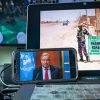
US Pulls the Plug on a UN Global Cease-Fire Resolution
After six weeks of negotiations, the United States shot down hopes for a resolution to be approved in the United Nations Security Council on May 8, refusing to back worldwide cease-fires as the US continues to castigate China and the World Health Organization for the Covid-19 pandemic. Meanwhile, momentum behind tenuous cease-fires is vanishing, experts say.« Previous Page — Next Page »





The Week with IPS

NEXT STOP - SDGs
Tracking global progress towards a sustainable world
Tracking global progress towards a sustainable world
