Languages
Thursday, November 12, 2026



News and Views from the Global South
Featured

How to ‘Fix the Business of Food’ and Save the Planet
With up to one billion undernourished people around the world, and agriculture and land use systems increasingly vulnerable to climate change and land degradation, more companies within the global food industry need to start aligning their operations with the United Nations Sustainable Development Goals or SDGs.
At the U.N., it Was the Day of Populist Strongmen
The United Nations is an institution which promotes multilateralism and preaches some of the basic tenets of multiparty democracy and liberalism, including the rule of law, universal human rights, free speech, civil liberties, the rights of refugees and freedom of the press.
Nature’s Solution to Climate Change
When it comes to saving the planet, one whale is worth thousands of trees.

Advice to US: When You’re Going to a Gunfight, Bring all Your Friends with Guns
Jim Mattis a former United States Defense Secretary in the Trump administration quotes a Marine Corps dictum in a recently released book titled “Call Sign Chaos: Learning to Lead”.
World Summit of Nobel Peace Laureates Calls for Decisive Action, With No Time to Waste
In a world of increasing fragility and declining resources, can the world foster peace? With a looming climate crisis, is war inevitable? Will nuclear war be the final result? Are women the ultimate peace builders? How do we train and engage youth to promote peace?
50 Days of Kashmir Under Lockdown – in Pictures
It is 50 days into the lockdown in Kashmir since roads were blocked off, schools shut, and internet and communication services stopped.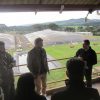
In Southern Brazil, Need Becomes an Environmental Virtue
The state of Santa Catarina in southern Brazil is the largest national producer and exporter of pork and this year it also leads in exports of chicken, of which it is the second-biggest producer in the country.
World’s Hard Fought Battle Against Climate Change
UN Secretary-General Antonio Guterres describes the ongoing crisis as a “climate emergency”-- as the world continues its hard fought battle against devastating droughts, floods, hurricanes and rising sea levels that threaten the very existence of small island developing states located in low-lying areas.
Confronting the New Climate Reality in Asia and the Pacific
In less than ten days world leaders will be gathering at the United Nations in New York for the Climate Action Summit. Their goal is simple; to increase ambition and accelerate action in the face of a mounting climate emergency. For many this means ambition and action that enables countries to decarbonize their economies by the middle of the century. But that is only half the equation. Equally ambitious plans are also needed to build the resilience of vulnerable sectors and communities being battered by climate related disasters of increasing frequency, intensity and unpredictability.
‘I Want my Kids to Know What a Rhino and Turtle Are’ – #ClimateStrike Kids Say
 From Nigeria, to Kenya to the Democratic Republic of Congo, to South Africa, thousands of African climate campaigners have taken to the streets joining millions around the world for the global Climate Strike ahead of the United Nations Climate Action Summit 2019, which starts in New York next week.
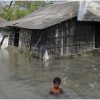
Rural Bangladesh Families Spend 2.0 Billion Dollars on Climate Change ― Dwarfing Government & International Finance
In an alarming imbalance struggling families in rural Bangladesh spend almost US$2 billion a year on preventing climate-related disasters or repairing damage caused by climate change ― far more than either the Bangladesh government or international bodies.
Not Enough Good Information About Africa’s Climate for Adaptation
 "We don't have a good appreciation of our local weather systems," says Dr James Kinyangi head of the African Development Bank's climate and development Africa special fund, which supports investments in climate and weather observations networks in Africa.

NYC Library Ditches Controversial Saudi Royal MBS’ Event
A New York library appeared to bow to pressure this week when it canceled an event that was being co-hosted by Saudi Arabia’s crown prince Mohammad bin Salman, who is accused of a range of human rights abuses.
Community Management, Outmigration Help Nepal Double Forest Area
New analysis of historical satellite imagery indicates that Nepal’s forest area has nearly doubled, from 26% of land area in 1992 to 45% in 2016. The midhills have experienced the strongest resurgence, although forests have also expanded in the Tarai and in the mountains. This makes Nepal an exception to the global trend of deforestation in developing countries.
Do Women Suffer Greater Loss of Employment than Men in Morbidity?
In a life peppered with tragedy, Mary Shelley wrote in 1818, “Have I not suffered enough, that you seek to increase my misery?” That this accurately sums up the fate of many women in South Asia who suffer a major health shock such as a serious illness or a disability or both, is hard to dispute.
International Cooperation Required to Solve World’s Severest Problems
In an interview with Dan Smith, Director of the renowned Stockholm International Peace Research Institute (SIPRI) and Professor of Peace and Conflict at the University of Manchester. The native Londoner, he has been researching conflicts and peace for decades and served in the UN Peacebuilding Fund Advisory Group, which he chaired for two years.
World is in Crisis– & Multilateral Approach is the Key
As the UN General Assembly begins, we are once again ringing the alarm on the urgent issues of climate and development that demand our global attention and action. And I worry yet again leaders will not heed the warnings and not act with the clarity and at the scale the issues we’re here to tackle demand.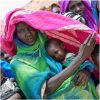
As Climate Crisis Worsens & Poverty Rises, UN Appears Off-Track on Development Agenda
The two key goals in the UN’s development agenda are the eradication of extreme poverty and hunger by 2030. But most of the world’s developing nations, currently fighting a losing battle against rising poverty and hunger –and suffering from the devastating impact of climate change-- are likely to miss the deadline for most of the 17 Sustainable Development Goals (SDGs), according to the latest report by Secretary-General Antonio Guterres.
When the Search for Jobs Ends in Slavery
In 2017, Zubedah Nakitende’s electronics shop was robbed with thieves taking her entire stock. But she had heard from a colleague about lucrative jobs in Jordan and decided to take on work as a domestic helper, earning an income of 740 dollars a month.
How a Bangladesh Non Profit for Leprosy Made its Members Completely Self-Sufficient
The 20th International Leprosy Congress just wrapped up in Manila, Philippines last week. Alongside policy makers, diplomats, medical researchers, doctors, donors and academics, several Hansen's disease-affected people’s organisations also participated in the 3-day congress that was co-sponsored by The Nippon Foundation (TNF) and Sasakawa Health Foundation (SHF). 
Petition and Critics of Khashoggi Killing Heap Pressure on U.N.-Saudi Event
The United Nations faces growing public opposition to an event it is co-hosting with a Saudi Arabian charity only days before the anniversary of the murder of journalist Jamal Khashoggi.« Previous Page — Next Page »





The Week with IPS

NEXT STOP - SDGs
Tracking global progress towards a sustainable world
Tracking global progress towards a sustainable world
