Languages
Thursday, November 12, 2026



News and Views from the Global South
Featured
Women as Forerunners of Change: When Financial Inclusion Meets Digital Transformation
Imagine a world where women fully participate in society, and enjoy equal access to resources and opportunities. Most probably, the 2030 Agenda would be nearing its fulfillment and we would be closer to achieving the better planet we wish to build.
Break the Menstrual Taboo
It is time to rise up and fight a long neglected taboo: menstruation. Marking International Women’s Day, United Nations human rights experts called on the international community to break taboos around menstruation, noting its impacts on women and girls’ human rights.
Island Women Take the Lead in Peatland Restoration
Eluminada Roca has lived all her life next to the Leyte Sab-a Basin peatlands. The grandmother from of San Isidro village in Philippines’ Leyte island grew up looking at the green hills that feed water to the peatland, she harvested tikog—a peatland grass to weave mats—and ate the delicious fish that was once in abundant in the waters. But today, the land is losing its water, the grass is disappearing and the fish stock has drastically decreased.
Eight Years on, Fukushima Still Poses Health Risks for Children
On March 11, we commemorate the 8th anniversary of the Fukushima nuclear disaster. To an outside observer, this anniversary passes as a technical progress report, a look at new robot, or a short story on how lives there are slowly returning to normal.
Smart Tech Will Only Work for Women When the Fundamentals for Its Uptake Are in Place
Science and technology offer exciting pathways for rural women to tackle the challenges they face daily. Innovative solutions for rural women can, for example, reduce their workload, raise food production and increase their participation in the paid labour market. But even the very best innovative, gender-appropriate technology makes no sense without access to other critical resources, especially secure land rights, which women in rural areas need to flourish.
Was Slavery the World’s First Human Rights Violation?
The United Nations, which diligently monitors human rights violations worldwide, believes that centuries-old slavery still exists worldwide.
International Women’s Day in Cameroon: A Day for All Women?
On March 8, women all over Cameroon will don custom-made dresses sewn of pagne, specially printed for International Women’s Day. They will parade through cities and towns, joining women around the world in celebration of the day.
How Cultural & Creative Industries Can Power Human Development in 21st Century
Cultural and creative industries, which include arts and crafts, advertising, design, entertainment, architecture, books, media and software, have become a vital force in accelerating human development. They empower people to take ownership of their own development and stimulate the innovation that can drive inclusive sustainable growth.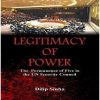
Veteran Diplomat Challenges Security Council’s Imbalance of Power, Offers Solutions for Reforms
A reexamination of the role of the United Nations and a tallying of its successes and failure get underway as it prepares for the 75th anniversary next year in the world of the 21st century while its core entity, the Security Council, is trapped in the time warp of 1945, its founding year.
Ethiopia’s Remote Afar: an Ancient Way of Life Continues in a Modernising Country

Once made infamous through explorers’ tales of old, Ethiopia’s remote northeast Afar region both conforms to and contradicts stereotypes.

Women’s Feature Service: Mapping the Struggles of Feminism in India
Pamela Phillipose was editor of the Women’s Feature Service, the only syndicated news service in India with a gender perspective, for nearly six years, until she stepped down this year as editor in chief and director. She wore other hats for the publication as well, writing and photographing.
Awareness Raising, a Deterrent to Educate Guineans About Irregular Migration
Every year, there thousands of young people, including women and children, who try to irregularly reach Europe and what, they hope, will be a better life.
Ignorance-Inspired Brexit Imperial Nostalgia
As the possible implications of Britain’s self-imposed ‘no-deal’ exit from the European Union loom larger, a new round of imperial nostalgia has come alive. After turning its back on the Commonwealth since the Thatcherite 1980s, some British Conservative Party leaders are seeking to revive colonial connections in increasingly desperate efforts to avoid self-inflicted marginalization following divorce from its European Union neighbours across the Channel.
A Disease as Old as Time – Eliminated but Not Eradicated
 As the Executive Director of Sasakawa Memorial Health Foundation (SMHF), Takahiro Nanri has been working on the issue of leprosy since 2014. Over the past few years, he has traveled across the world visiting the large number of leprosy projects that SMHF has been supporting and meeting dozens of organisations led by leprosy-affected people.

Q&A: Important to Treat Anyone Suffering from Leprosy as an Equal Individual
Discrimination against women who are affected by leprosy or Hansen's Disease is a harsh reality, says Alice Cruz is the United Nations Special Rapporteur on the elimination of discrimination against persons affected by leprosy and their family members.
New Regional Secretariat to Advance Leprosy Advocacy in Asia
Organisations of people affected by leprosy in Asia have agreed to form a regional-level secretariat to support national advocacies and represent their collective agenda at a world conference to be held later this year.
Q&A: Leprosy-affected People Live Not at the Bottom, but Outside the Social Pyramid
Takahiro Nanri is the Executive Director of Sasakawa Memorial Health Foundation which has been supporting the global fight against leprosy for almost five decades. Since 2014, Nanri has been leading the foundation’s leprosy projects across the world and has deep insights into the challenges faced by the people affected by leprosy as well as the organisations that work with them.
Healthy Oceans, Healthy Societies
Over recent years, there have been shocking reports of marine endangerment and plastic pollution. The threats are clear, and now urgent action is needed more than ever.
Hope Springs Once Again for Nigeria’s Returnee Migrants
 Nigeria accounts for some of the largest number of irregular migrants trying to reach Europe from Africa.

International Women’s Day: Don’t Let Anyone Tell You How Far You Can Go
The data – with its sexism and its gaps – shows us that many of the barriers girls experience are determined merely by their gender. This inequality, present in all societies, is by far the most widespread bias. At Educo we are determined, like the women and girls we work with, to put a stop to this injustice. And not just on International Women’s Day March 8, but every day.
Individual Empowerment Still Important in Leprosy Groups’ Strategies
The tragic tale of Thobias Alexander Manas’s personal experience with leprosy is all too typical.« Previous Page — Next Page »


The Week with IPS

NEXT STOP - SDGs
Tracking global progress towards a sustainable world
Tracking global progress towards a sustainable world
