Languages
Sunday, November 15, 2026



News and Views from the Global South
Featured

Uncertainty Surrounds Renegotiation of NAFTA and Its Consequences for Mexico
The first few months of 2018 will be key to defining the future of the North American Free Trade Agreement (NAFTA), whose renegotiation due to the insistence of U.S. President Donald Trump has Mexico on edge because of the potential economic and social consequences.
Trade Multilateralism Set Back yet Again
As feared, the Eleventh Ministerial Conference (MC11) of the World Trade Organization (WTO) in Buenos Aires, Argentina, on 10-13 December 2017, ended in failure. It failed to even produce the customary ministerial declaration reiterating the centrality of the global trading system and the importance of trade as a driver of development.
Moralist Upsurge in Brazil Revives Censorship of the Arts
It is not yet an official policy because censorship is not openly accepted by the current authorities, but de facto vetoes on artistic expressions are increasing due to moralistic pressures in Brazil.
Billionaires, Fiscal Paradise, the World’s Debt, and the Victims
Among Bloomberg's many profitable activities is a convenient Bloomberg Billionaires Index that has just published its findings for 2017. It covers only the 500 richest people, and it proudly announces that they have increased their wealth by 1 trillion dollars in just one year. Their fortunes went up by 23% to top comfortable 5 trillion dollars (to put this in perspective, the US budget is now at 3.7 trillion). That obviously means an equivalent reduction for the rest of the population, which lost those trillion dollars. What is not widely known is that the amount of the circulation of money stays the same; no new money is printed to accommodate the 500 richest billionaires!
Nowhere to Hide from Climate Change
The water is nibbling away the beaches of Fiji. Not even the dead are allowed peace of mind. The graveyard of Togoru - a village on the largest island of Fiji - has been submerged. The waves are sloshing softly against the tilted tombstones covered with barnacles. The names have become illegible, erased by the sea.
Central America Weakens Forest Shield Against Future Droughts
Jazziel Baca lives in the municipality of Esquías, in western Honduras, one of the areas hardest hit by the southern pine beetle (Dendroctonus frontalis), which damaged almost 500,000 hectares of forest in that Central American country between 2013 and 2015.
The Political Responsibility in the Collapse of Our Planet
On 20 December, Europe’s 28 Ministers of Environment met in Brussels, to discuss the plan for reducing emissions prepared by the Commission, to comply with the Paris Agreement on climate change. Well, it is now clear that we have lost the battle in keeping the planet as we have known it. Now, of course, this can be considered a personal opinion of mine, devoid of objectivity.
US Faces Collective Defiance at UN Over Jerusalem
When the UN General Assembly condemned the United States for its decision to recognize Jerusalem as the capital of Israel, the vote was described as a “collective defiance” of the international community against public threats against the United Nations and its member states by a politically unpredictable and predictably wavering US President.
Central America Hashes Out Agenda for Sustainable Use of Water
The countries of Central America are striving to define a plan to promote the sustainable use of water, a crucial need in a region that is already suffering the impacts of climate change.
Ethiopia’s New Addiction – And What It Says About Media Freedom
On a Saturday afternoon in one of Addis Ababa’s khat houses, a group of men and women chew the mildly narcotic plant while gazing mesmerized toward a television featuring a South Korean soldier stripped to his waist and holding a young lady’s hand while proclaiming his undying love—somewhat incongruously—in Amharic.
“Only Our Youth Can Save the Planet” – Kumi Naidoo
"Today’s youth should think of new solutions for old problems like climate change and social injustice." That's the strong message of the South African activist Kumi Naidoo. The former executive director of Greenpeace says young people need to be more innovative and visionary, "because the solutions of my generation have failed."
To Be a Latin-American Migrant in Madrid
If you are in Madrid and have some spare time, just go to an area which residents consider a “high class” neighbourhood situated in a district bordering Barrio de Salamanca, one of the richest areas in the Spanish capital.
Rise of Teenage Pregnancy Deters Development Goals
A few years ago, someone shared a video with me that deeply impacted me. It was called "The Girl Effect". In three minutes, the video demonstrates the fate of millions of girls and teenagers around the world.
Key Facts You Should Know About Global Migration Trends
The UN International Organization for Migration --IOM’s Global Migration Trends Factsheet presents a snapshot of the major migration trends worldwide for the year 2015 based on statistics from a variety of sources.
Venezuela’s Oil Industry Is Falling Apart
Corruption in the Venezuelan state oil industry, denounced by the government itself, and with former ministers and senior managers behind bars, is the latest evidence that, in the country with the largest oil reserves on the planet, the industry on which the economy depends is falling apart.
Long Maligned for Deforestation, Charcoal Emerges from the Shadows
“We have various financial obligations that push us to charcoal making. Top on the list is farming inputs and school fees,” explains Arclay Moonga, a charcoal producer and chairperson of the recently formed Choma District Charcoal Association in Southern Zambia.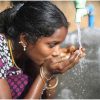
Water, Water Everywhere, Costs More Than You Might Think
Without reliable access to water, human beings cannot survive. Yet 3 out of 10 people do not have a safely managed water supply, and 6 out of 10 lack safely managed sanitation. Over 2 billion people drank water that was fecally contaminated in 2015, and the World Bank estimates that the annual cost of poor sanitation is in excess of $260 billion annually.
Our Right of Passage Should be Safe Migration, Not Leaky Boats
“I’m a migrant, but didn't have to risk my life on a leaky boat or pay traffickers. Safe migration cannot be limited to the global elite.” Thus spoke United Nations Secretary General Antonio Guterres in September 2017.
No Health Protection for Migrant-Women Healthcare Givers
While the media may be attracted by images of migrants drowning or sold as slaves, another flagrant but lesser-known drama is that of care workers, who are overwhelmingly women, often migrants, and who make a very large contribution to global public health, but are exposed to great health risks themselves with little or no protection, let alone basic labour rights.
Why the Rohingya Can’t Yet Return to Myanmar
On Nov. 23, the governments of Myanmar and Bangladesh signed an agreement to return the Rohingya refugees — more than 600,000 people who escaped from Rakhine state in western Myanmar to Cox’s Bazar in Bangladesh — after ethnic cleansing carried out by Myanmar’s armed forces since August.
Rohingyas: Lurching from Crisis to Crisis
Ferdous Begum was cleaning her child after he had defecated in the open, using leaves she collected from a nearby tree at Bangladesh’s Teknaf Nature Park. The settlement is packed with Rohingya refugees who fled military persecution in Myanmar since August.« Previous Page — Next Page »


The Week with IPS

NEXT STOP - SDGs
Tracking global progress towards a sustainable world
Tracking global progress towards a sustainable world
