Languages
Saturday, May 2, 2026



News and Views from the Global South
Featured

Bold Donor Action Urgently Needed to Give Ethiopia’s Crisis-Impacted Children a Lifeline
Ethiopia’s education system is buckling under the weight of complex, competing challenges. The aftermath of a deadly war in the north, ongoing violence, climate-induced disasters, and widespread forced displacements have converged to push as many as 9 million children out of school. With close to 18 percent of schools in the country destroyed or damaged and persisting intercommunal conflicts in various regions, there are fears that many might never find their way back to school.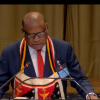
African Union, Nations Lay Bare Climate Vulnerabilities at UN’s Top Court
Kenya agrees with many UN member states testifying before the International Court of Justice (ICJ) that the law of international responsibility should hold countries legally responsible for major damage to the global climate system.
UNCCD COP16 Raises Hopes for Ambitious Global Land Action
While many delegates at the 16th meeting of the Conference of the Parties to the UN Convention to Combat Desertification (UNCCD COP16) hope that this could be the convention’s own Paris moment—referring to the historic Paris agreement inked by UNFCCC signatories—however, this hedges heavily on the UN parties’ seriousness to combat drought, desertification and land degradation.
Climate Finance Not Charity, But Obligation, International Court of Justice hears
Developing nations should not bear the brunt of the climate crisis caused by the industrialized world's historical emissions. This was the resounding message as the Solomon Islands, India, and Iran, among others, presented their cases before the International Court of Justice (ICJ).
Conservation Agriculture Transforming Farming in Southern Africa
On the dusty plains of Shamva District in Zimbabwe, Wilfred Mudavanhu's maize field defies drought.> With the El Niño-induced drought gripping several countries in Southern Africa, Mudavanhu’s maize crop is flourishing, thanks to an innovative farming method that helps keep moisture in the soil and promotes soil health.
States Individually Accountable For Contributions to Climate Change—Fiji
At The Hague, the United Nation’s highest court heard Fiji, a small island nation, lay out its arguments on the threat posed by climate change and the legal obligations, especially those of developed nations.
Rural Laboratory Innovates in Northeastern Brazil
In the municipality of Congo, in the state of Paraiba, in the driest territory of Brazil's semi-arid region, an original initiative seeks to prove it is possible to overcome several challenges concerning family farming. It is the EcoProductive Pilot Project.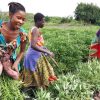
How an App Transformed Farming for Rural Tanzanian Women
In the sun-scorched soils of Moshi, where every drop of rain counts, two female farmers have defied the odds through technology. Mwajuma Rashid Njau and Mumii Rajab, once locked in a daily struggle to survive, have found a mobile phone their best ally.
‘Quilombola Communities Live in Fear Because the Laws That Are Supposed to Protect Them Are Ignored’
CIVICUS discusses threats to the security, rights and ancestral lands of Brazil’s quilombola communities with Wellington Gabriel de Jesus dos Santos, leader and activist of the Pitanga dos Palmares Quilombola community in Bahia state.

Climate Change’s Dire Consequences Laid Bare at International Court of Justice Hearings
At the International Court of Justice on Tuesday, December 4, 2024, Brazil called for climate justice, and Canada urged swift action on the world's "greatest challenge," while China advocated for equity and development rights. These countries are among the 98 that will make presentations during the fortnight of hearings, after which the court will give an advisory opinion.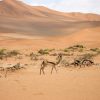
Focus on Africa: IPBES Plenary Session Makes Inaugural Visit to Biodiverse Continent
The Intergovernmental Science-Policy Platform on Biodiversity and Ecosystem Services’ (IPBES) first Plenary session in Africa is a “crucial acknowledgement of Africa’s important contribution to biodiversity conservation, which is a global public good, a heritage that Africa has the privilege to share with the peoples of the world,” says Dr. Luthando Dziba, from South Africa, co-chair of the IPBES Multidisciplinary Expert Panel.
Small Island States Urge International Court to Look Beyond Climate Treaties
A few UN member states responsible for the majority of emissions have breached international law, Ralph Regenvanu, a special climate envoy from Vanuatu, told the International Court of Justice in the Hague in his opening address.
COP29 Falls Short on Finance
COP29, the latest annual climate summit, had one job: to strike a deal to provide the money needed to respond to climate change. It failed. This was the first climate summit dedicated to finance. Global south countries estimate they need a combined US$1.3 trillion a year to transition to low-carbon economies and adapt to the impacts of climate change. But the last-minute offer made by global north states was for only US$300 billion a year.
Who are the Ultimate Winners in the World’s Ongoing Military Conflicts?
If and when the devastating military conflicts in Ukraine and Gaza come to an end, the ultimate winners will not be the Russians, the Americans or the Israelis but the world’s arms manufacturers—contemptuously described as “merchants of death”. And so will be the winners in a rash of conflicts and civil wars in Syria, Myanmar, Lebanon, Yemen, Sudan and Afghanistan.
Youth-Led Landmark Climate Change Case Starts in The Hague
The intersection of law, diplomacy, and science will come under the spotlight at the International Court of Justice hearings starting today (Monday, December 2, 2024) in The Hague as the court starts its deliberations into the obligations under international law of UN member states to protect people and ecosystems from climate change.
US Envoy-in-Waiting Blasts UN as Corrupt – & Threatens Funding Cuts
John Bolton a former US ambassador to the United Nations (2005-2006) once infamously declared that if the 39-storeyed UN Secretariat building in New York “lost 10 stories, it wouldn’t make a bit of difference.” That statement triggered a sarcastic response from a New York Times columnist who said Bolton would have done better as an urban planner than a US diplomat --while another newspaper described him as “a human wrecking ball”
Solar Project Causes Social and Environmental Conflict in Rural El Salvador
With machete in hand, Salvadoran farmer Damián Córdoba weeds the undergrowth covering the trunk of what was once a leafy tree to show the deforestation taking place on the Santa Adelaida farm, where a company seeks to install a solar park in western El Salvador.
Equitable Ocean Prediction Systems: Bridging the North-South Divide
At their recent Leaders’ Summit in Rio de Janeiro, the G20 committed to support developing countries in responding to global crises and achieving the Sustainable Development Goals (SDGs). To meet that pledge, the world’s leading economies need to enhance global collaboration and investment in ocean prediction systems and technology.
Lahore’s Smog: With the Sun Out, the Government Lifts Restrictions
Atif Manzoor, 45, the owner of the renowned blue pottery business in Multan, had every reason to feel cheerful last week when the sun finally came out. For a good three weeks, the city of Sufi shrines had been shrouded in an envelope of thick smog.
Bangladesh Bans Polythene Bags Again, Sparking Hopes for the Eco-Friendly ‘Sonali Bag’
After Bangladesh’s interim government banned polyethene bags, a new sense of hope has emerged for the Sonali bag—a jute-based, eco-friendly alternative developed in 2017 by Bangladeshi scientist Dr. Mubarak Ahmed Khan. Sonali bag, or the golden bag, is named after the golden fiber of jute from which it is made.
U.S.-Backed Israel-Hezbollah Ceasefire Comes Into Effect
A ceasefire between Israel and Hezbollah comes into effect early on Wednesday morning (November 27). It is hoped that this will mark an end to a 13-month-long period of hostilities between the two parties in Lebanon. News of the ceasefire came from United States President Joe Biden, who made a televised announcement on Tuesday afternoon that an agreement had been reached between the Israeli and Lebanese governments. Biden remarked that the ceasefire was expected to be a “permanent cessation of hostilities” from both sides of the conflict.« Previous Page — Next Page »


The Week with IPS

NEXT STOP - SDGs
Tracking global progress towards a sustainable world
Tracking global progress towards a sustainable world
