Languages
Thursday, November 12, 2026



News and Views from the Global South
Gender
SUDAN: Rape Is Not Adultery
Women in the Sudanese region of Darfur have been raped with impunity since the start of the conflict there in 2003. Now a campaign to reform the rape law is gaining momentum in the country, promoted by Alliance 149, a national coalition born in late 2009.Women Warriors Take the Offensive in War Zones
The world's traditional peacemakers - a title long conferred on women - may be undergoing a gradual transformation.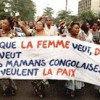
DR CONGO: ‘An Opportunity to Say Never Again’
Civil society in the DRC's eastern province of South Kivu is determined that meaningful action will follow from the publication of the U.N.'s Mapping Project, a report detailing some of the most serious human rights violations by state and non-state actors in the DRC between 1993 and 2003.ZIMBABWE: Failing to Address Schoolgirl Pregnancies
Concern over reports of growing numbers of pupils dropping out of school due to pregnancy has rekindled debate over the link between intergenerational sex and HIV infection among Zimbabwe's youth.
SRI LANKA: Widows Struggle to Put Life Back Together Again
Having to take care of eight teenage children is not an easy task for 70-year-old Yamunadevi (not her real name).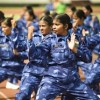
India’s Female Peacekeepers Inspire Liberian Girls
It is break time at the Victory Chapel School in Congo Town. Children dressed in their royal blue uniforms with bright yellow and white trim fight to get under the shade of the only mango tree in the yard. It is the start of the dry season and the scorching sun will soon be almost unbearable to stand in.
NICARAGUA: Machismo Just Isn’t Cool
As he left a workshop in the Nicaraguan capital about gender equality, Alejandro Silva was forced to confront a show of machismo, ironically, with his fists. He was attacked by classmates who taunted him that he was gay.CHILE: Women Sterilised Over HIV Status
When Francisca arrived at the historic Curicó Hospital – a staple in the Chilean central valley for nearly one and a half centuries – for the birth of her first child, she didn't know it would be her only one.The Prospects and Pitfalls of 1325
Ten years after the Security Council issued its landmark resolution 1325, designed to address the "disproportionate and unique impact of war on women", U.N. officials and international human rights advocates say it is high time the principles it espouses move from paper to reality.For Women, Dry Statistics Can Be Power
While women have made strides forward in areas like job market participation over the last two decades, in 2009 only 14 women in the world held the position of head of state or government, and of the 500 largest corporations, just 13 had a female CEO.War Is Hell, Especially for Women
As the United Nations commemorates the 10th anniversary of a landmark Security Council resolution (1325) on the protection of women in war zones, a new study details the successes and failures of a long-drawn-out effort to battle gender-based violence and provide women a key role in male-dominated peacekeeping and peace-building operations.
Q&A: What the U.S. Undid for Women in Iraq
The U.S.-led invasion and then occupation of Iraq brought a sharp setback to the rights of women in that country, UNFPA head Thoraya Obaid tells IPS in an interview.ZIMBABWE: Woman Metal Worker Breaking the Mould
At a time when more and more women around the world are taking up jobs in male-dominated domains, 41-year-old Sithabile Ruswa is also making her mark, albeit far from the air-conditioned boardrooms usually reported on.
LATIN AMERICA: Women Peacekeepers Have a Vital Role to Play
In June 2009, Chilean army captain Andrea Fuentes travelled to the city of Cap-Haïtien, in north Haiti, to serve for six months in her country's contingent in the United Nations Stabilisation Mission in Haiti (MINUSTAH).
COLOMBIA: Voices of Women Peace Activists Silenced
"When we women speak out, without showing fear, we pay a high price: living with that fear," says one peace activist in Colombia. "The threats will not stop us from working for peace and social justice," says another.
CHINA: On the Thousand Mothers March
Rebiya Kadeer has taken up a campaign for the rights of a people usually far from world headlines: the Uyghurs, a predominantly Muslim minority in China.Risking Death to Report the Truth
Alma Guillermoprieto was one of only two journalists to investigate rumours of the notorious massacre in El Mozote, El Salvador in December 1981. Because the slaughter of 1,000 unarmed civilians was perpetrated by the U.S.-backed Salvadorian Army, the Ronald Reagan administration attempted to discredit her work.
LATIN AMERICA: And Now For Non-Sexist Education
Women in Latin America have broken down barriers in education, and in several countries have more years of education than men. But the task now is to make sure that education reduces, rather than fuels, inequality between men and women.EUROPE: For Women, East Is Backward East
Women's rights organisations in Eastern Europe say they are struggling to overcome centuries-old gender stereotypes.
ZIMBABWE: Debt Crowds Out Essential Spending on Health
Zimbabwe’s debt burden of about 8.3 billion dollars, owed to internal and external institutions, is crowding out essential national budget items such as health and basic services, with detrimental effects for particularly women.POLITICS-BAHRAIN: More Than A Matter of Putting Women in Office
Women candidates seem to be getting scarcer in Bahraini elections, but women leaders here say female poll participation is no longer about getting into office.« Previous Page — Next Page »





Women make up half the world's population, but don't nearly share half of the world's wealth, well-being and opportunity. Two-thirds of the world poor are women, disproportionally exposing women to precarious living conditions, disease and unmitigated natural disasters. The media, meanwhile, remains a male-dominated sector in much of the world, contributing to women's voices lacking a crucial amplifier to put their concerns on political agendas and unleash the development potential of their ingenuity. Rather than then stereotypical victims of local and global forces, women are also organizer, innovators, conservators and community builders. These are some of their stories.

The Week with IPS

NEXT STOP - SDGs
Tracking global progress towards a sustainable world
Tracking global progress towards a sustainable world
