Languages
Friday, November 13, 2026



News and Views from the Global South
Gender
U.N. Clears Final Hurdle to Create New Gender Entity
After several rounds of intense eleventh-hour negotiations last week over the structure and composition of a proposed new "gender entity" and its executive board, the United Nations has cleared the last of the remaining political hurdles towards the creation of a separate and distinct U.N. agency for women.Gender Equality Seen as Goal, Not Yet Realised – Poll
While the goal of gender equality is embraced by almost all countries, the perception that men are - and should be - favoured in employment and education remains widespread, especially in poor nations or predominantly Muslim countries, according to a survey released Thursday by the Pew Research Center's Global Attitudes Project (GAP).IOC Joins U.N. to Level the Playing Field for Women
The sight of girls and boys playing cricket and skateboarding together in the streets of Afghanistan and Iraq may be unexpected to some, but it is a homegrown effort aimed at fostering gender equality.
ECUADOR: Like Mother, Like Multi-Tasking Daughter
In Ecuador, girl workers conform to universal statistics: they drop out of school less than boy workers, because they learn from an early age to juggle earning an income with looking after younger siblings and getting an education.Jobs Pact Spotlights Women’s Role in Economic Recovery
One year after the creation of the Global Jobs Pact, members of the International Labour Organisation (ILO) are considering the measure's impact - and what comes next.
SRI LANKA: A Former Woman Combatant Struggles to Pick Up the Pieces
As a young woman, Ranjani (not her real name), a 32-year-old Tamil from Sri Lanka's eastern Batticaloa district, only had bright hopes for tomorrow.Domestic Workers Begin to See Some Rights
Twenty-seven-year-old Maria Puscariu is about to complete her MA in philosophy at a Belgian university. The Moldovan has been working for over five years as a domestic worker in Western Europe in order to support herself and finance her studies.
Despite Gains, South Korean Women Still Struggle for Equality
Forty-six year-old language professor Kwon Hye Yang views her life as a typical example of the growing confidence of modern women in her home country, South Korea.ZAMBIA: Need to Mainstream Gender Equality into all Policies
Despite the adoption almost a decade ago of a national gender policy that aims to ensure fair participation of men and women in the development process, most of the Zambian government’s policies still remain gender blind, say civil society and women's rights associations.SPAIN: Women Entrepreneurs Pledge Support for African Counterparts
Senegalese businesswoman Marie Thiaré makes her business cards by hand, because she has no way to have them printed -- a sharp contrast with the situation faced by women entrepreneurs in Europe, where it is easy to order business cards, and most people even have their own home computer and printer.
Q&A: “There Is Almost Total Impunity for Rape in Congo”
Sexual violence against women has become part of modern warfare around the world. In some countries, women cannot even go out to draw water without fear of being attacked and raped.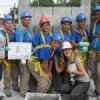
Brick by Brick, Women Builders Make Their Way in Brazil
It looks like any other construction site: wheelbarrows full of bricks, boards and steel bars trundling back and forth to a soundtrack of hammering, sawing and drilling. But there is a difference: some of the construction workers underneath the hard hats are women.EDUCATION: EnGendering Awareness in Trainee Teachers
The teacher seats the most attentive girls in the front row and the troublesome boys at the back of the classroom. He punishes the liveliest pupil and lets the withdrawn one be. Dark-skinned boys sit with dark-skinned girls, boys play with boys and girls with girls.Wrangling Continues over New U.N. Women’s Entity
Ahead of a week-long meeting on gender equality starting Monday at the United Nations, women's rights activists have been pushing for concrete progress on a pledge made last September by the world body to create a new, better-funded U.N. agency for women.LITERATURE-CUBA: ‘Forbidden Stories’ by Sonia Rivera-Valdes
Lázara wakes up every morning in her home in New York, has a cup of coffee and, with the same passion with which she takes a stand for or against every cause, she turns on the radio, hoping to hear the news that she has been waiting for most of her life: the demise of former Cuban president Fidel Castro.
DEVELOPMENT-ZIMBABWE: Selling Scrap Metal to Scrape By
Gugulethu Mkhwananzi is another one of the many unemployed women who have become features of everyday life in Bulawayo’s poor working class suburbs as she moves from house to house, looking for "rusted gold", or scrap metal.
“Excluded Workers” Move from Shadows to Negotiating Table
The U.S. labour movement needs to be reorganised from the bottom up to include domestic workers, day labourers, restaurant workers, taxi drivers, farm workers, incarcerated workers, guest workers and those in the "right to work" states.DEVELOPMENT: Women Adamant for Change as the Maldives Struggles to Reform
Authorities in the Maldives view women’s issues as a core human rights problem and are keen to tackle them head on, but cultural and religious issues often stand in the way.LATIN AMERICA: Majority Favours Legalising Abortion – But Not for All Cases
The majority of people surveyed in Brazil, Chile, Mexico and Nicaragua are in favour of legalising therapeutic abortion, but not all forms of elective abortion, according to a study by the Latin American Faculty of Social Sciences (FLACSO).Female Presence Growing in Brazil’s Gangs
They are no longer simply the girlfriends of gang members. Women have increasingly become members themselves of Brazil's youth gangs over the past decade -- though they have yet to reach the leadership positions of their male colleagues.
ZIMBABWE: A Chance for Women’s Voices to be Heard?
As Zimbabwe embarks on writing a new constitution with the countrywide collection of public submissions starting on Jun. 23, not all women are upbeat about the process.« Previous Page — Next Page »


Women make up half the world's population, but don't nearly share half of the world's wealth, well-being and opportunity. Two-thirds of the world poor are women, disproportionally exposing women to precarious living conditions, disease and unmitigated natural disasters. The media, meanwhile, remains a male-dominated sector in much of the world, contributing to women's voices lacking a crucial amplifier to put their concerns on political agendas and unleash the development potential of their ingenuity. Rather than then stereotypical victims of local and global forces, women are also organizer, innovators, conservators and community builders. These are some of their stories.

The Week with IPS

NEXT STOP - SDGs
Tracking global progress towards a sustainable world
Tracking global progress towards a sustainable world
