Languages
Friday, November 13, 2026



News and Views from the Global South
Gender

COLOMBIA: Midwives Seek Legal Recognition, Respect
In Colombia, western medicine has nearly succeeded in pushing midwives -- "parteras" or "comadronas," as they are known in Spanish -- out of existence. But some tenacious practitioners are pushing for a law to formalise the role of midwife as a health worker.
More Than 200 Ways of Becoming a Mother
"You can only have one mother," as the saying goes, but in Brazil there are 215 ways of becoming a mother, one for each of the ethnic groups in this South American country. Promoting maternal health while respecting cultural traditions is a major health challenge.
RIGHTS-PAKISTAN: Slowly, Women Gain Ground through Land Ownership
"I told my husband if he ever hits me (again), I’ll pack up and go to my parents who live just round the corner, and he will lose the land I got," says Jannat Gul of Tando Bagho village here in this southern Pakistani district. Her husband has not hit her for the past six months – since Gul became the owner of some 1.6 hectares of land.
THAILAND: For Transgenders, Identity Papers Are No Simple Matter
In New Zealand, where Sujinrat Prachathai enjoys resident status, she is a woman able to append ‘Mrs’ to her name to signify that she is married. Here in Thailand, however, she has to be addressed as ‘Mr’ since she is still considered male even though she underwent a sex-change operation years ago.ZAMBIA: Women Welcome Equality Commission
The Zambian National Constitution Conference (NCC) concluded its business recently with the adoption of a clause for the creation of a Gender Equality Commission.
LATIN AMERICA: Time to Value Women’s Unpaid Work
The time has come for Latin American countries to put an economic value on the work that women do as they take care of households, children and the elderly, says ECLAC, the United Nations regional economic agency.Midwives vs. Doctors in U.S. Maternal Mortality Crisis
"I was baking a cake when my contractions were two minutes apart," Kristine says, her voice warm with memory, "not in a hospital, holding onto a bedside somewhere screaming."
Making 2010 a Turning Point for Women’s Health
As the international community readies to commemorate World Population Day Sunday, the United Nations is reviewing the state of the world's women - and how they stack up against the risks of maternal mortality and the lack of universal access to reproductive health.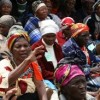
SWAZILAND: Women MPs Limited by the Patriarchal System
Minah Ndzinisa spends every day selling fruit and vegetables at the outdoor Mbabane Market, braving the rain, wind and cold for almost 20 years. "I was in the same cold even in the 1990s when we used to have only one woman Member of Parliament."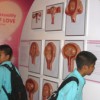
THAILAND: Sexuality 101 Exhibit Says It Straight
Teenage boys gape at a coloured photograph of a vagina, while girls give embarrassed smiles as they watch a cartoon that showed penises 'talking' about masturbation. Young girls crowd around a display panel about love and relationships, as a boy embraces a female mannequin with all his might in order to measure the strength of his hug.MOZAMBIQUE: Women at Forefront of Resisting Climate Change
The Mozambican government has adopted various policies to address the effects of climate change, with special attention to women as studies show that they are more adversely affected by this phenomenon.
Afro-Brazilian Communities in the Shadow of Space Facility
A space launch centre built in their territory has altered the way of life that members of "quilombos" - village communities originally founded by runaway slaves - have maintained for a century and a half in this municipality in the Brazilian state of Maranhao.CZECH REPUBLIC: Women Resist All-Male Cabinet
Women’s rights campaigners say the Czech Republic’s new government has effectively told women they have no relevance to the country’s future after the new cabinet was formed – without a single female minister.
PAKISTAN: More Action, Less Words, Needed to Ease Population Bulge
While militancy, power outages and skyrocketing food prices hog the limelight in parliamentary and media discussions in Pakistan, health experts warn that it is a neglected issue – the population bulge – that will prove to be a more insidious problem.
ETHIOPIA: Unique Community Leads on Gender Equality
Married at just 13 years of age, Fantaye Adem wishes her life had been different.MADAGASCAR: Calls for Equality to be Written into New Constitution
Madagascan female activists are asking that the right of women to participate directly in politics be included in a new draft of the country’s Constitution, so that there can be 30 percent of female politicians in parliament by 2012 and 50 percent by 2015.
Gender Meet Ends on High Note with New “U.N. Women”
Nearly 50 government delegations spent the past week at U.N. headquarters in New York hashing over the progress that has been made and challenges that remain in pursuing gender parity worldwide, one of the crucial elements of the Millennium Development Goals.Slavery Casts a Long Shadow
Ayana rises before the sun. She bathes, dresses, and leaves the house before her daughters awake.
UGANDA: Getting the Common Market to Benefit the Common Woman
July 1 marked the moment when the East African Community common market protocol kicked into operation. But Ugandan women face several obstacles before they will benefit from the boost that the protocol gives to the free movement of goods, labour and capital.
KENYA: Tradition an Obstacle to Maternal Health
Their kangas and heavy bead necklaces are the only colour in an arid landscape. The weary women waiting outside the Kangatotha dispensary have walked up to 50 kilometres to receive food aid; now they will walk home carrying their share.URUGUAY: Women Join Forces in the Parliamentary Trenches
Women lawmakers in Uruguay have joined forces across party lines, in spite of criticism from colleagues in their own parties, and have built majorities to approve laws in favour of gender equality and other rights that have been denied for years.« Previous Page — Next Page »


Women make up half the world's population, but don't nearly share half of the world's wealth, well-being and opportunity. Two-thirds of the world poor are women, disproportionally exposing women to precarious living conditions, disease and unmitigated natural disasters. The media, meanwhile, remains a male-dominated sector in much of the world, contributing to women's voices lacking a crucial amplifier to put their concerns on political agendas and unleash the development potential of their ingenuity. Rather than then stereotypical victims of local and global forces, women are also organizer, innovators, conservators and community builders. These are some of their stories.

The Week with IPS

NEXT STOP - SDGs
Tracking global progress towards a sustainable world
Tracking global progress towards a sustainable world
