Languages
Friday, November 13, 2026



News and Views from the Global South
Gender

Q&A: Equality Is Feminism
"I think that Islam has been misinterpreted. No Islamic law says violate women's rights and repress women," says Nobel Peace Prize laureate Shirin Ebadi. "Democracy, human rights and women leadership are absolutely not hostile to the Islamic doctrine." And women in Iran are well aware of that, she says.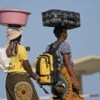
RIGHTS: Africa’s Success Stories in Gender Empowerment
Whenever gender empowerment is a vibrant topic of discussion internationally, some of the countries in Europe, Asia and Latin America are invariably singled out for their success stories in politics, education, health care or civil liberties even as Africa is mostly left out of political reckoning - and wrongly so.EDUCATION-TANZANIA: Pregnant Teens Forced Out of School
Pregnancy is the leading cause of dropouts for school girls in Tanzania. And a national law forbidding young mothers to return to school after giving birth did not make it any easier for them to continue their education.
LATIN AMERICA: Abortion – Still Illegal, Still Killing, Despite Growing Awareness
Although most of the governments in Latin America today are described as progressive, abortion is only legal in one country, while in five countries it is banned under all circumstances, even when the mother's life is at risk.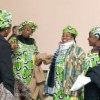
RIGHTS: “Famine Marriages” Just One Byproduct of Climate Change
The negative fallout from climate change is having a devastatingly lopsided impact on women compared to men, from higher death rates during natural disasters to heavier household and care burdens.
NAMIBIA: Female Hip-Hop Artists Challenge Stereotypes
African hip-hop prides itself on a more positive portrayal of women, but traditional cultural attitudes towards women still dominate the industry, say Namibian female rappers.
RIGHTS: Middle East Women Ahead But Not Home
Male leaders fail to break the Mideast impasse. Enter women from Israel and the Palestinian territories working together. And... it would have been nice to say they succeeded where the men failed.MALAWI: Patrilineal Inheritance Prevents Women’s Access to Land
Mercy Gondwe, 51, from Rumphi in northern Malawi, was married for 34 years. When her husband died in 2008, she assumed she would inherit the land they had been cultivating together since they got married. But this was not the case.RIGHTS: Fewer Jobs, Less Money, Same Old Story
"What do I get from them? Nothing but bullsh*t," says Nupur Acharya, reflecting about how she is treated by her husband and two grown sons on daily basis.CAMBODIA: Rape Victims Need Better Protection from New Penal Code
Cambodia’s new penal code, which comes into force later this year, should be accompanied by stronger law enforcement measures if the country’s women and girls are to be better protected from rape, says the global rights lobby Amnesty International (AI).DEVELOPMENT-SRI LANKA: Water Woes Fall on Women’s Shoulders
As a wife of a rice farmer and mother of two children aged nine and two, Sanjeevani Bandara’s days are packed with chores. Yet while she used to be able to keep up with all she has to do in a day, this Sri Lankan mother now finds herself struggling to accomplish even the most basic tasks.
INTERNATIONAL WOMEN’S DAY: ‘We Will Demonstrate, As They Celebrate’
‘Equal rights; equal opportunities’ may be the theme for this year’s International Women’s Day, but while women around the world celebrate, a group of Ugandan women are protesting against the suppression of their rights.RIGHTS: This Eerie Economic Calm
The problem now, almost, is to find a way to relive the peak of that economic crisis of September 2008. The current move back to business of old – on the face of it anyhow – could well turn out to be a longer-running difficulty than the crisis it supposedly left behind. A difficulty far greater for women than for men.TRINIDAD: Women Demand a Real Gender Policy
A few days after she created history by becoming the first woman to be elected as opposition leader and the leader of a major political party in Trinidad and Tobago, Kamla Persad Bissessar was kicking mad at the "misunderstanding" of the role of women and their contribution to society.
RIGHTS: Burmese Rape Survivors Speak Out
"Seven Burmese military soldiers attacked me and three of my friends," said Chang Chang, from the northern Kachin State of Burma.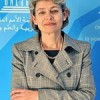
Q&A: Qualified Women Have Better Chance in Top Jobs
Irina Bokova, who was elected director-general of the U.N. Educational, Scientific and Cultural Organisation (UNESCO) last September, heads the Paris-based agency at a time when the world body has placed a high priority on gender empowerment.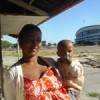
SOUTH AFRICA: Community Fears World Cup Will Cause Homelessness
While South African parliamentarians attended a swanky pre-International Women’s Day celebration at Cape Town’s International Convention Centre, a group of destitute women in decaying Kewtown, just seven miles away, worried about looming homelessness.
INDIA: No Stopping Reserved Seats for Women in Parliament
With assured backing from India's main opposition groups, the ruling Congress party hopes to see voted through in the upper house of Parliament Monday a bill reserving 33 percent of seats in national and provincial legislatures for women.
Q&A: 11.8 Seconds That Broke Taboos for Women
Dressed in an abaya (long, loose gown worn by women to cover their dress) and a headscarf, Naseem Hameed cannot be recognised as she alights from a crowded, rickety public bus to reach her destination – the sports stadium.LATIN AMERICA: Women’s Rights Laws – Where’s the Enforcement?
Advanced new legislation and constitutional reforms on women's rights are paving the way for equal opportunities for women in Latin America and the Caribbean. But application and enforcement remain a distant goal.CENTRAL AMERICA: Women Make Headway in Politics – and Want More
The victory of Laura Chinchilla in Costa Rica's presidential elections, and the growing participation of women in Central American parliaments, point to their progress in the region's spheres of political power. But they still have a long way to go, experts say.« Previous Page — Next Page »


Women make up half the world's population, but don't nearly share half of the world's wealth, well-being and opportunity. Two-thirds of the world poor are women, disproportionally exposing women to precarious living conditions, disease and unmitigated natural disasters. The media, meanwhile, remains a male-dominated sector in much of the world, contributing to women's voices lacking a crucial amplifier to put their concerns on political agendas and unleash the development potential of their ingenuity. Rather than then stereotypical victims of local and global forces, women are also organizer, innovators, conservators and community builders. These are some of their stories.

The Week with IPS

NEXT STOP - SDGs
Tracking global progress towards a sustainable world
Tracking global progress towards a sustainable world
