Languages
Saturday, November 14, 2026



News and Views from the Global South
Gender
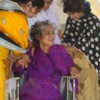
PAKISTAN: Mental Illness among Women: Gender-Driven?
No sooner does a visitor step into the facility than a surreal scene unfolds: The sound of laughter, the sight of ready smiles and vigorous, pumping handshakes mix with the acrid odor of an unwashed human body and the unbearable stench of neglect that in turn combines with the heavy smell of medicine.BURMA: Ethnic Women Expose Opium Fields in Junta Strongholds
A report exposing the spreading opium fields in the north-eastern corner of the military-ruled Burma has brought to light an equally revealing story. It was produced by a team of ethnic women who risked their lives to document the heroin-filled world they inhabit.
WORLD SOCIAL FORUM: “Machista” but Valued by Feminists Nonetheless
The World Social Forum (WSF) "changed our lives," although it continues to be "machista," with men significantly outnumbering women in its organisation and almost all discussion panels, commented Nalu Farias, coordinator in Brazil of the World March of Women.KENYA: Documenting Sexual Violence
The testimonies of women who survived sexual violence during post-election conflict in 2008 should be heard, say advocates. The magnitude of the crimes committed against women because of their gender must be recorded and prosecuted to prevent such violence from occurring again.FRANCE: Burqa Ban Keeps Immigration Issue Alive
With the French regional elections coming up in March and a debate on national identity raging, the burqa polemic is keeping the immigration and "values" issue alive here.LABOUR: Migrant Domestic Workers’ Rights Next on ILO’s Agenda
Po Po has been enduring long hours of hard work, poor pay and abuse within the confines of her employer’s home for the past seven years. Poverty forced her to leave her family in eastern Burma and abandon a university education to work as a domestic helper in Thailand.BOLIVIA: Unprecedented Gender Parity in Cabinet
Evo Morales began his second term as president of Bolivia by swearing in a cabinet made up of an equal number of women and men - unprecedented in this South American nation with a strong patriarchal tradition.
ARGENTINA: Slow Progress in Cutting Maternal Deaths
Some 300 women a year die in Argentina of complications during pregnancy, childbirth or the postpartum period, from largely preventable causes. Many of the deaths result from unsafe abortions.
ZIMBABWE: One Million Casualties of Land Reform
The seizure of large commercial farms - almost all white-owned - has continued despite the formation of a unity government in Zimbabwe. The country's farm workers say they are the biggest losers.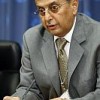
DEVELOPMENT: Yemen to Lead South in U.N. Negotiations
The republic of Yemen, categorised by the United Nations as one of the world's "least developed countries" (LDCs), will lead the largest single coalition of developing nations this year: the 130-member Group of 77 (G77).
Q&A: “U.S. Should Invest in New U.N. Women’s Agency”
One year after U.S. President Barack Obama's inauguration, how has his administration fared in terms of advancing an agenda for women's rights around the world?PAKISTAN: Home-Based Workers Struggle to Climb Out of Poverty
Razia Khatoon, 36, crouches over a huge wooden frame, her eyes squinting in the dimly lit room inside a squatter settlement in Orangi town in Karachi, Pakistan’s largest city.Q&A: ‘With More Political Space, Women Can Do More as Peacemakers’
As a political activist and president of the women's wing of the Awami National Party (ANP), Zahira Khattak has been working relentlessly for the empowerment of women in the war-torn North West Frontier Province (NWFP) in Pakistan. She believes that by empowering them, they can contribute more to the peace efforts in the region.
MAURITIUS: These Women Chose the Sea
She cannot swim, but Marie-Claite Hector is not afraid of the ocean. The 53-year-old pushes her small boat with all her strength towards the blue lagoon, starts the engine, and sets out to sea.
LAOS: Getting Women in the News Takes Much More than Policy
Women’s empowerment may be a key policy of the Lao government, but this is far from obvious in this South-east Asian country’s newspapers and publications, many of which usually give more space to government pronouncements by male officials and pass on questionable stereotypes of women in their reportage.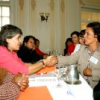
BOLIVIA: More Women in Parliament, With Their Own Agenda
An unprecedented 28 percent of seats in Bolivia's new parliament will soon be occupied by women. Female lawmakers have already launched a battle for women to serve in half the posts in the executive, legislative and judicial branches of government.ZAMBIA: Scarcely Room for Women in Male-dominated Politics
Charity Mwansa, a former minister and member of parliament, knows just exactly what being one of the very few female politicians in Zambia means. When she left politics it had nothing to with not being able to do the work and instead had everything to do with the mad world of male-dominated politics.
PERU: Victims of Military Rapists Wait for Justice 25 Years On
"I want justice. That will be a kind of peace," says Micaela, a 40-year-old woman from the Andean region of Peru who is a survivor of the sexual violence prevalent during the 1980-2000 civil war. Twenty-five years ago, soldiers assaulted her at a military base and in her own home.
GHANA: Quietly Extending Options to Women
Juliana Kweais has a small scar on her bottom lip, from the first time she witnessed an abortion. The sharp blow to her mouth was delivered by her grandmother, after the then-13-year-old Kweais had asked why her auntie had given "birth" to a bloody sack.INDIA: Hill Women Form Cooperative, Turn Entrepreneurs
Women in Uttarkashi district of the hill state of Uttarakhand in India, traditionally sidelined from the developmental processes, are forming their own cooperative and producing processed food items, giving big multinational brands a run for their money in local markets.
Q&A: Defining – and Defying – the ‘Most Proper Way’ to be Sexual
"The Prize and The Price - Shaping Sexualities in South Africa" is the first book of its kind in South Africa to unpack the ideology behind the enforcement of "acceptable" versions of sex, gender and sexuality.« Previous Page — Next Page »


Women make up half the world's population, but don't nearly share half of the world's wealth, well-being and opportunity. Two-thirds of the world poor are women, disproportionally exposing women to precarious living conditions, disease and unmitigated natural disasters. The media, meanwhile, remains a male-dominated sector in much of the world, contributing to women's voices lacking a crucial amplifier to put their concerns on political agendas and unleash the development potential of their ingenuity. Rather than then stereotypical victims of local and global forces, women are also organizer, innovators, conservators and community builders. These are some of their stories.

The Week with IPS

NEXT STOP - SDGs
Tracking global progress towards a sustainable world
Tracking global progress towards a sustainable world
