Languages
Saturday, November 14, 2026



News and Views from the Global South
Gender

Q&A: “We Refuse to Be Held to Ransom By Terrorism”
Karachi-based, Trinidad-born and educated Veena Masud is a school principal who wants to see Pakistani women shine in the international sports arena.CLIMATE CHANGE-BOLIVIA: Climbing a ‘Dead’ Glacier
The rapid disappearance of glaciers and the subsequent exhaustion of water sources are pushing indigenous communities in the Bolivian highlands even further into poverty, Bolivian experts told IPS, adding that an increase in awareness about climate change is desperately needed.ZAMBIA: Give Us Our Constitution
Pressure is mounting for a new constitution that is inclusive of all citizens' views as the ongoing delays by the body granted to draft it still continues.
PHILIPPINES: Women’s Rights Laws in Place
Although the enacting in August of the Magna Carta of Women (MCW) - a major law aiming to end discrimination against women across the archipelago - was well-received here, there remain concerns about whether the legislation will be fully implemented.
BOLIVIA: Politics, a Risky Business for Women
Taking an active part in politics in Bolivia can be a hazardous undertaking. Hundreds of reports of violence against women participating in politics attest to the risk. And while attacks go unpunished, a bill designed to protect the rights of women occupying public office has spent almost a decade in Congress waiting to be approved.
KENYA : Practical Measures Needed on Teen Sexual Education
Kenyan teenagers are having sex. And they appear to have no clue how to go about it.RIGHTS: Women Still Sidelined in Economic Decision-Making
Gender equality contributes to economic growth, but economic growth does not always contribute to gender equality, says the United Nations World Survey on the Role of Women in Development launched Tuesday, a message well timed in the context of the current financial crisis.SRI LANKA: 25 Years On, Women Still Struggle for Their Rights
When Thamalini, leader of the women’s wing of Sri Lankan Tamil Tiger guerrillas, entertained guests at the women’s political wing office in northern areas once controlled by the rebels, the visitors were served tea and other refreshments by male aides.URUGUAY: Next President to Emerge from November Runoff
Uruguay's Electoral Court announced Monday that the governing Broad Front (FA) candidate José Mujica took 48 percent of the vote in Sunday's elections, which means he will face off with former conservative president Luis Alberto Lacalle of the National Party (PN) in a second round on Nov. 29.DOMINICAN REPUBLIC: Protests Surround New Constitution
The Dominican Republic passed the 38th version of its constitution Thursday evening, amending more than 40 articles that drew public protests and opposition from civil society groups and many average Dominicans.
Q&A: “Women Will Benefit From Secularism”
Controversy stalks dissident writer Nawal El-Saadawi, whose views on women and religion have put her at odds with Egyptian conservatives.
HEALTH-AFRICA: Fresh Campaign Against Paediatric AIDS
Eleven years ago, Raloke Odetoyinbo had been married for two years and a month when she found out she was HIV positive.UGANDA: Lifting Silence on Menstruation to Keep Girls in School
More than half of Ugandan girls who enrol in grade one drop out before sitting for their primary school-leaving examinations.
INDIA: Single Women Break Their Silence, Challenge Societal Norms
It has been more than eight years since the January 2001 earthquake struck the Indian state of Gujarat, but Hansa Rathore still cannot quite shake off memories of that not too distant past — all because it left her a widow.
AFRICA: Counting on Media for Good Governance
While campaigning in the last election, Margaret Roka Mauwa, Member of the Malawian Parliament, did not promise her voters that when she won she would buy them coffins.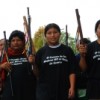
COLOMBIA: Sexual Violence as Weapon of War
Sexual violence is used as a weapon of war in Colombia by all parties in the country’s longstanding armed conflict, and its main victims are women and girls, states a report recently released by Intermón Oxfam, backing up claims made repeatedly by national and international human rights groups.Q&A: Italian Women At A Loss
On the eve of the 30th anniversary of the Convention on the Elimination of All Forms of Discrimination against Women (CEDAW), Italy is far from attaining gender equality.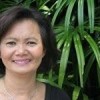
Q&A: ‘Cambodia’s Penal Code Aims to Silence Gov’t Critics’
To be an outspoken critic of the government brings a heavy price in Cambodia, the South-east Asian country struggling to put behind decades of war and brutality, including the Khmer Rouge genocide.DEVELOPMENT: Is It Time to Plan Another U.N. Population Meet?
When the United Nations commemorated the 15th anniversary of the 1994 landmark conference on population and development (ICPD) last week, one of the questions lingering in the minds of many seemed obvious: is it time to plan another major conference on population?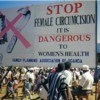
RIGHTS-UGANDA: Female Circumcision Still a Vote Winner
Over three decades ago a 14-year-old girl, her sister and a group of young teenagers from Bukwo headed to the River Amana for a ceremony that would change their lives forever.DEVELOPMENT-SOUTH ASIA: Women’s Peace Offensive
‘Give peace a chance' may just be another cliché for many, but for women who have suffered the ravages of war, endless strife and other forms of conflict, joining hands to find meaningful solutions to their collective aspiration lends it a whole new meaning.« Previous Page — Next Page »


Women make up half the world's population, but don't nearly share half of the world's wealth, well-being and opportunity. Two-thirds of the world poor are women, disproportionally exposing women to precarious living conditions, disease and unmitigated natural disasters. The media, meanwhile, remains a male-dominated sector in much of the world, contributing to women's voices lacking a crucial amplifier to put their concerns on political agendas and unleash the development potential of their ingenuity. Rather than then stereotypical victims of local and global forces, women are also organizer, innovators, conservators and community builders. These are some of their stories.

The Week with IPS

NEXT STOP - SDGs
Tracking global progress towards a sustainable world
Tracking global progress towards a sustainable world
