Languages
Sunday, November 15, 2026



News and Views from the Global South
Gender
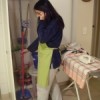
LATIN AMERICA: While Women Pull Double Shift, State Looks the Other Way
Little does it matter if they’re black or white, rich or poor, young or old. Neither does it matter if they work or hold a degree. In Latin America, women bear the brunt of household chores, child-raising and care of the elderly, while the state looks the other way.
TRADE-ZIMBABWE: "Another Operation Murambatsvina to Be Unleashed"
It’s a Thursday morning and the Mbare Musika Market is a hive of activity. Trucks, weighed down with assorted fruits and vegetables, negotiate their way through the congested market. You can get anything here -- from vegetables, mealie-meal and cooking oil to television sets and clothing.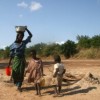
Q&A: Defending Women’s Rights Under New Land Policy
After years of delays, Kenya's cabinet has finally adopted a draft National Land Policy (NLP), which is now awaiting debate in parliament.RIGHTS-UGANDA: Women Press for Domestic Violence Bill
"Man forces wife to breastfeed puppies," screams one headline. "Police boss shoots wife," shouts another; and a third: "Man batters wife over meat". These are typical headlines in Uganda’s newspapers today. Women daily report surviving different forms of violence in their homes: physical, sexual, emotional or even economic abuse.AFRICA: Organic Farming Could be Answer to Food Insecurity
Commercial farmers sometimes fail at organic farming because they switch over too quickly, ditching all chemicals, which is as traumatic for the soil as "a drug addict going cold turkey".EDUCATION: Mother Tongue Absent in Thousands of Classrooms
Millions of children across the world fail to receive a basic education not only because they are born into poverty, but because local authorities do not allow them to read and write in their native language at school.
Q&A: ‘Farmers Can Gain From Crisis’
The financial crisis could actually boost agriculture in Latin America, Josefina Stubbs, director of the International Fund for Agricultural Development (IFAD) division for Latin America and the Caribbean tells IPS in an interview.DR-CONGO: Rape by Regular Army a Growing Problem, HRW Says
In the Democratic Republic of Congo (DRC), tens of thousands of women and girls have suffered horrific acts of sexual violence at the hands of the government army, the Forces Armées de la République Démocratique du Congo (FARDC), said Human Rights Watch in a report released Thursday.
PERU: Going to School Still a Feat for Rural Girls
María Belén Sabio, a 30-year-old Awajun woman from Peru’s northeastern Amazonia province, was able to complete a teacher training programme despite having five children to raise. "Life here in the countryside is not easy, and I’ve had a hard time getting ahead," she told IPS.CUBA: What Schools Can and Cannot Do for Equality
They are sisters, just two years apart, and had the same upbringing and education, but they have completely different aspirations. While Ana, the younger, dreams of going to university and following a professional career, Marlén is only interested in boyfriends, getting married and living happily and quietly at home.FILM: Graphically Condemning a “Barbaric and Horrific Punishment”
Director Cyrus Nowrasteh's latest feature film "The Stoning of Soraya M." begins with a car radio blaring the successes of Iran's 1979 Revolution.
ECONOMY: Accountability To Women Could Upset Business-As-Usual
A public presentation of the "Progress of the World's Women" report by the United Nations Development Fund for Women (UNIFEM) in Pretoria, South Africa this week suggests that one of the most powerful constraints on realising women's rights and achieving the Millennium Development Goals is a lack of accountability to women's needs.POLITICS-US: Sotomayor Poised Amid Senatorial Jousting
On Tuesday, the first full day of questions from members of the U.S. Senate Judiciary Committee considering the confirmation of Supreme Court Justice Sonia Sotomayor, was remarkable mainly for the softball questions asked by her Democratic supporters and the snarky, "gotcha" questions posed by her Republican opponents.
Q&A: "My Boyfriend Insisted I Quit Dancing, My Answer Was No"
She has had to change her name, sever links with her family and boyfriend, and even move cities because of male stalkers in the Bahraini capital. But no "sacrifice" is too much in the pursuit of her dream for Tufaha, just 24.
POLITICS-US: Smooth Sailing for High Court Nominee
In what many Congress-watchers see as Washington's version of Kabuki Theater, the U.S. Senate Judiciary Committee Monday began its hearings on the confirmation of Judge Sonia Sotomayor to be the first Latina associate justice of the Supreme Court and only the third woman ever to be nominated to the nation's highest court.EAST AFRICA: Raising the Bar for Gender Equality
Mention of the East African Community (EAC) usually elicits thoughts about regional trade, but a campaign is under way to use the regional body to promote gender equality.
Q&A: "The Killing of Women Is Like Killing a Bird Today in Afghanistan"
It is easy to understand why epithets such as brave and courageous often accompany the name of Malalai Joya. Slight of stature and serenely demure, the young Afghan woman’s past and present encapsulate the plight of her countrywomen.
ARGENTINA: Women Writers Who Break the Mould
An Argentine woman’s first novel, narrated by a character that eludes female literary stereotypes, has surprisingly met with some nasty sexist comments from spheres where such biases were previously unheard of, such as literary criticism and sophisticated readership.SAUDI ARABIA: New Bill Fails to Protect Domestic Workers, HRW Says
Despite a bill passed by Saudi Arabia's Shura Council on Wednesday, a prominent New York-based human rights group is asking for more protection for the estimated 1.5 million domestic workers in the country.BRAZIL: Electoral Reform “Just a Sop” to Women
The Brazilian government is congratulating itself on the first-stage approval of a draft electoral law that increases women's participation in party politics. However, the women's movement says it introduces no changes to a power structure that excludes women from politics.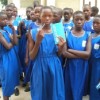
RIGHTS: No Safe Haven for Ugandan Girls
A year ago, a mother in Kashari County took the law into her own hands and castrated a man she caught raping her seven-year-old daughter.« Previous Page — Next Page »


Women make up half the world's population, but don't nearly share half of the world's wealth, well-being and opportunity. Two-thirds of the world poor are women, disproportionally exposing women to precarious living conditions, disease and unmitigated natural disasters. The media, meanwhile, remains a male-dominated sector in much of the world, contributing to women's voices lacking a crucial amplifier to put their concerns on political agendas and unleash the development potential of their ingenuity. Rather than then stereotypical victims of local and global forces, women are also organizer, innovators, conservators and community builders. These are some of their stories.

The Week with IPS

NEXT STOP - SDGs
Tracking global progress towards a sustainable world
Tracking global progress towards a sustainable world
