Languages
Sunday, November 15, 2026



News and Views from the Global South
Gender

COLOMBIA: Women Lead Opposition to Gold Mine
Women in the small Andean town of Cajamarca and the nearby city of Ibagué, in the central-west Colombian province of Tolima, are leading the struggle against a major gold mining venture that threatens to alter their way of life.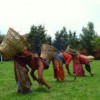
POLITICS-NEPAL: Women Push for Gender Equality in New Constitution
A political crisis, which has dragged on for months, crippling progress in drafting a new constitution for Nepal by the Constituent Assembly (CA) has considerably dampened the euphoria of women's organisations here.RIGHTS: U.N. Body Relentlessly Pursues Women's Equality
The U.N. Committee on the Elimination of Discrimination Against Women (CEDAW) is known to publicly castigate countries accused of gender discrimination or violating international conventions governing women's rights.
ECONOMY-RWANDA: Credit for Women's Development
In early July, Rwandan officials announced a new programme that aims to strengthen women's economic capacity by providing more access to credit and enabling them to start income generating projects.HEALTH-AFRICA: HIV Laws Do More Harm Than Good
In Sierra Leone, a mother who transmits HIV to her child can be fined, jailed for up to seven years, or both. Human Rights Watch reports that in 2008, several men were arrested in Egypt simply for being HIV positive. New legislation is currently being discussed in Angola that could lead to a three to ten year jail sentence for those who knowingly pass on HIV.
Q&A: "Changing Stereotypes of Women Is the Starting Point"
For the last 10 days, experts from the U.N. Committee on the Elimination of All Forms of Discrimination Against Women (CEDAW) have been reviewing the status of women's rights in 11 countries.MOROCCO: New Law, But the Same Old Men
The new Moroccan family law was designed to give women equal rights in the family. But five years after its introduction, Moroccan women leaders say opposition to the law from politicians and within the judicial system persists, and the new law has not been able to change Moroccan mentality.
URUGUAY: Schoolgirls Access Computers but Can’t Shake Gender Stereotypes
The girls who attend the school of Villa García, a township on the outskirts of the Uruguayan capital, are still playing dolls and dress up - only now they do it on their laptop computers.
Q&A: "Every Work Form You Fill Asks Your Marital Status"
When a high court amended Article 377 of the Indian Penal Code, a colonial-era law which was used to criminalise consensual homosexual relationships, on Jul. 2, it was a "life-changing moment for me," says Lesley Esteves, a journalist and queer activist.
RIGHTS-BULGARIA: Two Women Take on Defence Ministry
Two young women are suing Bulgaria's Ministry of Defence over gender discrimination in the mainly ceremonial, National Guard - a case that could go a long way in changing patriarchal social norms.
Q&A: Reality Fell Upon Us: Women's Voices Must Be Heard
Fifty-six percent of Rwanda's parliamentarians are women, a manifestation of the active role women have taken in rebuilding the country since the 1994 genocide.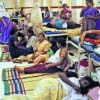
HEALTH-INDIA: High Morbidity Mars Kerala Women’s Progress
While Kerala, in southwest India, enjoys enviable indices when it comes to health and human development, the state seems unable to shake off high chronic morbidity rates among its women.
COSTA RICA: Women Ageing Alone, Easy Prey to Looting
Though América Herrera may not ever know it, she has become the poster child for a growing practice in Costa Rica, which experts define as financial or economic abuse of the elderly.NICARAGUA: Therapeutic Abortion Ban a "Disgrace" Says Rights Group
"What happened to me shattered my dreams, my hopes – I wanted to be someone who worked outside the home but I spend all day at home looking after the baby...I can’t even sleep and I feel very unsafe, many of my days are a nightmare, it’s very hard to carry on and I feel very sad and very tired," said "M", who was raped at age 17 by a relative.RIGHTS-KENYA: Justice Waits While Debate Rages Over Tribunal
Kenya's cabinet is expected to meet Monday to review a bill establishing how the masterminds of the country's post-election violence will be punished.EGYPT: Disputes Rise Over Quotas for Women MPs
Disputes have arisen over new legislation setting a quota for female representatives in parliament. Spokesmen for the ruling National Democratic Party (NDP) of President Hosni Mubarak describe the quotas as a milestone for women's rights, but some critics say the move threatens to create more problems than it solves.CULTURE-AUSTRALIA: Film on ‘Slavery’ Ignites Controversy
‘Stolen’, an Australian documentary film that premiered at the Sydney Film Festival last month, has ignited a controversy with its claims on slavery in the refugee camps of Western Sahara. The main protagonist has denounced the film for her portrayal as a 'slave’, but the filmmakers say they stand by their version of the story "one hundred per cent".
HAITI: Women "More Protected" to Report Sexual Violence
It has been five years since the U.N. sent peacekeepers to Haiti following the forced departure of President Jean-Bertrand Aristide, and the country, while not in a state of war, remains one of the world's most unstable.
AUSTRALIA: Male Job Losses Rise as Families Count Costs
Despite concerns that female workers would bear the brunt of Australian job losses due to the global economic downturn, employees in the male-dominated manufacturing industry have so far been the hardest hit.
POLITICS-MAURITANIA: Election Results Challenged
Coup leader-turned-politician General Mohammed Ould Abdel Aziz has been declared winner of Saturday's presidential elections by Mauritania’s Interior Ministry.
Q&A: South America Marching Towards Equality in Armed Forces
It’s not something out of a Hollywood movie. In a decade’s time, any one of the countries of South America could have a woman as chief commander of its armed forces, Argentine expert Mariel Lucero predicted in this interview with IPS during her visit to the Chilean capital to deliver a presentation on the subject.« Previous Page — Next Page »


Women make up half the world's population, but don't nearly share half of the world's wealth, well-being and opportunity. Two-thirds of the world poor are women, disproportionally exposing women to precarious living conditions, disease and unmitigated natural disasters. The media, meanwhile, remains a male-dominated sector in much of the world, contributing to women's voices lacking a crucial amplifier to put their concerns on political agendas and unleash the development potential of their ingenuity. Rather than then stereotypical victims of local and global forces, women are also organizer, innovators, conservators and community builders. These are some of their stories.

The Week with IPS

NEXT STOP - SDGs
Tracking global progress towards a sustainable world
Tracking global progress towards a sustainable world
