Languages
Monday, November 16, 2026



News and Views from the Global South
Gender
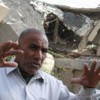
IRAQ: Still Homeless in Baghdad
"We only want a normal life," says Um Qasim, sitting in a bombed out building in Baghdad. She and others around have been saying that for years.ARGENTINA: Two Drivers at the Wheel?
Former president Nestor Kirchner, while having no official government post, calls and receives ministers and governors, confidently choosing staff and distributing funds for public works projects.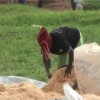
HEALTH-UGANDA: Pads From Papyrus
The average income in the Kyenjojo district in western Uganda is less than a dollar a day. Spending twice that on a single sanitary pad is an unaffordable luxury for most women.PHILIPPINES: Media Has Key Role in Fighting Corruption
When administrative officer Bryan Baylon discovered irregularities in the state-run hospital that employed him he first tried resolving them by informing his supervisors and proposing measures to curb corrupt practices.
RIGHTS: ‘Fight Terror But Follow Due Process’
Pakistani lawyer and human rights activist Hina Jilani is a member of the Eminent Jurists Panel on Terrorism, Counter-terrorism and Human Rights, convened by the International Commission of Jurists (www.icj.org) to investigate counter-terrorism practices and human rights standards.HEALTH-BRAZIL: Older Women at Higher Risk from AIDS
The HIV infection rate in women over 50 in Brazil has more than tripled since 1996, making this population group the prime target of the government's HIV/AIDS prevention campaign during the carnival festivities.RIGHTS: Human Slavery Thriving in the Shadows
"Dora", a young Mexican woman, was helped by another Mexican woman to cross the U.S. border in the promise of a good job there. She ended up in Texas, working in a sweatshop and not allowed to go out or even take a shower.
LABOUR: Women At the Helm, Literally
Shipping used to be for men. Now women are starting to be seen commanding merchant vessels, oil tankers and cruisers, "manning" ships and operating liner engines.
INDIA/PAKISTAN: Peaceful Pink Panties to Tame Right-Wing Goons
Outraged by an attack by right-wing Hindu militants on women emerging from a pub in Mangalore, Karnataka state, activists in India have initiated a ‘Pink Chaddi’ (underwear) campaign in which they are sending pink panties to members of the Sri Ram Sena (Army of Lord Ram) on Valentines’ Day.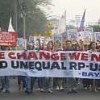
PHILIPPINES: Rapist US Marine’s Custody – Women’s Group Sceptical
A "one-step victory" was how a women’s rights group described a decision handed down by the Supreme Court (SC) this week on a controversial rape case involving a United States serviceman.
DR-CONGO: How Many More Will Be Raped?
As people around the world celebrate their loved ones on Valentine's Day weekend, activists are working to ensure that the ongoing horrors of the conflict in the Democratic Republic of Congo (DRC) are not forgotten.JAMAICA: Women Cheer Ban on Sexually Degrading Song Lyrics
It's the new dance craze here and many artists have hopped on the bandwagon. But when the latest "daggering" song hit the airwaves, government, broadcast regulators, civil society and others in Jamaica said enough is enough.
Q&A: ‘An Opportunity to Do Things Differently’
As Zimbabwe's government of national unity begins its work, gender activists are pushing for a greater place for women in decision-making.
WEST AFRICA: Female Genital Mutilation Knows No Borders
Laws against female genital mutilation are driving the practice underground and across borders, says UNIFEM.
/UPDATE/MIGRATION-US: Building a House for Day Labourers
Twenty-five centuries ago, ancient Athenians set aside part of their agora, the central public plaza, as a place where people seeking temporary work and others seeking workers could meet.
EAST AFRICA: Increasing Women's Participation in Government
Kenya’s poor record of improving percentage of women in decision making positions has come under scrutiny, but its neighbours are doing significantly better.WORLD SOCIAL FORUM: Presidents for Feminist Socialism
"True socialism is feminist," and is already being built, said Venezuelan President Hugo Chávez, standing next to three other South American presidents, all of them men, at a dialogue that took place Thursday at the World Social Forum (WSF).
MAURITIUS-RIGHTS: Sceptical Welcome for Equality Law
Nobody shall suffer prejudice in his social life or his place of work because of his or her ethnic origin, religion, age, sexual orientation, political conviction or physical handicap. This is the challenge of Mauritius's new Equal Opportunities Act (EOA).
DEVELOPMENT: Urgent Aid Sought for Victims of “Silent” Crises
The United Nations children's agency UNICEF said Tuesday that it must raise over a billion dollars this year to meet the basic needs of women and children in disaster zones worldwide, most of them in sub-Saharan Africa.
PAKISTAN/INDIA: Women Beat Unorthodox Paths to Peace
As high-profile delegations from Pakistan visit India after the launch of a month-long cross-border signature campaign to press for resumption of dialogue between the two countries and call for peace, IPS interviewed three Pakistani women who are pushing this agenda in their own unorthodox ways.
ZIMBABWE: ‘Life Is Like A Casino – We Live Each Day As It Comes’
Long lines of stalls, run by women, have sprung up next to many of Zimbabwe’s highways, selling honey, milk, mushrooms, tomatoes, onions and chickens. As prices in towns skyrocket due to unprecedented inflation levels running in the millions, people leave their towns to purchase basic commodities.« Previous Page — Next Page »


Women make up half the world's population, but don't nearly share half of the world's wealth, well-being and opportunity. Two-thirds of the world poor are women, disproportionally exposing women to precarious living conditions, disease and unmitigated natural disasters. The media, meanwhile, remains a male-dominated sector in much of the world, contributing to women's voices lacking a crucial amplifier to put their concerns on political agendas and unleash the development potential of their ingenuity. Rather than then stereotypical victims of local and global forces, women are also organizer, innovators, conservators and community builders. These are some of their stories.

The Week with IPS

NEXT STOP - SDGs
Tracking global progress towards a sustainable world
Tracking global progress towards a sustainable world
